Disclosure: This article contains affiliate links. Action Gunner may earn a commission on purchases made through these links at no additional cost to you. Our recommendations are based on our own testing, not affiliate relationships.
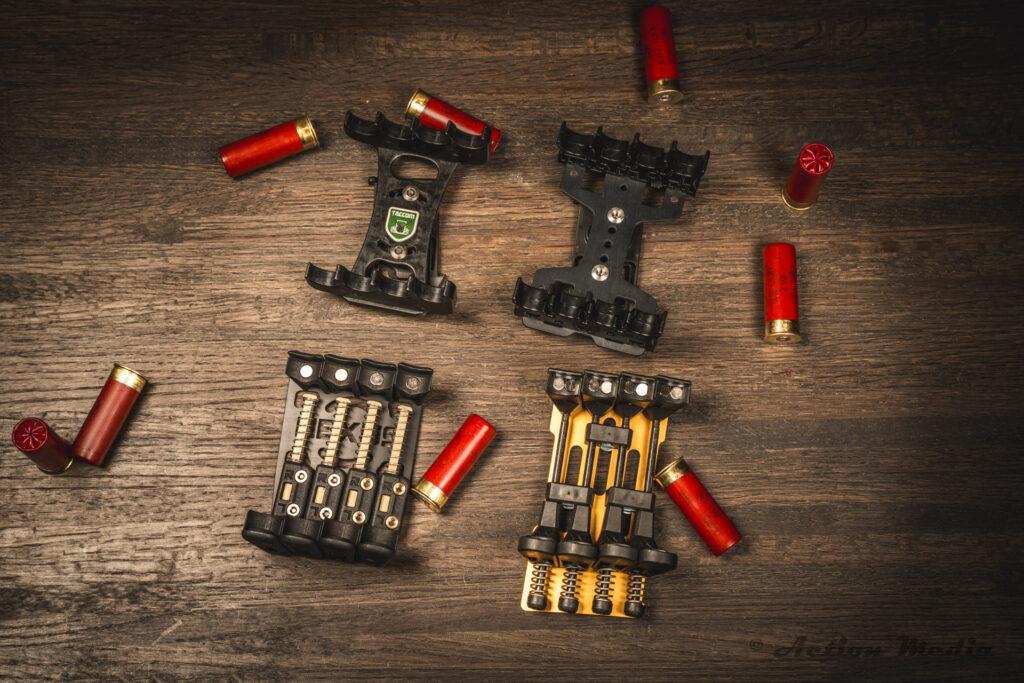
This article assumes your intention is to strong-hand or weak-hand quad load, or at minimum running a dual load technique. If you’re just starting out and trying to dial in technique, start with one caddy that allows you to test either technique and decide what to fill your belt out with from there. From budget-friendly Taccom to the refined King Competition lineup, each caddy I’ve reviewed here offers a different set of trade-offs. The best shotgun shell caddy for your setup comes down to what matters most to you: cost, retention strength, adjustability, or IPSC compatibility.
Caddies are just one piece of the rig. If you are building a shotgun from the ground up, start with our competition shotgun setup guide, then come back here to dial in your shell carriers.
Ready to buy? The caddies that held up are in our shotgun shell caddies collection in the Pro Shop.
I’ve been running shotgun caddies in 3-Gun and multigun since 2015. I started with traditional single shell loading out of AP4 caddies, moved to dual load caddies, and quickly committed to strong hand quad loading. Along the way I’ve spent my own money on every caddy system reviewed here and run them in live competition. This article covers what I’ve tested, what I run now, and what I’d recommend depending on where you are in the sport. If you’re still putting your shotgun platform together, start with our Competition Shotgun Setup Guide for the complete picture.
Your caddy system is the bridge between the shells on your belt and the shells in your gun. Without one, you’re fishing loose rounds out of a pocket or pulling singles off an elastic loop, both of which cost seconds per reload. With a well-designed caddy, you grab a set of shells in a consistent orientation, bring them to the loading port, and feed them in a single motion. The caddy does the organizing so your hands don’t have to.
The type of caddy you run determines your loading technique. Quad caddies feed a quad load. Dual caddies feed a dual load. You can’t run a quad load without a caddy designed for it, and there’s no point buying a quad caddy if you don’t have intention to load that way. You can, however, pull dual loads from a quad caddy with a little extra finesse, so don’t feel like you’re stuck only ever loading in 4-round increments for a stage plan.
Four types of shotgun shell holders exist for competition. Only the first three matter for running a shotgun on the clock, whether it’s 3-Gun or IPSC Shotgun.
Belt caddies are the standard in 3-Gun. They mount to your competition belt on the support-hand side, holding shells in a pre-staged orientation so you can grab them consistently and load without looking down. The major distinction within belt caddies is whether they’re designed for load-2 (dual) or load-4 (quad) technique.
Belt caddies keep shells at hip level, which means a short reach and a direct path to the loading port. The downside is belt space. Once you mount a holster, pistol mag pouches, rifle mag pouches, and shell caddies, you’re running out of real estate on a standard competition belt. Every piece of gear has to earn its spot. For a full breakdown of how to organize your belt around caddy placement, read our guide to shell carrier setup for 3-Gun.
Chest-mounted carriers hold shells on your torso instead of your belt. They’re the same concept as belt caddies but positioned higher, so you’re not competing for belt space with your pistol and rifle gear. Chest rigs will typically carry 24+ rounds, enough to handle just about any stage. Many majors will feature a shotgun-only stage that puts your total round count into 40+, and many competitors run both belt and chest rig setups to get through those.
Chest rigs can promote faster loading because they place the shells closest to your loading port and minimize the movement to get them into the gun. The trade-off is the added bulk over your midsection, which can restrict positional shooting (think going prone with rifle).
I’ve used chest rigs on specialty stages calling for 30+ shotgun rounds where my belt caddies couldn’t hold enough. For standard 3-Gun stages running 8-16 shotgun rounds, belt caddies are unobtrusive and convenient. For anyone coming over from another shooting discipline, a chest rig is the easiest way to add shells to your loadout without reconfiguring your belt.
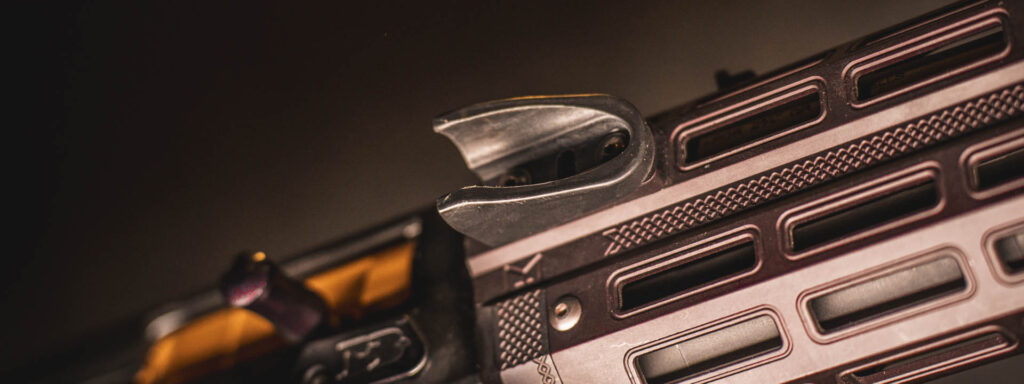
This is not a shell caddy, but worth covering. Match savers mount directly on the shotgun’s hand guard or receiver, holding one shell. They’re not a primary loading system. They’re emergency insurance for when you run your gun dry or want a slug on standby to make up for a miss. Position it directly in front of the chamber where you can easily slide the shell into the open chamber.
I run match savers on every shotgun and I’ve needed them more than once.
Receiver-mounted holders sit on the side of the shotgun opposite the ejection port. They’re more common on tactical and home defense setups than competition guns. The capacity is low (4-6 rounds typically), they add width to the gun, and accessing them during a timed stage is slower than pulling from your belt. For competition purposes, your money is better spent on belt-mounted caddies.
I’ve tested every caddy below in live competition with my own money. Each review reflects hands-on match experience, the good and the bad. Products are listed roughly in order of my recommendation.
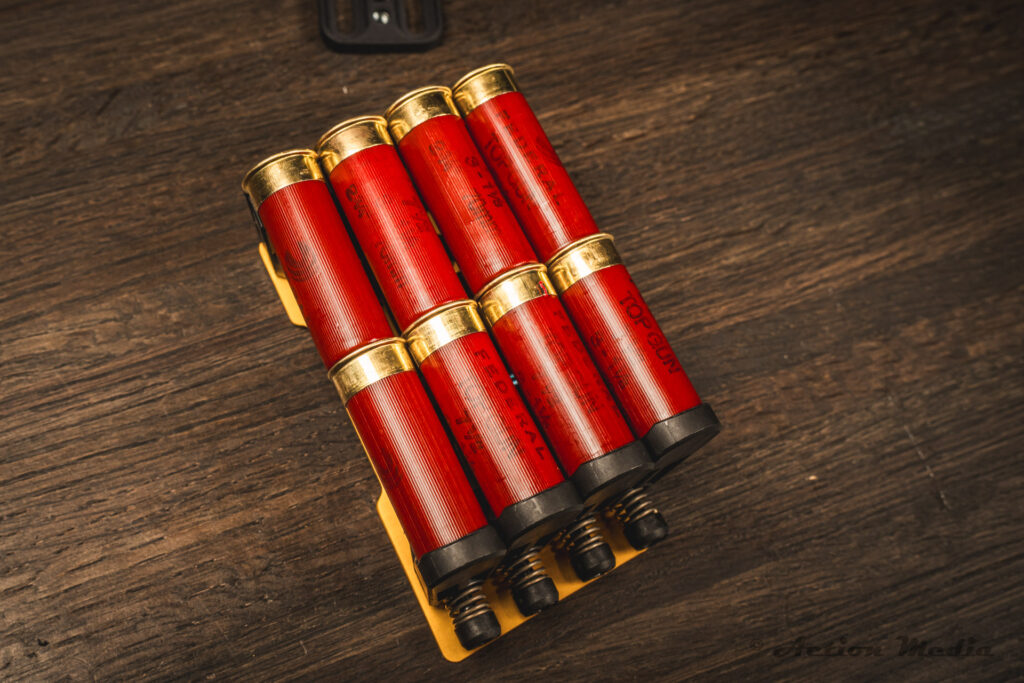
The King Competition MSHG6 is a 6th-generation quad load caddy that uses high-strength magnets for shell retention. The shells lock in tight and release with a clean, consistent pull. Of every caddy I’ve tested, the King delivers the smoothest release without sacrificing retention strength. Most caddies trade one for the other. The King does both.
The unit is self-leveling, compatible with standard 12-gauge 2-3/4″ shells, and allows tool-free spring tension adjustments. The guide system keeps shell positioning consistent regardless of minor variations in shell length between ammo brands. It mounts via your preferred adapter (TEK-LOK or ELS, etc.) with a rigid 360-degree attachment that doesn’t shift under movement.
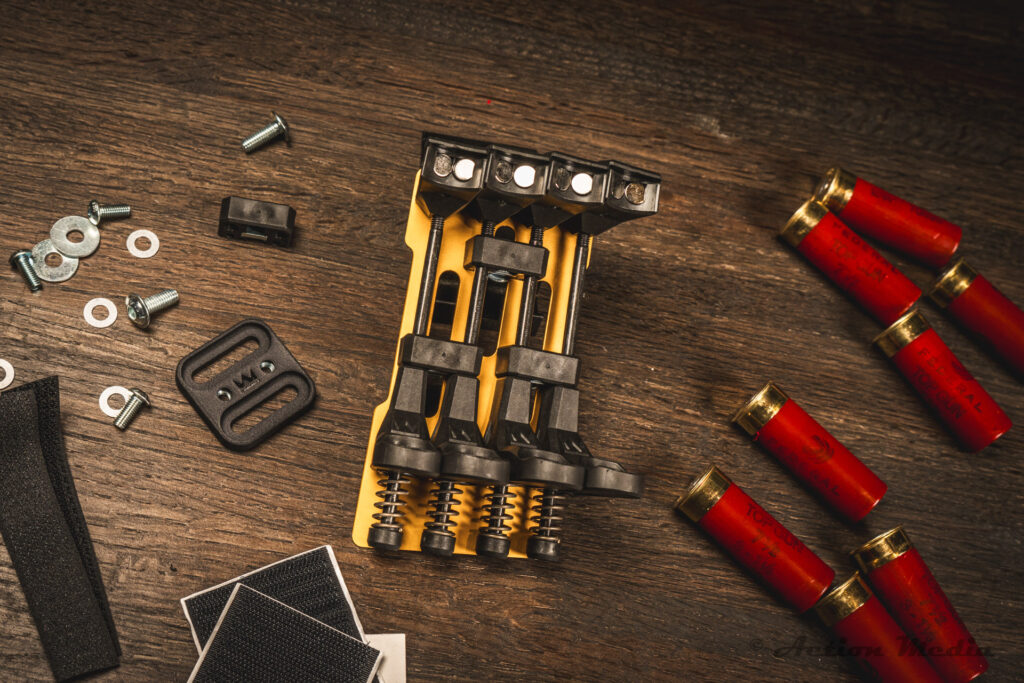
What I found in competition: I’ve been running up to three 8-shell King caddies across my belt at every multigun match since my original review. The retention is rock solid. The only time I’ve lost a shell is when I fumbled shoving it into the loading port, not when going for the initial grab off the belt. Caddies that hold shells until YOU decide to pull them, versus caddies that let shells rattle loose mid-stage, are two different categories. The Kings are firmly in the first.
The King also comes in a 12-round configuration. I sub the 12-round caddy onto my belt when the stage round count calls for it. Same shell release feel, same retention, just more capacity per unit. If you’re shooting stages that push past 24 shotgun rounds, the 12-round option reduces the number of caddies on your belt.
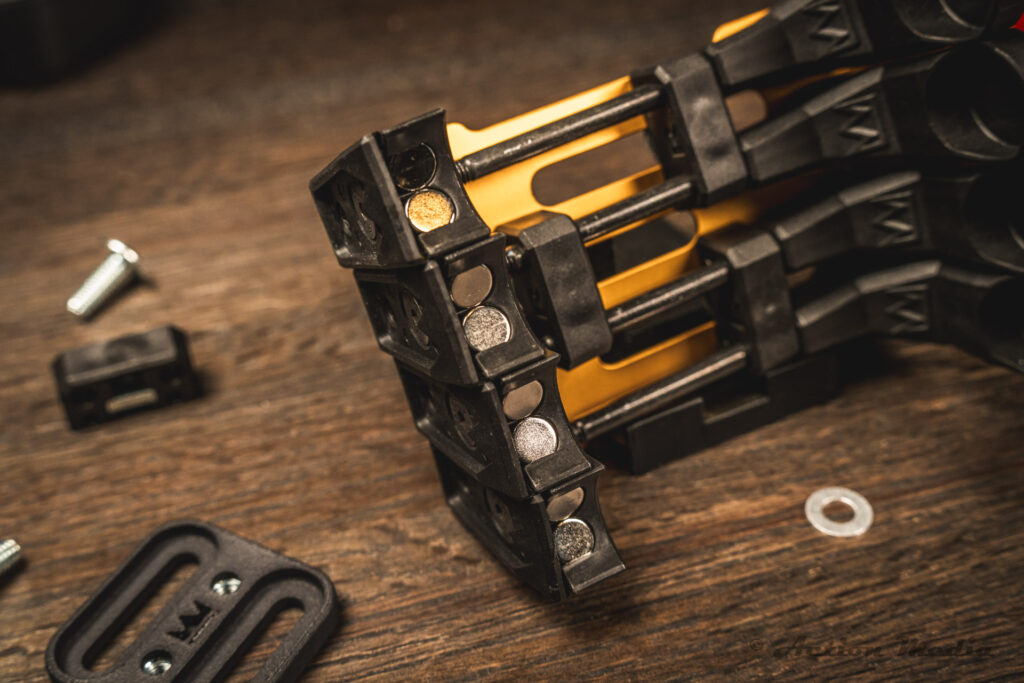
The drawback: The 8-round version’s mounting slots don’t line up exactly where I wanted them on the belt line. If I crouch or bend at the waist, the aluminum edge digs into my legs. The 12-round version avoids this because the shell positions sit higher relative to the belt mount. Not a dealbreaker, but worth noting if you spend a lot of time in low positions on stages.
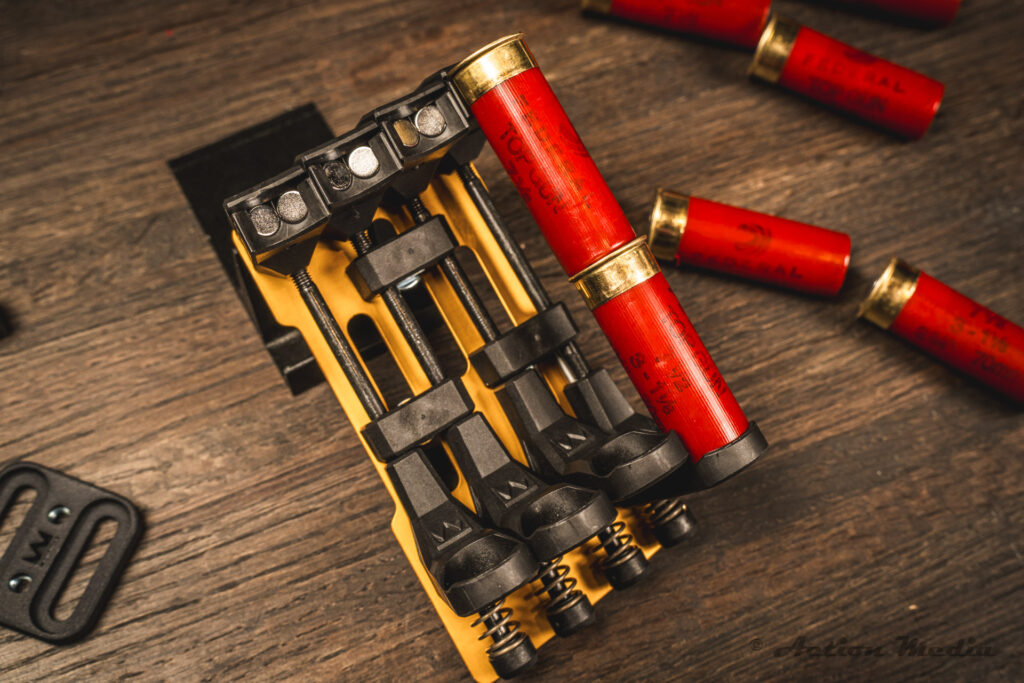
Price: $115 per caddy depending on configuration.
Best for: Committed competitors who want the strongest retention and smoothest release available.
Where to buy the King Competition MSHG6:
The Carbon Arms SSLP8 is a second-generation Twin/Quad load caddy. Carbon Arms introduced Twin and Quad loading caddies to the US market, and the SSLP8 is the current version of that design. It holds 8 rounds and supports four twin loads, two quad loads, or a mix of both from the same unit. It’s injection-molded in the US with domestically sourced hardware.
When I originally published this article, I couldn’t get my hands on one due to ordering issues with Carbon Arms’ website. I had used them in the past and kept seeing them on other competitors’ belts, so I knew they belonged in this review. Since then, I’ve worked with Carbon Arms to start stocking their inventory in the Action Gunner Pro Shop to help with the availability issue.
What I found in use: The Delrin backplate keeps the weight down compared to aluminum-backed caddies. The orientation is adjustable, which I like because I run mine at a slight angle to reduce wrist contortion during the grab. The versatility of running twin or quad loads from the same caddy is useful for shooters who are still deciding on a loading method or who want to mix techniques based on stage demands.
The drawback: The SSLP8 uses clip tension for shell retention, and the shell spacing is wider than I’d prefer for quad loads. With practice, clean quad loads at speed are doable, but the wider spacing means your hand has to cover more surface area on the grab compared to tighter-spaced caddies like the King or the Invictus. For shooters running twin loads, the spacing is a non-issue.
Price: $70
Best for: Shooters who want configuration flexibility between twin and quad loading, or anyone looking for a US-made caddy at a competitive price point.
Where to buy the Carbon Arms SSLP8:
Where to buy the Best Budget Option:
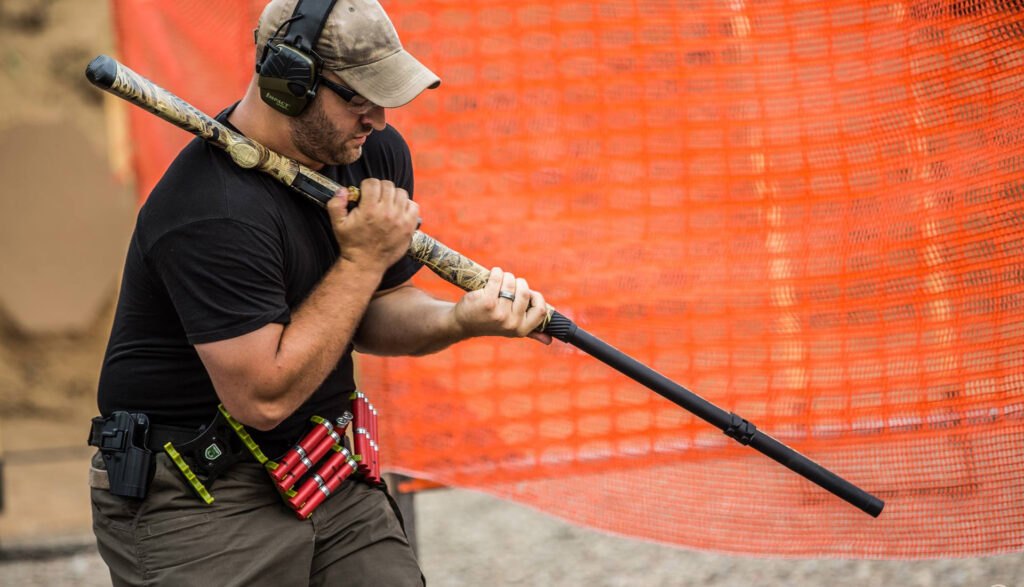
The Taccom Sport Series 8S4 is the successor to Taccom’s popular Duelin’ Deuce line of shell holders. It holds 8 shells in a configuration designed for quad or dual loading, and it’s the most affordable competition-grade caddy on this list. At $38 for a complete 8-shell setup (before belt mount), it’s where I tell budget-conscious shooters to start.
The Sport Series requires no assembly beyond belt attachment and works ambidextrous. The shell orientation runs more horizontal with the larger end down, promoting a “snatch” draw where you pull up rather than out.
What I found in competition: The clip retention on the shells is the weak point. Taccom offers clip, spring, and magnet retention options, and they perform differently. The clip retention provides less lateral hold than the King Competition or Invictus caddies. Shells that aren’t retained by the brass can slip out of position, which means you need to index off the bottom shells to make sure everything is compact before breaking retention. It’s a small extra step, but it’s one more thing to think about under a timer.
That said, the Sport Series is what Taccom has in stock right now, and for the price point, it runs. I ran Taccom caddies early in my quad loading progression and they held up fine.
Price: $38 per 8-shell setup.
Best for: New competitors, shooters on a budget, or anyone who wants to try quad loading before investing in more expensive caddies.
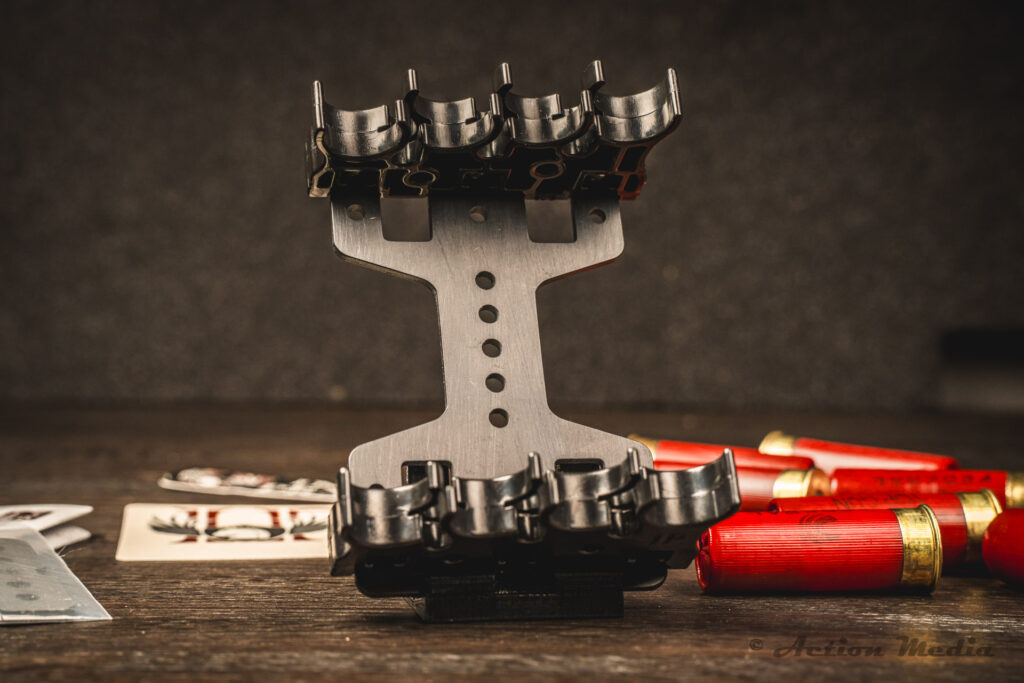
Update (2026): Invictus Practical has ceased business operations. Their website is still active at the time of this update, but you cannot order new product. If you find Invictus caddies on the used market (match buy/sell groups, forums, local competitors selling gear), they’re still a solid option at the right price.
Invictus Practical supported competitive shooting for years, and their caddies earned a strong reputation. The Straight 8ight is a light, rugged 8-shell holder that works for both right and left-handed loading. You just flip the plate to ramp the clip in the proper direction. The 12Q model adds capacity and lets you tilt the shell holder arms at an angle, which many shooters find gives a better angle of attack for the hand and faster movement from the holder to the magazine tube.
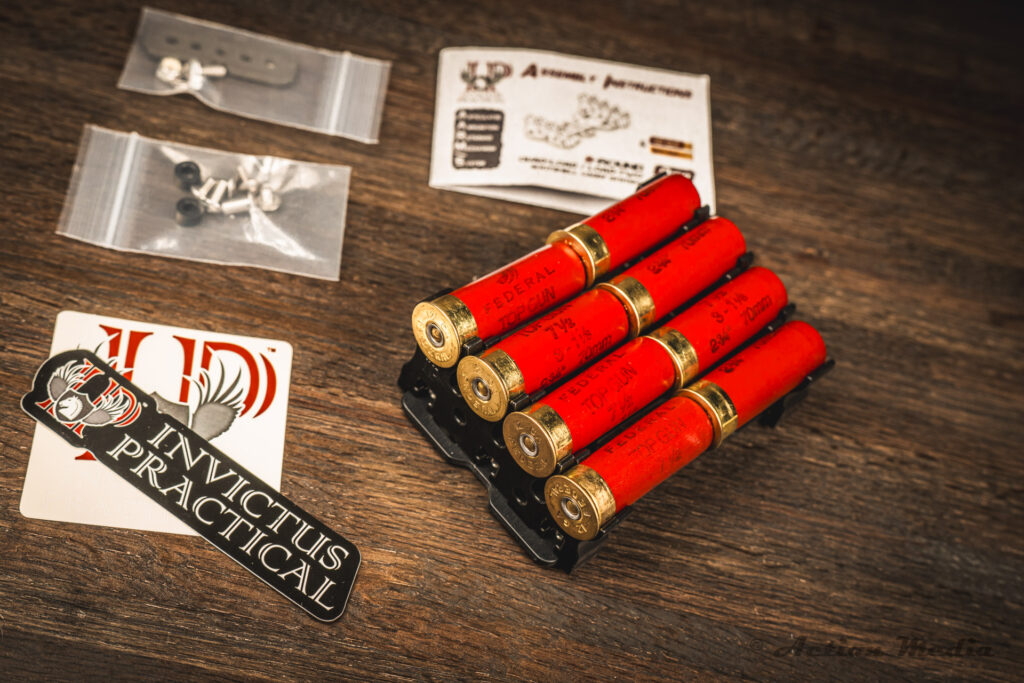
What sets the Invictus apart from other clip-retention caddies is the shell clip design. Shells nest so close that their rims touch, yet each shell is retained independently. There’s also a 1/8″ vertical offset between adjacent shell rows that keeps the bottom shells down until you’re ready for them. The retention is strong, and the pull mechanics work well for fast quad or dual loads.
The drawback: They require some assembly and the initial setup takes effort. And obviously, the biggest limitation now is availability. You can’t buy them new.
Price: $45-$60 per caddy when they were available. Used market prices vary.
Best for: Shooters who can find them secondhand and want a proven design at a used-market price.
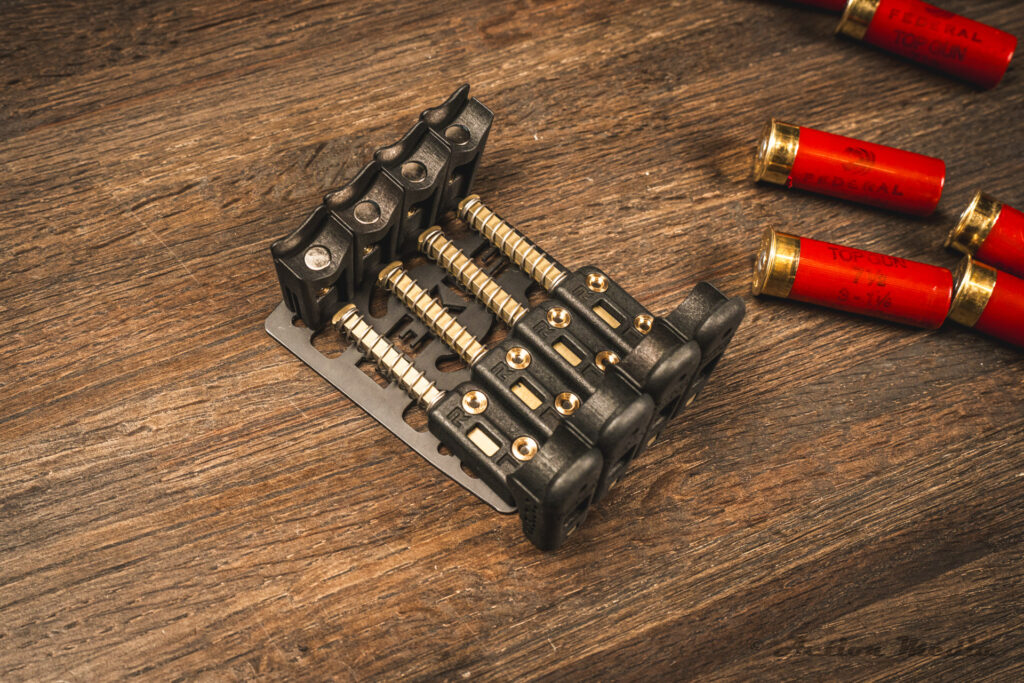
The Magload Nexus PRO 8 is built from aerospace-grade aluminum with a hard anodized backplate. At 92 grams, according to Magload it’s the lightest self-adjusting loader on the market. The self-adjusting feature means it takes any shotgun cartridge with an unfired length from 50-67.5mm without manual adjustment. Bird, buck, or slug, the caddy adapts. It’s IPSC-compliant and mounts via CLIC, TEK-LOK, ELS, or Velcro. Available in configurations from 4 to 32 shells.
On paper, the Nexus PRO checks every box. In competition, the retention doesn’t hold up.
What I found in competition: The retention strength is the problem. I continue to try to make the Magload caddy work because I like the compact design and the weight savings. But after extended match use, I still have retention issues. The shell stack doesn’t feel as solid as the other caddies in this article, and it’s too easy to inadvertently knock a shell out during movement or when going for the grab. Compare that to the Kings, where my only shell losses have been at the loading port, and the difference in match reliability is clear.
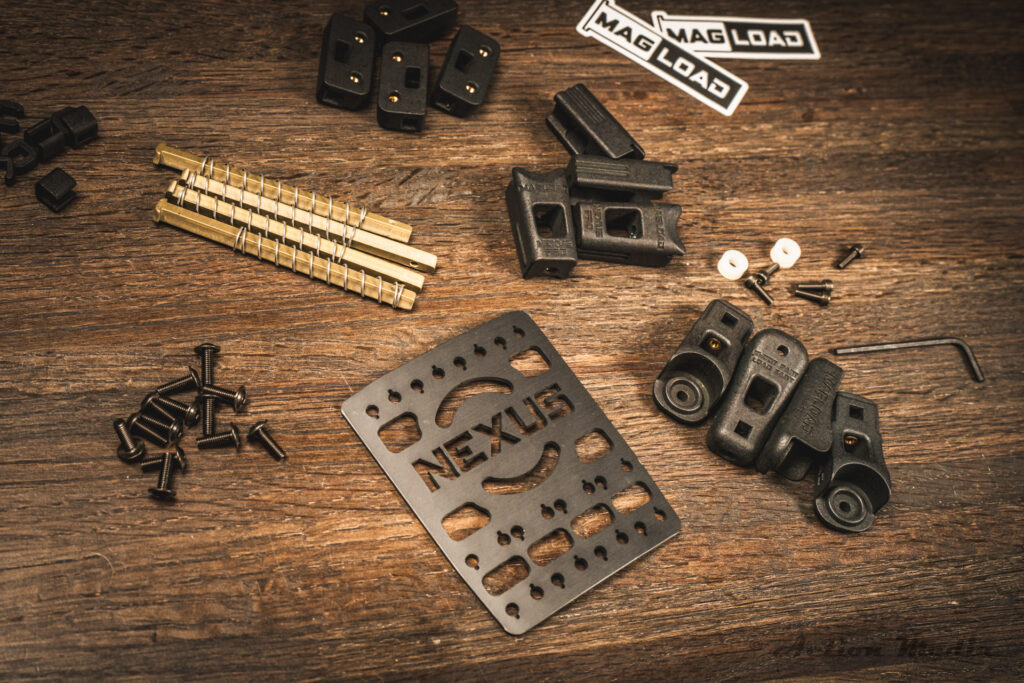
If Magload tightens up the retention in a future revision, this could be a contender. The build quality and weight savings are genuinely appealing. But right now, I can’t recommend it for match use when the shells don’t stay put.
Price: I paid $115 for mine through WickedFast LLC.
Best for: Shooters who prioritize weight savings and are willing to accept weaker retention. May work better for IPSC-style shooting where stage movement is less dynamic than 3-Gun.
Availability note: The Magload is a European product. WickedFast LLC, which was the US dealer, appears to have shut down. I’m not sure how to source these domestically going forward. Check Magload’s website directly for current distribution options.
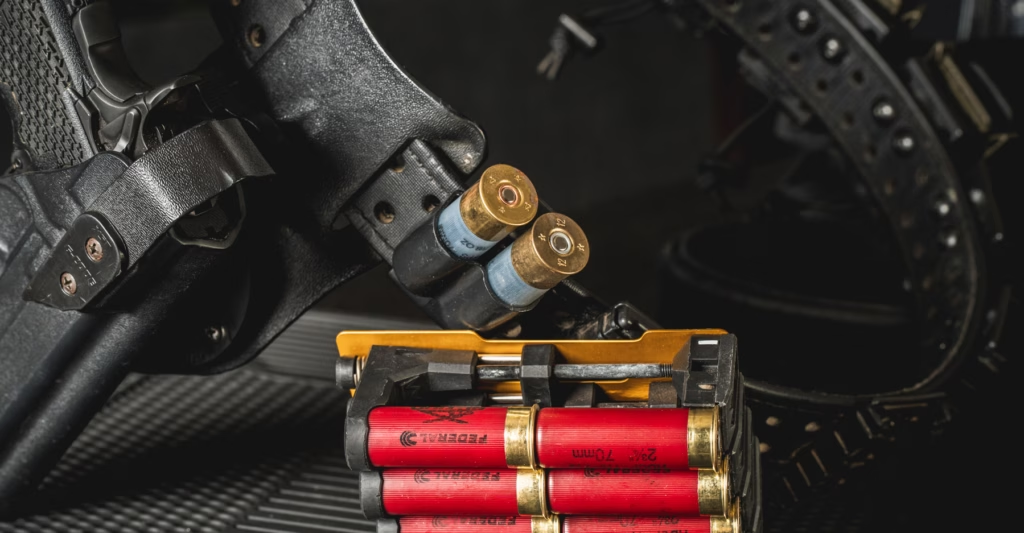
Update (2026): The Safariland 080-12 appears to be discontinued. I can’t find it available from any current retailer. If you already own them, keep running them. If you’re looking for a similar product, the King Competition PINESHOT 2 is the closest replacement in function and footprint.
The Safariland 080-12 has been a staple on my belt since I discovered it years ago. It only holds two shells, but I’ve found it useful for both emergency birdshot on high round count stages and specialty loads (slugs or buckshot) when the stage calls for it.
The 080-12 is compact and lightweight, making it easy to throw on your belt just about anywhere for convenience. I placed mine directly in front of my pistol holster or between a set of quad-load caddies.
It’s a loss that this product is off the market. For new shooters looking for a similar solution, see the PINESHOT 2 below.
Price: Was $12 per unit.
Best for: No longer available new. Use the King Competition PINESHOT 2 as a replacement.
Where to buy the Best 2-Shell Emergency Holder:
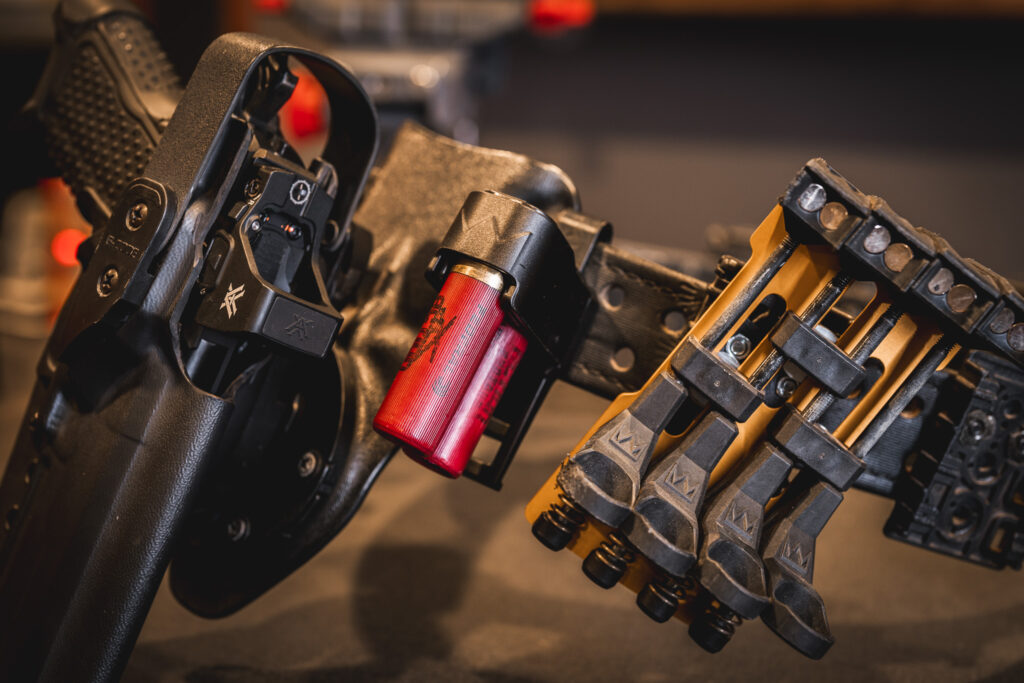
The King Competition PINESHOT 2 is a Finnish-made polymer and stainless steel holder designed for 2 shells. It fills the gap left by the discontinued Safariland 080-12 as a compact emergency shell carrier. The mounting clip attaches to belts, MOLLE rigs, chest straps, and even pockets, which gives it more mounting flexibility than most 2-shell holders.
What I found in competition: The PINESHOT uses a push-button locking mechanism. You press and strip the shells out. In practice, I found myself fumbling more than I wanted when trying to move quickly, with shells occasionally hanging up on the release. It’s not as intuitive as the Safariland’s pull-and-go design was. Under match pressure, that extra fumble potential adds stress to an already stressful reload.
That said, this is an emergency holder, not a primary loading system. You’re reaching for it on the rare occasion your belt caddies run dry. For that specific role, it works. Just practice the push-button release enough that it doesn’t surprise you on the clock.
Price: $25-$35 per unit.
Best for: Emergency backup on your belt for high round count stages or specialty loads. The closest available replacement for the Safariland 080-12.
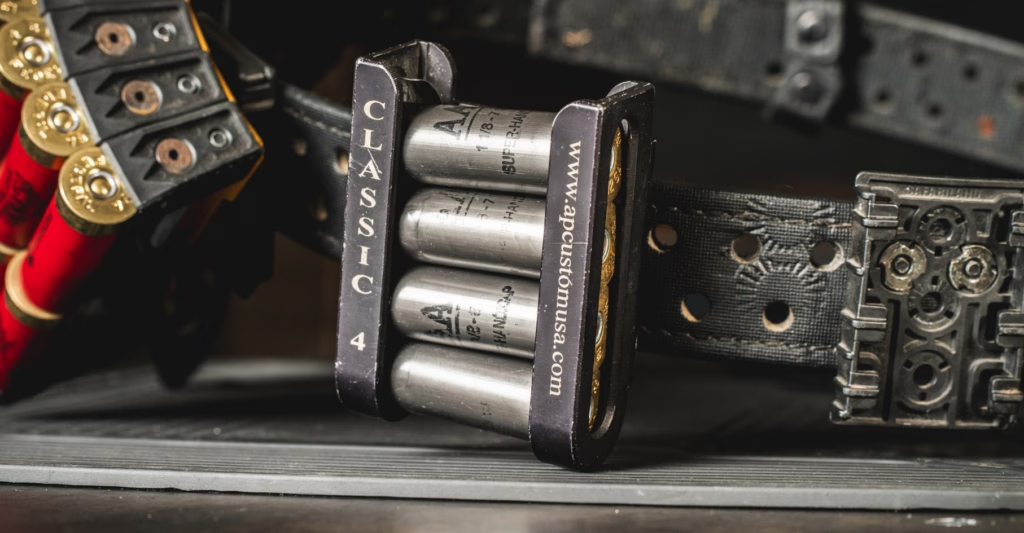
AP Customs shut down years ago, making these specific caddies nearly impossible to find. I’m covering them because other manufacturers still make similar designs, and anyone searching for this style of carrier should understand what they’re getting.
The classic 4-shell carrier was the standard in the early days of competition shotgun loading. The traditional weak-hand method of loading 4 shells one at a time with the stock tucked under your armpit was effective for its era. Strong-hand and weak-hand quad loading have since surpassed that technique in speed, but the carrier itself still has a role.
I keep one in my range bag on a Safariland ELS clip for high round count stages where belt space is tight. It sits at the 7 or 8 o’clock position and provides an extra 4 shells without taking up the real estate a full quad caddy would. I’ll admit it’s rare that I pull it out, but when a stage pushes past my belt capacity, it’s there.
The drawback: The loading method these carriers were designed for is slower than modern quad loading. And availability is limited to the used market and similar designs from other manufacturers.
Best for: Backup capacity on belt-heavy stages. Look for similar designs from current manufacturers if the classic 4-shell layout fits your loadout.
A growing number of shell caddies have appeared on Amazon and eBay from brands with no presence in the competition shooting community. Most of them look like knockoffs of the designs covered above. You might save a few dollars going that route, but your money isn’t going back into the companies that support competitive shooting. There’s also no match-tested reliability data on these products. I haven’t reviewed them because I can’t vouch for what I haven’t run, and I’m not comfortable recommending gear to competitors based on product photos and marketing copy. If you decide to try one, start with a single unit and test it extensively before building your whole belt around it.
| Product | Type | Capacity | Retention | Price | Status |
|---|---|---|---|---|---|
| King Competition MSHG6 Top Pick | Quad/Dual | 8 or 12 shells | Magnetic (strongest tested) | $115 | Available |
| Carbon Arms SSLP8 | Twin/Quad | 8 shells | Clip tension | [TBD] | Available (Pro Shop soon) |
| Taccom Sport Series 8S4 | Quad/Dual | 8 shells | Clip/Spring/Magnet options | $38 | Available |
| Invictus Practical | Quad/Dual | 8 or 12 shells | Independent shell clip | $45 – $60 (was) | Discontinued (used only) |
| Magload Nexus PRO 8 | Quad/Dual | 4–32 shells | Self-adjusting (weakest tested) | ~$115 | Limited (no US dealer) |
| Safariland 080-12 | 2-Shell Emergency | 2 shells | Friction fit | $12 (was) | Discontinued |
| King Competition PINESHOT 2 | 2-Shell Emergency | 2 shells | Push-button lock | $25 – $35 | Available |
The right number depends on the heaviest shotgun stage you’ll face at a given match. A typical local 3-Gun stage calls for 8-12 shotgun rounds. Major match stages push 16-24. Specialty or shotgun-only stages can hit 30+.
Here’s the math: count the shotgun targets on the stage, add required hits per target, then add a 25% miss buffer. If a stage calls for 16 rounds, plan for 20 on your belt. Factor in your tube capacity. If your gun holds 8+1 and the stage needs 20 rounds, you need 11-12 shells on your belt for reloads. Two 8-shell quad caddies cover that with room to spare.
I run three 8-shell King Competition caddies as my standard belt load (24 shells). With a full tube, that covers a 32-round stage. For stages that push higher, I swap one of the 8-shell caddies for the 12-round King, bringing my belt total to 28. That handles anything I’ve encountered at a major match.
For a detailed breakdown of stage planning around shell counts and caddy placement strategy, read our guide to shell carriers for 3-Gun.
| Budget quad setup (3x Taccom Sport Series + match savers) | $140 – $180 |
| Full quad setup (3x King Competition 8-shell + match savers) | $370 – $420 |
| Full coverage setup (3x King 8-shell + 1x King 12-shell + match savers) | $490 – $540 |
| Competition belt (if you don’t already have one) | $50 – $120 |
| ~Total for a complete shell carrier setup | $140 – $660 |
Don’t buy a full set of caddies before you’ve committed to a loading technique. Order one or two, run 100 practice loads, and confirm the grab feels natural and the shells release cleanly. If you’re fighting the caddy on every load, try a different brand before spending $200+ on a full belt. Selling used caddies to other competitors is easy, but it’s easier to buy right the first time.
This is the fork in the road for every 3-Gun shooter’s caddy setup. The caddy type dictates your loading technique, your practice investment, and your speed ceiling.
Quad load caddies hold four shells in a fanned arrangement. A practiced quad loader puts four shells in the gun in about 2-2.5 seconds. The learning curve is steep: I committed six weeks of daily snap cap work (15 minutes a session) before my quad loads were match-ready. The King Competition and Taccom caddies both support quad loading with different release mechanics.
Dual load caddies hold two shells side by side. A competent dual loader puts two shells in the gun in about 1.5-2 seconds per cycle. The hand mechanics are simpler, and most shooters achieve reliable dual loads within a few practice sessions. Dual caddies from most brands work well because the technique is more forgiving of caddy design variations.
If you’re new to 3-Gun, start with dual caddies. Get consistent, learn stage management, and build your shotgun handling. When loading speed becomes your bottleneck (and you’ll know because you’ll watch quad loaders clear stages while you’re still feeding shells), invest in quad caddies and commit to the practice time. For a full breakdown of every loading technique with practice progressions, read our shotgun loading techniques guide. For structured drills to build speed, see our shotgun loading drills.
Position your caddies on the support-hand side of your belt (left side for right-handed shooters), roughly 7 o’clock to 10 o’clock. Load from front to back: your first and fastest grabs come from the front caddies closest to your hip, with backup caddies wrapping toward your back. Leave about half an inch between caddies to prevent snagging shells from an adjacent unit.
The most important setup step is practicing your grab-and-load while moving. Standing still in your garage gives you a false read on how accessible your caddies are. On a stage, you’re loading while moving to the next position, and a caddy that works at a standstill might sit right where your elbow jams during a turn. Adjust based on moving practice, not static setup.
For a complete belt layout guide including caddy placement alongside pistol and rifle gear, read our shell carrier belt setup guide.
The Taccom Sport Series 8S4 is the most affordable competition-grade caddy and works for both dual and quad loading. At $38 per setup, you can outfit your belt for under $150 and start running matches. If you’re learning dual loading first, most dual caddies from any reputable brand work fine because the technique is forgiving of caddy design differences.
In my testing, the King Competition’s magnetic retention provided the strongest hold and the smoothest release of any caddy I’ve run. Spring and clip retention systems work, but they can vary in lateral hold depending on the brand. The Taccom offers clip, spring, and magnet options, and the magnet version performs best. The retention method matters less than the execution. Buy one caddy and test it before committing to a full set.
Yes. Shell caddies hold standard 12-gauge 2-3/4″ shells regardless of whether you’re running a Benelli M2, Stoeger M3K, or Beretta 1301. The caddies are platform-independent. The variable that changes between shotguns is the loading port size and accessibility, which affects how easily you can feed shells from your caddy into the gun.
Both are strong caddies. The King Competition’s magnetic retention feels more secure, and the tool-free adjustability is a practical advantage. The Invictus shell clip design allows very tight shell spacing and the pull mechanics are smooth. The deciding factor now is availability: Invictus has ceased business operations, so you can only find their caddies used. If you’re buying new, King Competition is the clear choice. If you find Invictus caddies used at a fair price, they’re still worth running.
A budget quad setup with Taccom caddies and match savers runs $140-$180. A full setup with King Competition caddies runs $370-$420. Full coverage with mixed King 8-shell and 12-shell caddies runs $490-$540. Add $50-$120 for a competition belt if you don’t already have one. Your caddy system is only as stable as the belt holding it.
Not for most matches. Belt-mounted caddies cover 90% of 3-Gun stages. A chest rig or bandolier becomes useful on specialty stages with 30+ shotgun rounds where your belt runs dry. If you shoot major matches or outlaw events regularly, a slim bandolier is worth keeping in your gear bag. Skip the full sporting clays vest. It adds bulk that interferes with rifle and pistol handling. For more on supplementing belt caddies, see our speed loaders and caddy systems comparison.
Shell caddies are one of the highest-impact gear decisions in 3-Gun because loading time is where most shooters lose the most seconds. The gear itself isn’t complicated. The decision is straightforward: pick a loading technique, buy caddies that match it, practice until the motion is automatic, and stop thinking about it on match day.
The King Competition MSHG6 is what I run and what I recommend for shooters ready to invest in their caddy setup. The magnetic retention has proven itself across every match I’ve run since the original review. Carbon Arms gives you configuration flexibility at a lower price point, and we’ll have them available in the Pro Shop soon. For budget-conscious shooters or anyone just entering the sport, Taccom gets you to the starting line for under $40 per caddy. And if you spot Invictus Practical caddies on the used market, grab them. They’re a proven design that’s no longer in production.
Whatever you choose, buy from brands that other competitors run at your local matches. Borrow one to test before committing, ask questions about setup, and get hands-on help with caddy angle and belt placement. The best shotgun shell caddy for 3-Gun is the one that puts shells in your gun the same way every time, without you having to think about it. For the complete picture on building your competition shotgun setup, start with our pillar guide.