Looking for the best LPVO for 3-Gun? These are the low-power variable optics we have actually run on the clock, what each one does well, who it is for, and how to choose. Every pick here is a scope we have competed with, not a spec-sheet guess.
What Makes a Good 3-Gun LPVO?
For 3-Gun, the low-power variable optic (LPVO) is the default rifle glass for a reason: a true 1x for close, fast targets and enough magnification to call hits on distant steel, one optic, no compromise stage to stage. But “best” depends on your budget and how far your targets stretch. Here’s what actually decides it on the clock, and the scopes we’ve run hard enough to recommend.
We’ve personally competed with every optic below. Right now that’s all Vortex, the brand we’ve run hardest, and the buying criteria apply to any brand. As we test other LPVOs, they’ll earn a spot here.
Quick Picks
- Best first LPVO / best value under $500: Vortex Venom 1-6×24
- Most magnification for the money (1-8x): Vortex Strike Eagle 1-8×24
- Best all-around for most 3-gunners: Vortex Viper PST Gen II 1-6×24
- Best proven high-end 1-6 (a 3-Gun staple): Vortex Razor HD Gen II-E 1-6×24
- Best if targets stretch out and budget isn’t the limit: Vortex Razor HD Gen III 1-10×24
At a Glance
| Scope | Tier | Mag | Focal plane | Reticle | Weight | MSRP | Best for |
|---|---|---|---|---|---|---|---|
| Vortex Venom 1-6×24 | Entry / value | 1-6x | SFP | AR-BDC3 | 18.6 oz | $499 | Your first LPVO; budget builds |
| Vortex Strike Eagle 1-8×24 | Value 1-8 | 1-8x | FFP | EBR-8 | Check spec | $749 | More magnification on a budget |
| Vortex Viper PST Gen II 1-6×24 | Mid / best value | 1-6x | FFP | VMR-2 (MOA/MRAD) | 22.7 oz | $699 | Most 3-gunners |
| Vortex Razor HD Gen II-E 1-6×24 | High-end 1-6 | 1-6x | SFP | JM-1 BDC / VMR-2 | 21.5 oz | Check price | Proven top-tier 1-6 |
| Vortex Razor HD Gen III 1-10×24 | Top-end | 1-10x | FFP | EBR-9 | 21.5 oz | $2,999 | Distance + dedicated competitors |
How to Choose the Best LPVO for 3-Gun
Magnification: 1-6x vs 1-10x. A 1-6x covers the vast majority of 3-Gun targets and gives you a wider field of view for fast, close work, it’s the sweet spot for most shooters. A 1-10x buys reach for small or distant steel, but the eye box gets tighter and the glass costs more. Pick 1-10x only if your local matches consistently push past what a 1-6x can resolve.
True 1x and daylight-bright illumination. This is the one that wins or loses stages. At 1x the optic should feel like a red dot, no tunnel, no distortion, and the illuminated dot has to be bright enough to pop in direct sun so you can shoot it like a red dot on the close array. Weak daylight illumination is the most common complaint on budget LPVOs.
FFP vs SFP. First focal plane (FFP) reticles scale with magnification, so your holdovers are correct at any zoom, better for calling distant hits. Second focal plane (SFP) reticles are simpler and the reticle stays the same size, which some shooters prefer for a clean 1x picture. The Venom and Razor Gen II-E are SFP; the Viper and Razor Gen III are FFP.
Eye box and eye relief. 3-Gun makes you shoot from broken positions, around barricades, leaning, off-hand. A forgiving eye box gets you a clean sight picture fast without perfect cheek weld. Eye boxes tighten at max magnification on every LPVO; the question is how much.
Weight. You carry the rifle through the whole stage. Most quality 1-6x LPVOs land between roughly 18 and 23 ounces. Lighter helps on movement-heavy stages, but don’t chase ounces at the expense of glass or durability.
Reticle, tube size, and mounting. Match the reticle to how you hold (MOA or MRAD), and budget for a quality mount, a scope that won’t hold zero through recoil and rough handling costs you more points than a cheap mount ever saves. (See our Optics & Mounts selection.)
Warranty. All the Vortex optics here carry the transferable VIP lifetime warranty, worth real money on gear that lives through mud, dust, and impacts.
The Picks
Best Value: Vortex Venom 1-6×24 (SFP), $499
The Venom is the one we hand a new 3-gunner. At 18.6 ounces with a true 1x and the AR-BDC3 reticle built for AR trajectories, it delivers most of what a mid-tier scope does for a fraction of the price, money better spent on ammo and match fees while you’re learning. The trade-off: the illumination can wash out in bright daylight, and the SFP reticle limits precise holdovers at distance. For beginner-to-intermediate shooters, that’s an easy compromise.
Read the full Vortex Venom 1-6×24 review →
More Magnification for the Money: Vortex Strike Eagle 1-8×24 (FFP), $749
Want more reach than a 1-6x without paying Razor money? The Strike Eagle 1-8×24 is the budget way to get to 8x. It runs a first-focal-plane EBR-8 reticle, so your holdovers stay true as you zoom, and it lists at $749. The trade-off at this price is glass and an eye box that are not on the Viper or Razor level, but for a first 1-8x it is a lot of capability for the money.
Read the full Vortex Strike Eagle 1-8×24 review →
Best All-Around: Vortex Viper PST Gen II 1-6×24 (FFP), $699
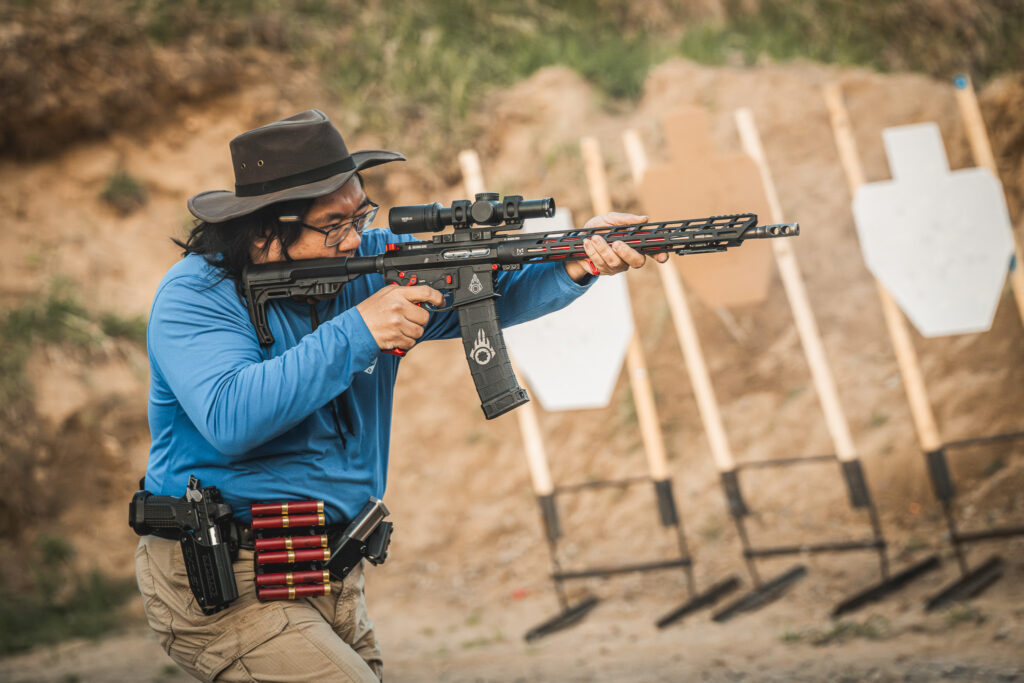
For most 3-gunners, this is the pick. You step up to a first-focal-plane VMR-2 reticle (MOA or MRAD), XD glass that’s razor-sharp edge to edge, and one of the more forgiving eye boxes in the class, exactly what you want shooting around barricades on the clock. It runs about $200 over the Venom and gives you roughly 85% of the Razor’s performance at half the price. The honest trade-offs: at 22.7 ounces it’s heavier than some 1-6x scopes, and the illumination, while daylight-bright at 1x, could be stronger in direct sun.
Read the full Vortex Viper PST Gen II 1-6×24 review →
Proven High-end 1-6: Vortex Razor HD Gen II-E 1-6×24 (SFP)
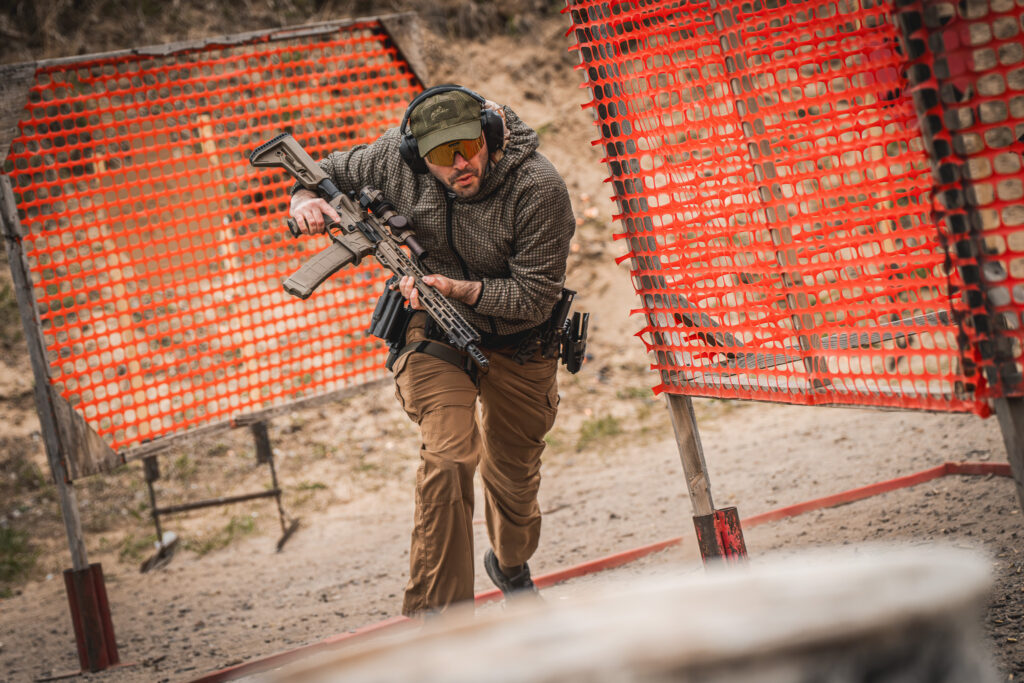
The Razor 1-6 has been a 3-Gun staple for years, and it’s still a solid choice. We’ve run both the original Gen II and the refined Gen II-E extensively on the clock. The Gen II-E trims the weight to 21.5 ounces, runs a 4-inch eye relief on a 30mm tube, and comes with either the Miculek-designed JM-1 BDC (MOA) or the VMR-2 (MRAD) reticle, both daylight-bright and built for fast 3-Gun work. The honest trade-offs: it’s second focal plane, so your holdovers shift with magnification (unlike the FFP Viper and Gen III), and it sits at a high-end price without the 1-10x reach of the newer Razor Gen III. If you want a proven, top-tier 1-6 and don’t mind an SFP reticle, this is the one.
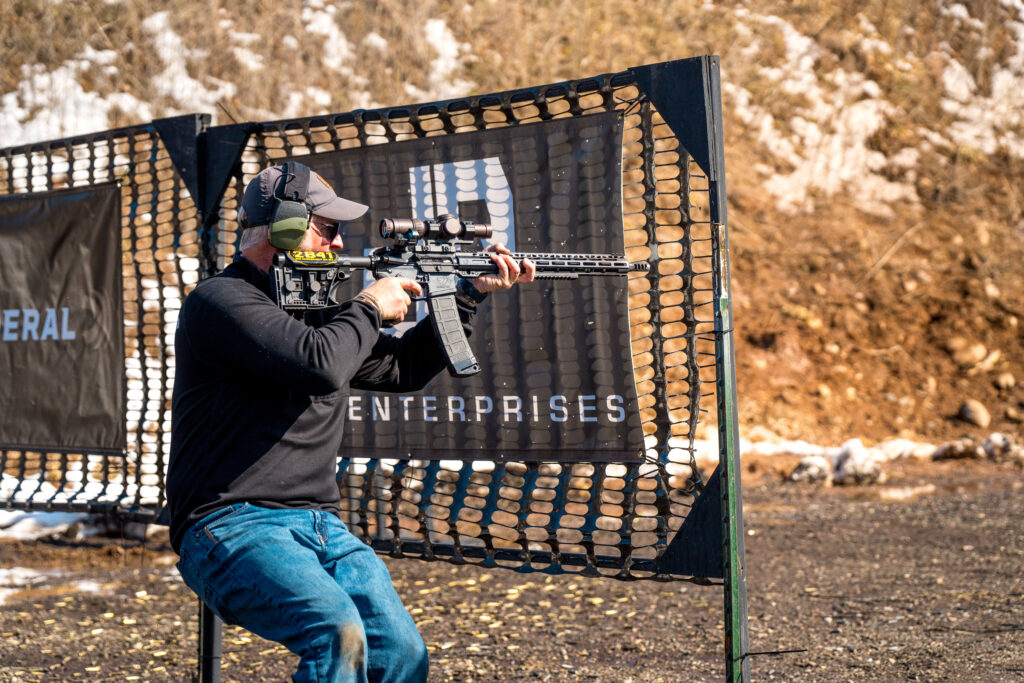
Running the original Gen II? It’s effectively the same optic a few ounces heavier, now found mostly on the used market, still a capable scope, but the Gen II-E is the one to buy new.
Top-End: Vortex Razor HD Gen III 1-10×24 (FFP), $2,999
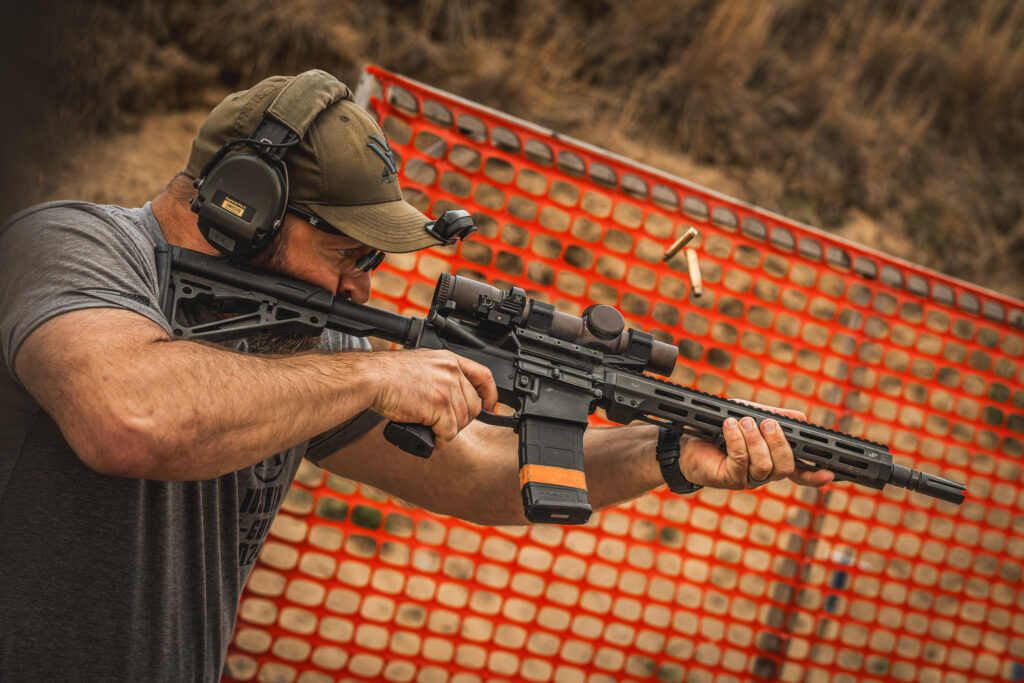
When targets stretch out and budget isn’t the constraint, the Razor’s 1-10x range and APO glass give you reach and clarity a 1-6x can’t match, true 1x that feels like a red dot, then real precision at 10x for distant or reduced-size steel. It’s 21.5 ounces (light for a 1-10x) with the daylight-bright FFP EBR-9 reticle. The trade-offs are the obvious one, the $2,999 price, and an eye box that tightens at 10x. This is the scope for the dedicated competitor chasing podiums, not the first-timer.
Read the full Vortex Razor HD Gen III 1-10×24 review →
Frequently Asked Questions
What is the best LPVO for 3-Gun?
For most 3-gunners, the Vortex Viper PST Gen II 1-6×24 is the best all-around pick, a first-focal-plane reticle, sharp glass, and a forgiving eye box at a mid-tier price. On a budget, the Vortex Venom 1-6×24 covers the essentials for under $500. For a proven high-end 1-6, the Vortex Razor HD Gen II-E 1-6×24 has been a 3-Gun staple for years. And if targets stretch out and budget isn’t a concern, the Razor HD Gen III 1-10×24 adds reach and top-tier glass.
Is a 1-6x or 1-10x better for 3-Gun?
A 1-6x is the sweet spot for most 3-Gun matches, wider field of view, lighter, and cheaper, and it handles the large majority of targets. Step up to a 1-10x only if your matches regularly feature small or distant steel that a 1-6x struggles to resolve. The extra magnification comes with a tighter eye box and a higher price.
FFP or SFP for 3-Gun?
First focal plane (FFP) reticles scale with magnification, so holdovers stay accurate at any zoom, better for calling distant hits. Second focal plane (SFP) keeps the reticle the same visual size, which some shooters prefer for a clean 1x picture and a simpler aiming point up close. Both work; FFP is more flexible as targets stretch out.
Do I really need an LPVO for 3-Gun, or is a red dot enough?
A red dot is fast up close but gives you nothing for distant precision. An LPVO at true 1x is nearly as fast as a red dot for close arrays while still letting you magnify for far steel, which is why it’s the default 3-Gun rifle optic. The main cost is price and a little weight.
How much should I spend on a 3-Gun LPVO?
You can get into a capable LPVO around $500 (Vortex Venom). The $650–$900 range (Vortex Viper PST Gen II) is where most serious competitors land for the jump to FFP and better glass. High-end 1-10x optics run $2,000–$3,000 and are worth it only once your fundamentals and your targets justify the reach.
Building the rest of the rifle? See our best AR-15 competition triggers and our Getting Started with 3-Gun Competition guide.