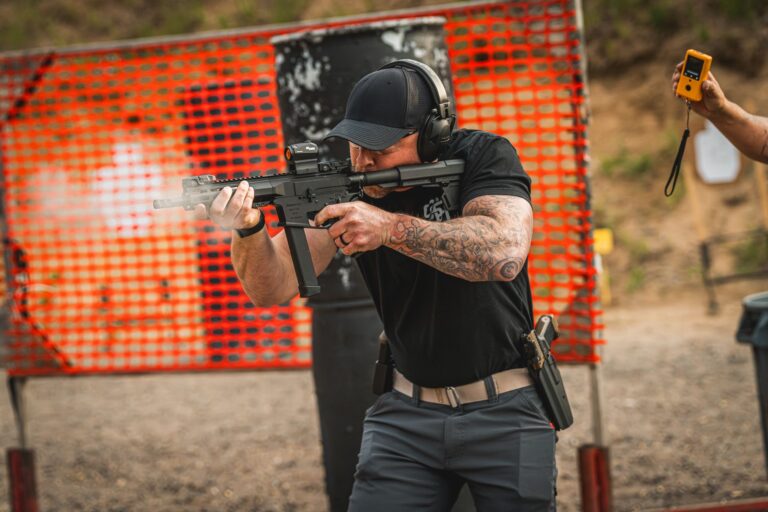
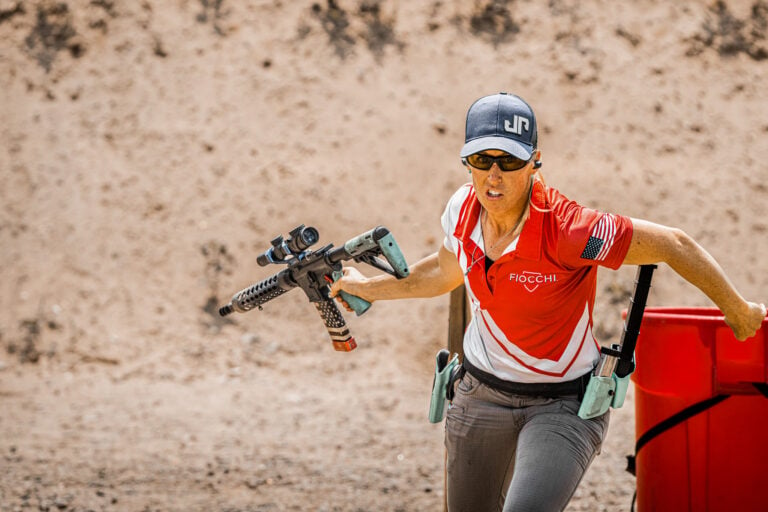
The best hearing protection for shooting is the set you’ll actually wear every time you step to the line. Gunfire runs roughly 140 to 165 decibels, loud enough to do permanent damage from a single unprotected shot, so the right ear pro is not optional gear. I bought and have run all five picks below with my own money, some of them for over a decade, and this guide sorts out which type fits which shooter, what the NRR numbers actually mean, and where to buy.
Quick Picks
- Best overall electronic muff: MSA Sordin Supreme Pro-X, slim cups, clear sound, holds up to weather and hard use.
- Best Bluetooth muff: Peltor Sport Tactical 500, when you want clear voice pass-through and a phone or timer connection.
- Best value electronic muff: Howard Leight Impact Sport, the one I hand new shooters, around $50.
- Best slim muff for long guns: Walker’s Razor Slim, thin cups that stay out of your cheek weld.
- Best low-profile in-ear: Decibullz Percussive Moldable, plugs you mold to your own ears that block the shot but let you hear the line.
Best Hearing Protection for Shooting at a Glance
| Pick | Type | Electronic | NRR | Best for | Where to buy |
|---|---|---|---|---|---|
| MSA Sordin Supreme Pro-X | Over-ear muff | Yes | 18 dB | Serious all-day use, weather | Amazon |
| Peltor Sport Tactical 500 | Over-ear muff | Yes (Bluetooth) | 26 dB | Voice clarity, phone/timer audio | Amazon |
| Howard Leight Impact Sport | Over-ear muff | Yes | 22 dB | New shooters, spare pair, value | Amazon |
| Walker’s Razor Slim | Over-ear muff | Yes | 23 dB | Rifle and shotgun cheek weld | Amazon |
| Decibullz Percussive Moldable | In-ear plug | No (percussive filter) | 31 dB | Low profile, under muffs, indoors | Amazon / AG Pro Shop |
NRR is the lab-tested Noise Reduction Rating in decibels. Higher blocks more, but real-world fit matters more than the number on the box, which is why I cover fit below.
What NRR Do You Need for Shooting?
One thing the NRR number hides: it assumes a perfect fit in a lab. In the real world, a muff broken by your glasses arms or a plug that isn’t seated drops your actual protection fast. A 22 NRR muff that seals well beats a 31 NRR plug that’s half in. Pick the type you’ll wear correctly every time, then worry about the number.
How to Choose Hearing Protection for the Range
Electronic vs passive. Electronic ear pro uses microphones to pass through range commands and conversation, then clamps down on the gunshot. Passive protection just blocks. If you compete, instruct, or hunt, electronic is worth it because you can hear the timer, the RO, and your squad without lifting a cup. Passive plugs still have a place as a low-profile or backup option.
Muffs vs plugs. Muffs are easy to get a good seal with and easy to pull on and off, but they add bulk around your cheek weld on a rifle or shotgun and they fight with glasses. Plugs disappear under a hat and don’t touch your stock, but they depend on a correct fit and are slower to pull in and out. Many competitors keep both.
Indoor vs outdoor. Indoor ranges bounce sound off hard walls and are noticeably harsher, so size up your NRR or double up. Outdoors is more forgiving.
Doubling up. For indoor pistol or anything heavy with a brake, run foam or moldable plugs under electronic muffs. You still hear range commands through the muffs’ microphones, and the combined protection covers the loud stuff. For more on staying safe at the range, see our guide to first aid for competitive shooters. The CDC/NIOSH overview of noise and hearing loss is a solid primer on how loud is too loud.
The Picks
MSA Sordin Supreme Pro-X, Best Overall Electronic Muff
The Sordin Supreme Pro-X is the muff I reach for when I’m going to be on a range all day, and I’ve run mine since 2022. The cups are slimmer than most, the sound reproduction is clean and natural instead of the tinny pass-through you get on cheaper sets, and the build shrugs off weather and getting tossed in a range bag. The behind-the-head band option also plays nicer with brimmed hats and helmets.
The honest trade-off: price. These run several times what an entry muff costs, and the 18 dB NRR looks low on paper. The electronics compress the impulse before it hits your ear, so it protects better than that number suggests, but if you want the highest passive seal for indoor work you’ll still want plugs underneath.
Peltor Sport Tactical 500, Best Bluetooth Muff
The Peltor Sport Tactical 500 is the set I grab when I want the cleanest voice pass-through and a Bluetooth connection, and it’s been in my rotation since 2016. The voice-clarity processing makes range commands and squad conversation easy to follow, the Bluetooth lets me take a call or run timer audio without pulling the muffs off, and the suppression of the gunshot is quick and clean.
The honest trade-off: the cups are on the larger side, so they crowd a rifle or shotgun cheek weld more than the slim options, and Bluetooth pairing can be fussy. Battery life is fine but it’s one more thing to keep charged. For a pistol bay or a range day where I want my phone connected, it earns its spot.
Howard Leight Impact Sport, Best Value Electronic Muff
This is the pair I put in a new shooter’s hands, and the spare set that lives in my range bag for anyone who shows up without ear pro. Mine date back to 2014 and still work. For around $50 you get electronic pass-through that lets you hear commands, a folding design, and an AUX jack. It does the job at a price where owning two or three pairs doesn’t hurt.
The honest trade-off: the cups are thick, so they crowd your cheek weld on a rifle or shotgun, and the foam and sound quality aren’t on the level of the Sordins. For a static pistol bay or a new shooter, none of that matters. For a long-gun match, you’ll feel the bulk.
Walker’s Razor Slim, Best Muff for Long Guns
The Razor Slim solves the cheek-weld problem, and I’ve run mine since 2022. The cups are noticeably thinner than the Impact Sport, so they stay out of the way when I mount a rifle or shotgun, and the 23 dB NRR is the highest of the muffs here. Sound pass-through is good for the money and the controls are simple.
The honest trade-off: the slim cups trade a little comfort on long days, and the plastic headband and build feel lighter-duty than the Sordins. The microphones can also pick up wind noise outdoors. For the price and the low profile on a long gun, it’s a trade I’ll take.
Decibullz Percussive Moldable, Best Low-Profile In-Ear
When muffs fight my setup, I go to the Decibullz, and I’ve had a pair since 2019. You heat the molds in hot water, press them into your ears, and they set to your exact ear shape, which is what makes the seal work. The percussive filter is the clever part: it lets you hear range conversation and ambient sound, then mechanically blocks the impulse of the gunshot, no batteries required. At an NRR of 31 they block as much as anything here, they vanish under a hat, and they don’t touch my cheek weld at all. I also run them under electronic muffs for indoor pistol. We stock Decibullz in the Action Gunner Pro Shop.
The honest trade-off: the situational awareness comes from a passive filter, not electronics, so it’s not as adjustable as an electronic muff’s volume. The first molding takes a couple of tries to get right, though you can re-mold them if you rush it. For a low-profile seal or the plug half of a doubled-up setup, nothing here beats them.