| Spec | Detail |
|---|---|
| Price | $120.99 (SurviveX lists a typical price of $139.99) |
| Contents | 250 components (SurviveX’s count) |
| Rated For | 3–4 people |
| Weight | 2.78 lbs |
| Bag | 900D polyester, tri-fold rapid-access, MOLLE webbing, Velcro rip-away back panel, removable shoulder strap |
| Organization | Color-coded, labeled compartments (Wounds, Burns, Hygiene, Tools, Personal Care) |
| Bleeding control | Pressure bandage only. No tourniquet, hemostatic gauze, or chest seals |
| Made | Designed in Virginia; components labeled “responsibly made in China” |
| Extras | FSA/HSA eligible, lifetime guarantee, 30-day returns |
If you’re shopping for a range first aid kit, it’s worth getting one thing straight up front: a first aid kit and a trauma kit aren’t the same thing. They cover different problems, and it’s easy to grab one assuming it does the other’s job too.
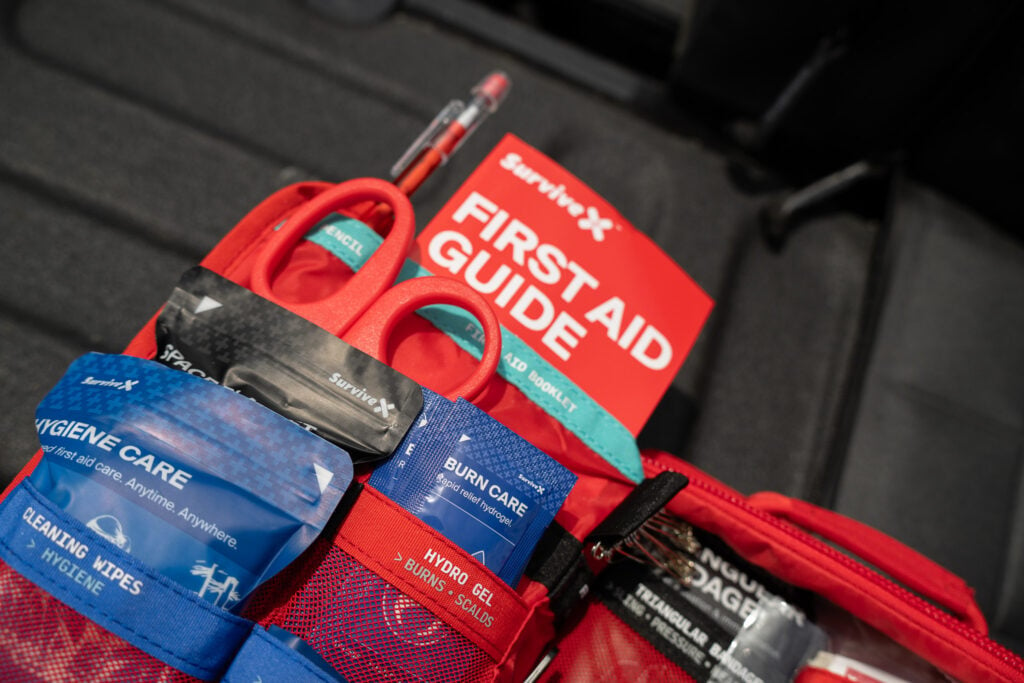
The SurviveX Large First Aid Kit is a first aid kit. It handles cuts, blisters, burns, sprains, headaches, and the dozens of minor problems that we do typically see on a range day. What it does not have is the gear that stops someone from bleeding out: no tourniquet, no hemostatic gauze, no chest seals. So if you’re searching for a gun range first aid kit expecting it to double as your “stop the bleed” setup, this isn’t that, but I’ll cover what to add so you’ve got that gap covered.
With that out of the way: I’ve been using this kit for a few months now, and as an all-around first aid kit it’s earned its spot in my range day loadout.
What Is the SurviveX Large First Aid Kit?
The SurviveX Large First Aid Kit is a 250-component first aid kit rated for 3 to 4 people, built into a 900D polyester bag with labeled, color-coded compartments. It runs $120.99 and covers cuts, burns, sprains, and minor injuries. It does not include a tourniquet, hemostatic gauze, or chest seals.
In other words, it’s the everyday-injury half of a range medical setup, not the bleeding-control half. That distinction drives this whole review, so it’s worth pinning down before we get into how it’s held up.
First Aid Kit vs. Trauma Kit: What a Range Kit Needs
A first aid kit treats minor, non-life-threatening injuries: cuts, burns, blisters, sprains, and headaches. A trauma kit stops major bleeding and manages life threats until EMS arrives, using a tourniquet, hemostatic gauze, a pressure or Israeli bandage, chest seals, and an airway. A complete range setup needs both. They do different jobs.
The SurviveX Large lands squarely in the first category. It ships with trauma shears and a splint, which blurs the line a little, but shears and a splint don’t stop arterial bleeding. If you only carry this kit and someone experiences serious trauma, you’re missing the tools that matter most in the first two minutes. That’s not a knock on SurviveX. It’s a category most “range kit” listings muddy, and it’s the reason I run a dedicated trauma kit alongside it.
How I Tested It: Matches, Media, and Travel
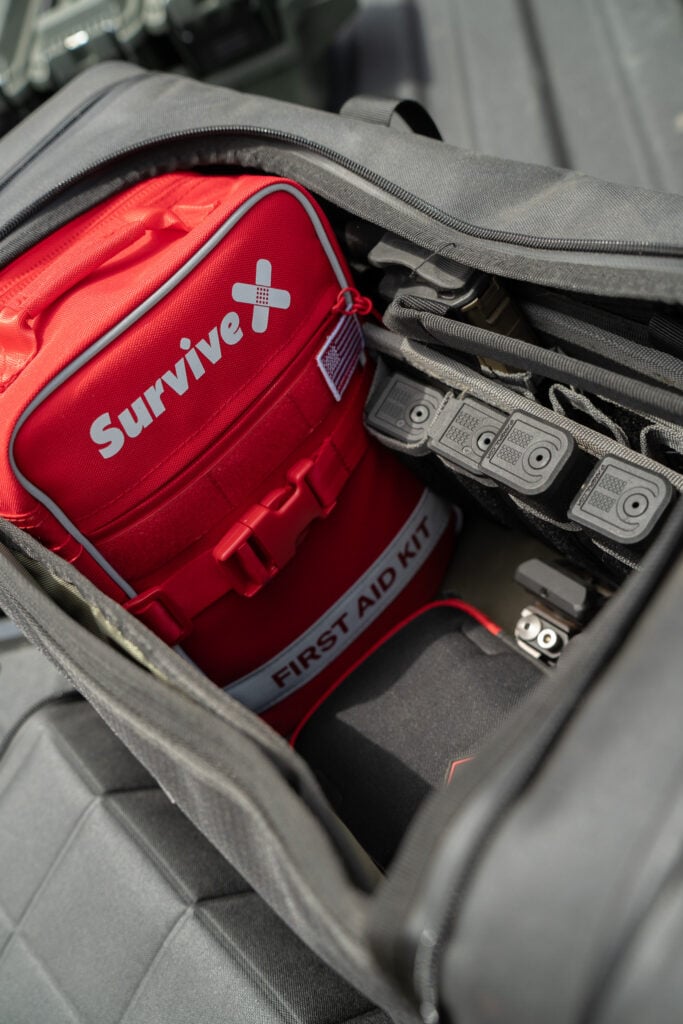
This kit has traveled with me when I cover events for media, when I run matches under Action Gunner, and when I compete as an individual. One reason it stays in rotation is that it packs into my checked luggage without hogging too much space, which is important when I’m traveling to matches across the country. It also compliments a dedicated trauma setup like the RTS Tactical Rapid Deploy IFAK or the RTS Tactical Rapid Deploy Complete Belt-Mount IFAK with CAT. First aid in one pouch, trauma in the other.
Across that stretch I’ve used it for three specific situations:
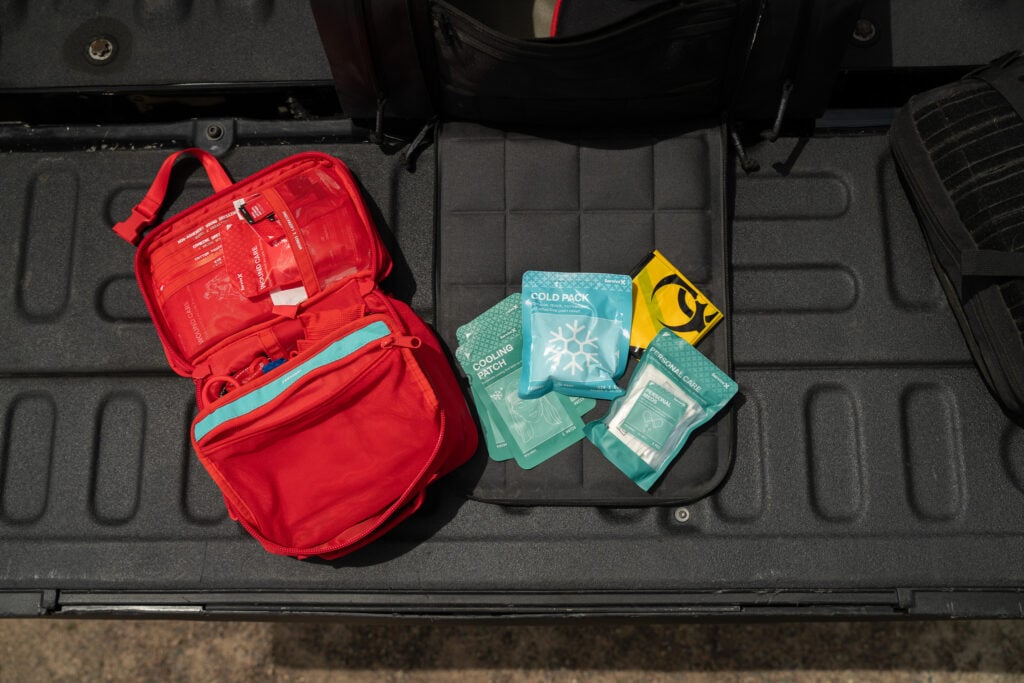
- A calf/muscle tear at Tactical Games Missouri (April 2026). A competitor went down with a calf tear. The instant cold pack plus the kit’s pressure bandage took the edge off the immediate symptoms and bought time while we sorted out next steps.
- A shotgun burn at a Wednesday night multigun we hosted. A shooter rolled a hot shotgun barrel into their hand while quad loading. The burn cream did its job and got them comfortable enough to finish the night out.
- Cuts and busted blisters. The adhesive bandages have come out more times than I can count for the everyday stuff.
That’s typically what I’d expect out of a dedicated first aid kit, and SurviveX handles it so far. If you want the full picture of what I bring to an event, it’s part of my broader competition gear checklist.
What Works
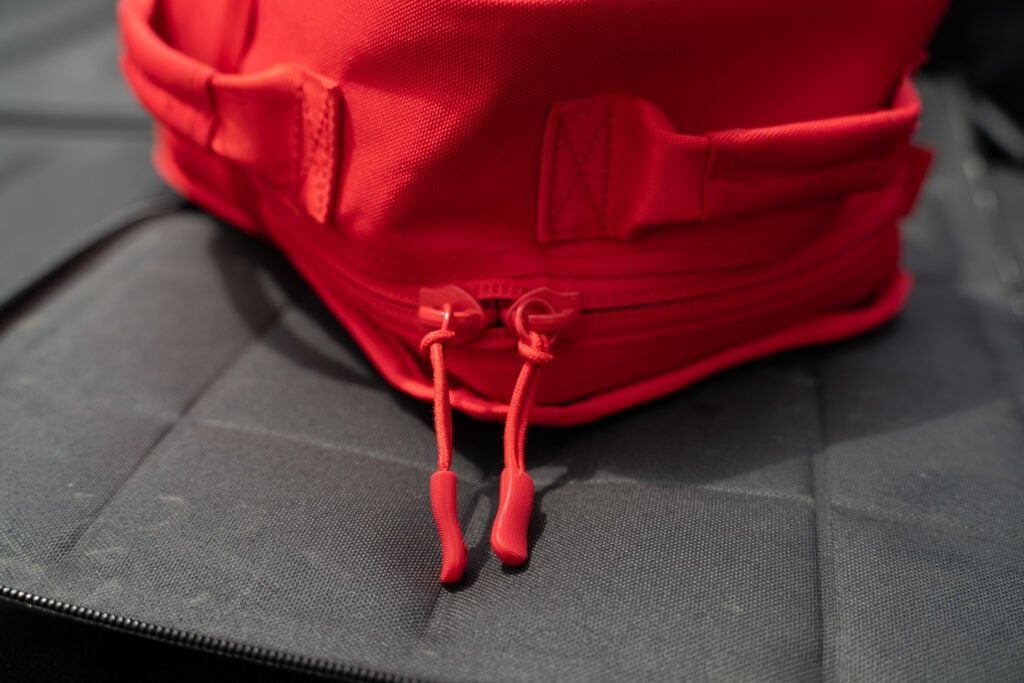
The bag is well built. The 900D shell feels solid, the zippers run smooth, and the MOLLE webbing and rip-away panel give you some mounting options. I like that the reflective text and the FIRST AID label sit right on the front. When it’s dark and someone needs the kit now, it’s easy to spot and easy to point a stranger to.
The organization is well-thought out. Every compartment is labeled, so I can find what I need fast, and just as importantly, I can put everything back in its spot after I use it. Kits that turn into a jumbled bag of loose supplies after the first use drive me up the wall. This one doesn’t.
It travels well for its size. At 2.78 lbs it’s not a pocket kit, but it still slides into checked luggage without becoming a problem.
The everyday consumables perform. The cold pack, pressure bandage, burn cream, and adhesive bandages have all earned their keep in real situations, which is the whole point.
Where It Falls Short
No kit is perfect, and a few things here are worth knowing before you buy.
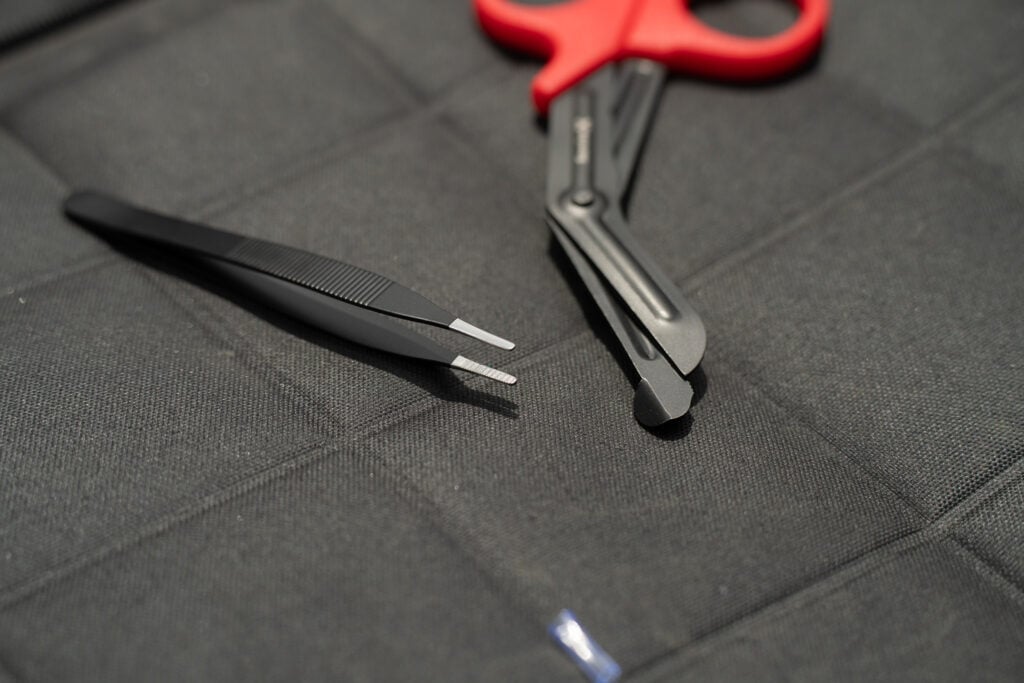
The tweezers are weak. They’re a cheaper metal with slightly rounded tips, and they struggle with the two jobs that matter most at a range: splinters and wood ticks. The included extraction pins work better, but you only get 10 and they’re single-use by design, so you’ll burn through them.
The personal meds pack is a fallback, not a solution. The dedicated personal medication packet is a nice touch when you’re in a pinch, but the included meds are limited. If you rely on ibuprofen or anything specific, plan to stock that pocket yourself, or add SurviveX’s Travel Medicine Kit ($29.99).
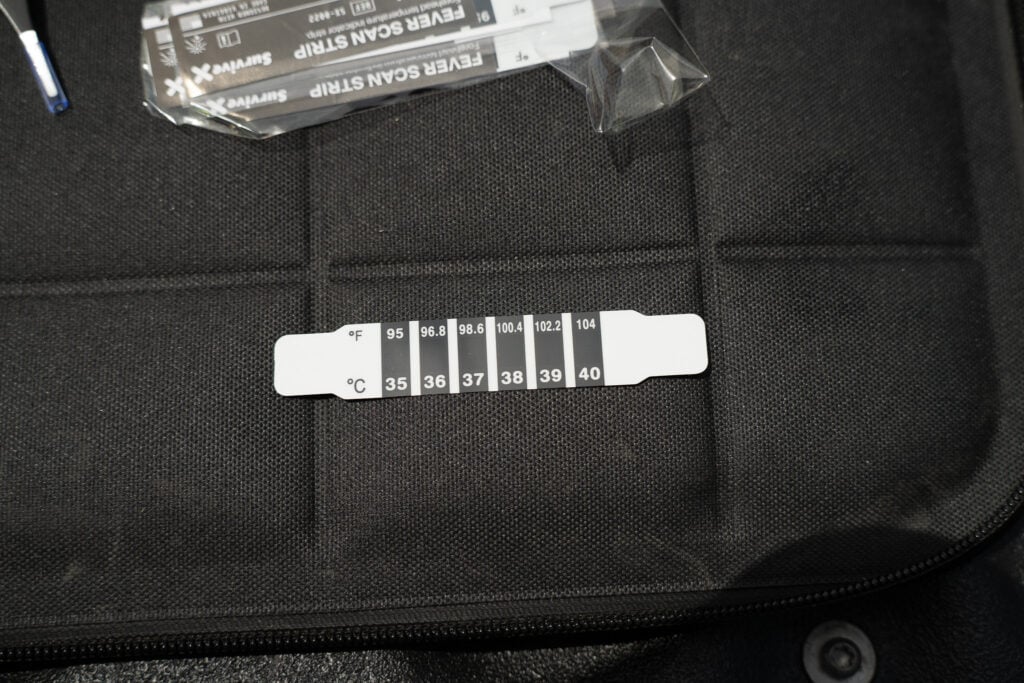
The fever strips are a rough indicator, not a diagnosis. The forehead temp strips are fine as a quick read when you don’t have an electronic thermometer, but if you’re trying to evaluate someone for heat exhaustion or heat stroke, verify with something more accurate before you make decisions.
Refills are partial. SurviveX offers refills for some supplies but not everything in the kit. I’ve had to source elsewhere for adhesive bandages, personal meds like ibuprofen, and cold packs. The good news is those are all common items with plenty of alternatives if you shop around.
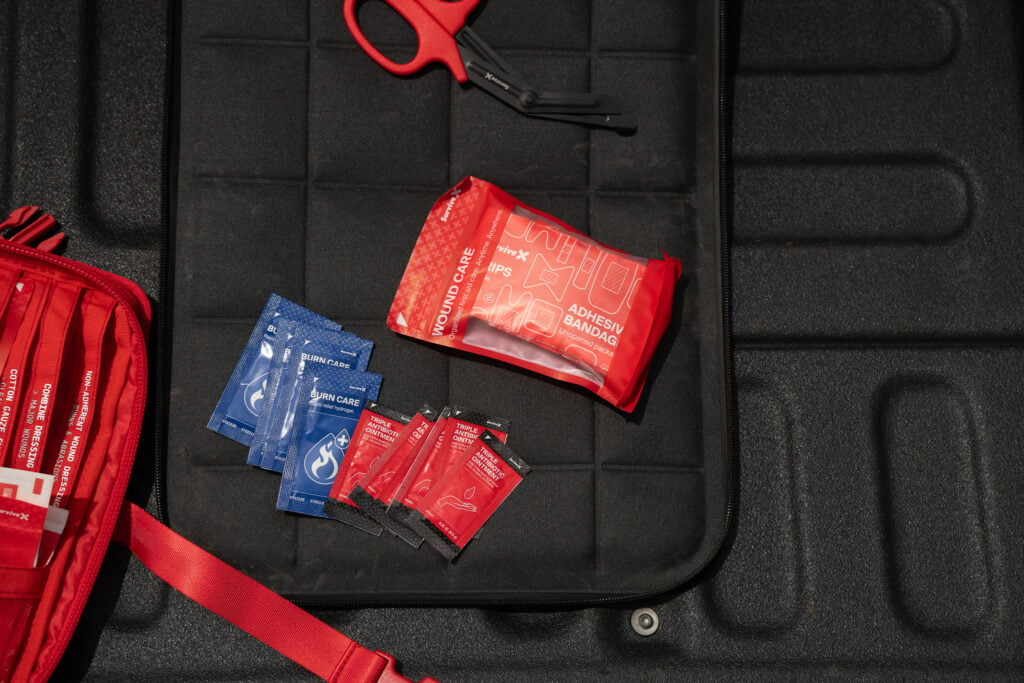
The component packaging reads a little budget. The look and feel reminds me of what I’m used to with MyMedic’s kits, just a notch lower on the polish, and the components are labeled “responsibly made in China” (the kit is designed in Virginia) for whatever that’s worth to you.
How Does the SurviveX Large Compare to the MyMedic MyFAK Large?
If you’ve shopped this category, you’ve probably landed on MyMedic. It’s my personal choice to date, I carry three MyFAK Large kits between truck, trailer, and squad kits for events. The SurviveX packaging and presentation sit in the same neighborhood, a step below MyMedic on finish but also well below it on price. Here’s the honest head-to-head.
| Feature | SurviveX Large | MyMedic MyFAK Large |
|---|---|---|
| Price | $120.99 | $269.95 (often on sale around $200) |
| Rated for | 3–4 people | 5–6 people |
| Component count | 250 (SurviveX’s count) | 200+ (MyMedic’s count) |
| Weight | 2.78 lbs | ~4–6 lbs |
| Tourniquet | Not included | Included (RATS) |
| Chest seals | Not included | Included (2-pack) |
| Bag | 900D, tri-fold, rip-away panel | Hypalon MOLLE, rip-away panel |
| Refills | Partial | Modular, sold by category |
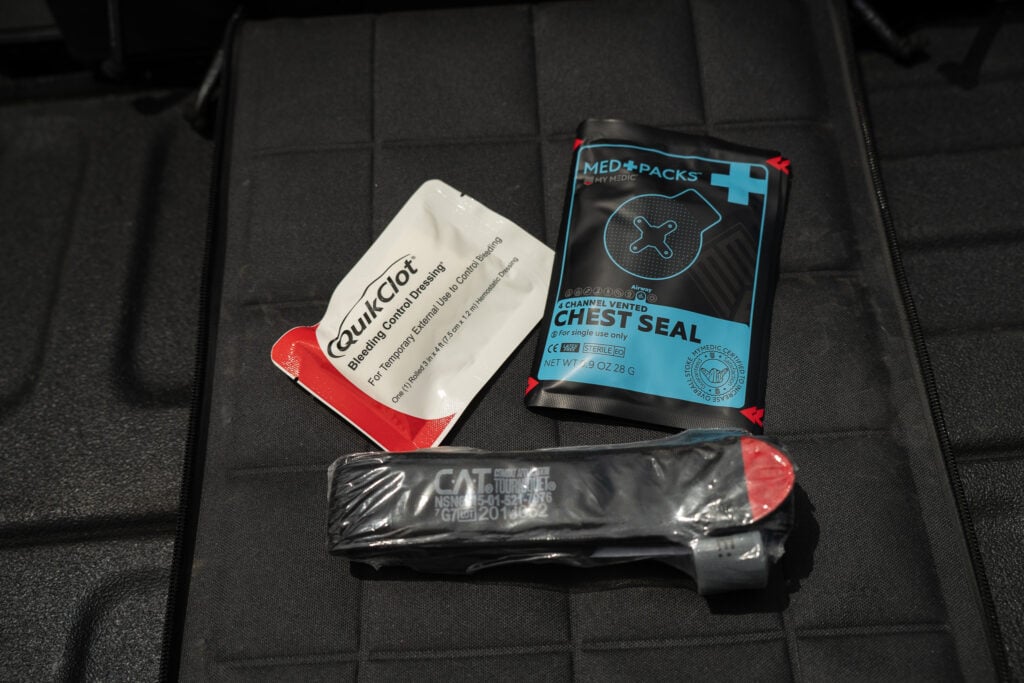
The biggest difference isn’t the finish, it’s the bleeding control. The MyFAK Large ships with a tourniquet and chest seals, so it straddles the first aid and trauma line in one bag. The SurviveX doesn’t, and it costs roughly half as much. That’s the trade. If you want one kit that does both jobs out of the box, the MyFAK is built for that and priced for it. If you already run a dedicated trauma kit, you’re paying MyMedic for bleeding-control gear you may be duplicating, and the SurviveX covers the first aid side for less.
Just keep the categories straight. Many of the “range kits” you’ll see advertised are trauma kits built for bleeding control. The SurviveX Large is the first aid half of the equation, not the trauma half, even with the trauma shears and splint it ships with.
The Complete Range Setup
Here’s how I’d run it. Pair this kit with trusted, quality trauma gear and you’ve got the range covered end to end:
- A tourniquet (a real CAT, like this one from North American Rescue, not a knockoff)
- Chest seals
- Israeli/pressure bandages
- Hemostatic gauze
- A nasopharyngeal airway kit
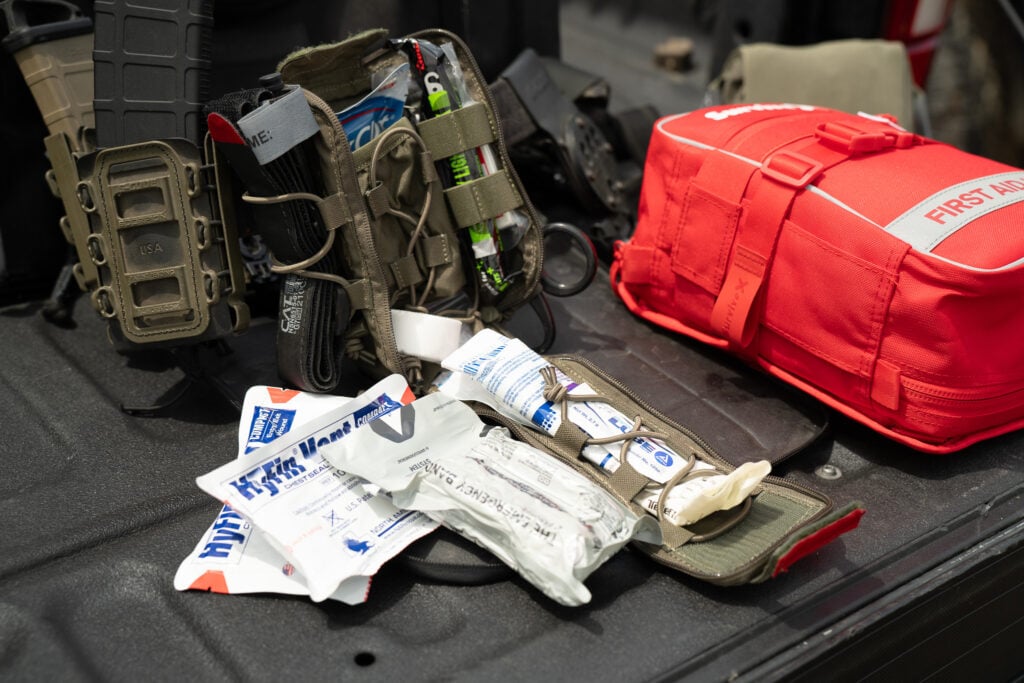
RTS Tactical Rapid Deploy Mini Belt-Mount IFAKRTS Tactical Rapid Deploy IFAK with CAT
That combination, first aid kit plus a proper IFAK, is what I’d want within arm’s reach at any match or training day. I personally carry the RTS Tactical Rapid Deploy Mini Belt-Mount IFAK – with CAT or RTS Tactical Rapid Deploy IFAK with CAT on my belt or in my range bag. If you don’t have formal training on the trauma side yet, get it. Gear without training is just weight in the bag. The national Stop the Bleed program is a solid place to start.
Who It’s For
- Competitors and range staff who want an organized first aid kit for the everyday stuff, and who already run (or plan to add) a separate trauma kit.
- Anyone who travels to matches and needs something that fits in checked luggage.
- People who want a solid all-around kit for the car and for everyday adventures, with enough supplies to cover a small group.
Who Should Skip It
- Anyone looking for a single kit that covers life-threatening bleeding. This isn’t a trauma kit, and no amount of bandages makes it one. If you want one bag that does both, look at the MyFAK Large instead.
- Shooters who need a deep, fully stocked medication supply out of the box.
- Anyone who wants every consumable to be refillable directly from the manufacturer.
- Anyone who needs a truly pocket-sized kit. At 2.78 lbs this is a bag, not a belt pouch.
Final Verdict
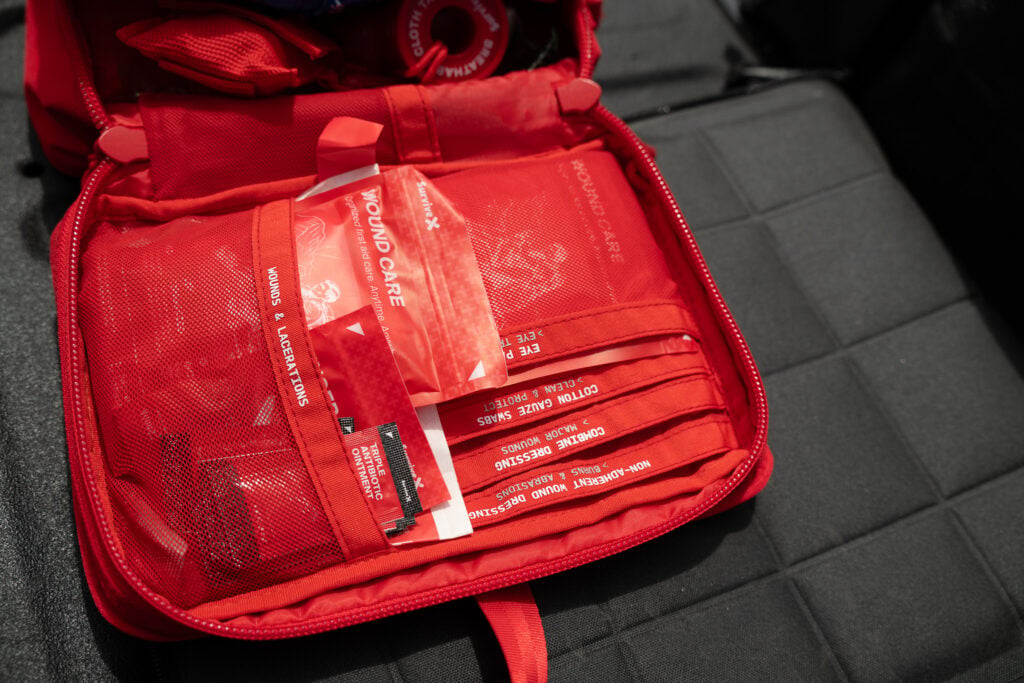
The SurviveX Large First Aid Kit is a well-built, well-organized first aid kit that’s handled real injuries at real matches for me: a torn calf, a shotgun burn, and a long list of cuts and blisters. The tweezers are weak, the meds are limited, and refills are only partial, but none of that is a dealbreaker for what this kit is meant to do.
Just buy it for what it is. Paired with chest seals, a tourniquet, Israeli bandages, hemostatic gauze, and a nasal airway, it rounds out a complete range setup. On its own, it’s a good all-around first aid kit to keep in the car and bring along on your adventures.
FAQ — SurviveX Large First Aid Kit
What should be in a range first aid kit?
Two layers. First aid (bandages, burn cream, cold packs, blister care, basic meds, tweezers) for the everyday stuff, and trauma gear (tourniquet, hemostatic gauze, pressure or Israeli bandage, chest seals, nasopharyngeal airway) for bleeding control. The SurviveX Large covers the first layer. You supply the second.
What’s the difference between a first aid kit and a trauma kit?
A first aid kit treats minor, non-life-threatening injuries. A trauma kit is built to stop major bleeding and manage life threats until EMS arrives. You want both at the range, because they do different jobs. The SurviveX Large is a first aid kit.
Is the SurviveX a good first aid kit for the shooting range?
As a general-purpose first aid kit, yes. It’s organized and handles the common injuries I see at matches. But it’s not a trauma kit, so pair it with a dedicated IFAK for full range coverage.
Does the SurviveX kit include a tourniquet?
No. It includes a pressure bandage but no tourniquet, hemostatic gauze, or chest seals. SurviveX sells a NAR CAT separately, and the bag’s MOLLE webbing lets you attach one externally.
How does it compare to the MyMedic MyFAK Large?
The MyFAK Large costs about twice as much ($269.95 vs $120.99) and includes a tourniquet and chest seals, so it covers bleeding control in one bag. The SurviveX is first aid only at half the price. If you already run a trauma kit, the SurviveX covers the first aid side for less.
How much does the SurviveX Large First Aid Kit cost?
It’s listed at $120.99 (typical price $139.99) and is FSA/HSA eligible, so you can buy it with pre-tax health dollars.