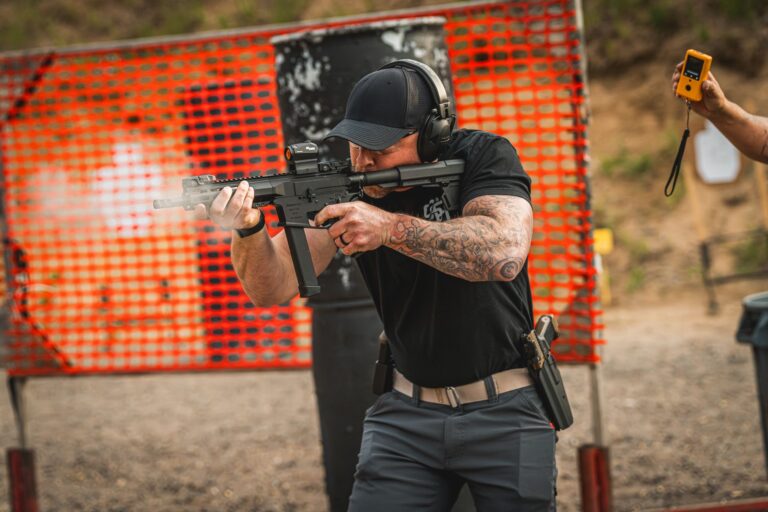
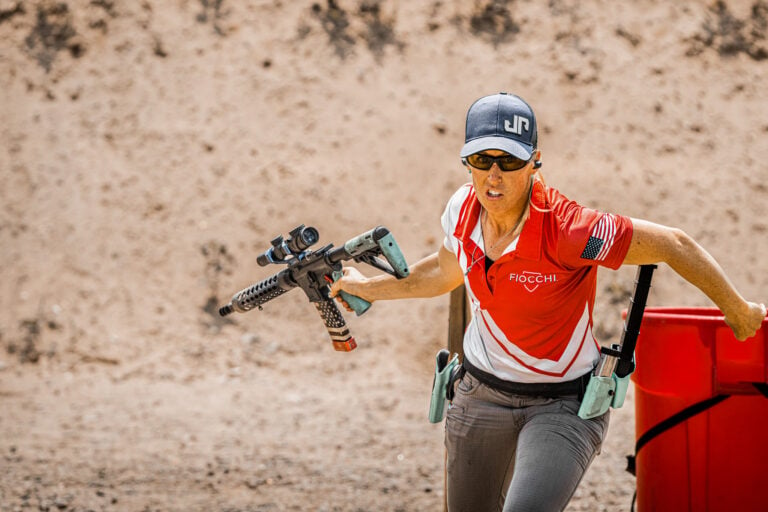
The Tactical Games is a thrilling and physically demanding competition that combines marksmanship with physical challenges. It offers participants a unique, challenging experience that tests their shooting skills, physical fitness, and mental resilience. This article provides an in-depth overview, including its origins, format, and key components.
Action Gunner produces the live broadcast for The Tactical Games, so this breakdown comes from inside the event. New and planning your first match? Start with our complete Tactical Games competition guide.
Origins of The Tactical Games
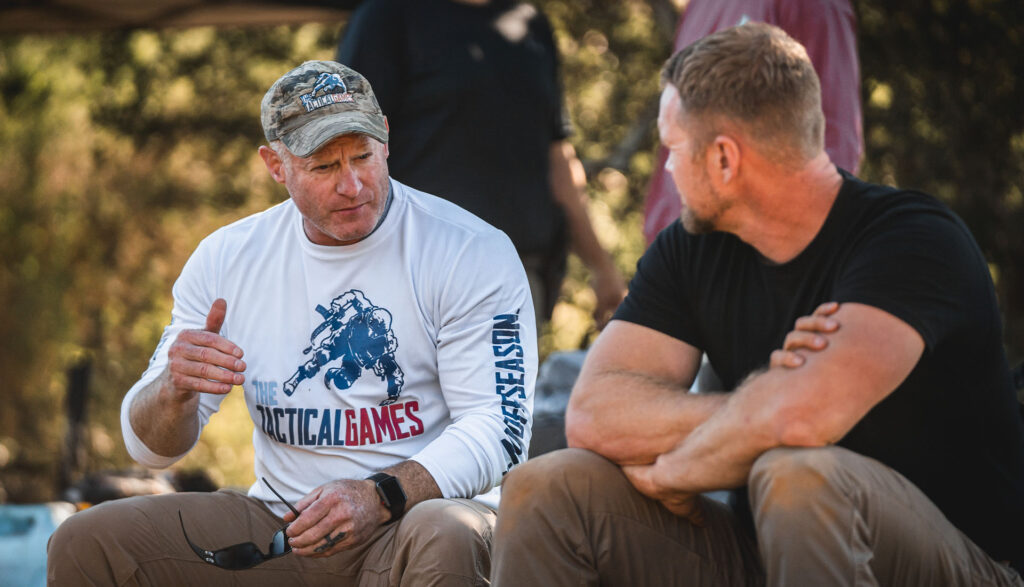
The Tactical Games was founded by Tim Burke in 2018. Derived from a highly secretive event hosted and run by NATO Tier 1 units, The Tactical Games was initially designed to test tactical athletes throughout the continuum of combat-related tasks, while under time constraints, and physical duress. Tim sought to create a competition that would mimic real-world scenarios faced by military and law enforcement personnel while also emphasizing the importance of physical fitness.
Since its inception, The Tactical Games has gained popularity and recognition within the shooting sports community. Tim’s vision was later handed off to business-minded competition shooter Jared Halbert, who then fine-tuned every facet of the competition to be able to sustain continued growth and equitable scoring mechanics. In 2023, The Tactical Games has again changed ownership to Nick Thayer, Jared’s previously designated VP who has taken the business and competition strategy to new heights.
Competition Format
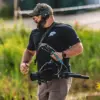
The Tactical Games is scored mostly on time, with penalties stacked on for missed shots. You move, you shoot, you keep moving — sled drags, sandbag carries, rope climbs, and runs broken up by rifle and pistol sequences, all in one continuous effort until you finish the work or hit the time cap. The shooting leans on bullseye-style fundamentals, not the speed-blasting you’d see at a USPSA stage. Published shooting standards have set a baseline pace around 4 seconds per rifle round and 3 seconds per pistol shot — which sounds generous until you’re trying to hold a steady sight picture after a 90-second max-effort interval.
A regional event runs Saturday and Sunday, eight stages total, four each day. The National Championship stretches to three days with more stages. Those eight stages usually break down like this:
- Four standard stages — the work-shoot-work-shoot grinders, 8–12 minutes each. You alternate fitness tasks and shooting sequences for a prescribed round count. This is where you find out whether your marksmanship survives a jacked-up heart rate.
- Two shooting-only stages — one is a published shooting standard (50 points) you can practice at home; the other is a 2-Gun-style action stage with steel, movers, and positional shooting. These open the biggest point gaps between competitors.
- Two fitness-only stages — one long movement in full kit (plate carrier, belt, rifle, pistol), anywhere from 1.5 to 4+ miles depending on the venue; the other a published fitness standard, usually around 90 seconds.
Standard stages are worth 100 points, published standards 50. Stages score either time-based (fastest athlete after penalties takes 100% of the points) or performance-based (most reps or best accuracy takes 100%). The takeaway: consistency across every format beats dominating one. You can’t out-fitness your misses, and you can’t out-shoot a gassed engine.
New to it? Our complete Tactical Games competition guide walks through event flow, gear, training, and cost in depth.
Key Components of The Tactical Games
The Tactical Games challenge competitors in various aspects including marksmanship, physical obstacles, loadout management, fitness, endurance, and time pressure:
- Marksmanship: Competitors will use their rifles and pistols to engage targets accurately while on the clock. A majority of these targets will be precise shots on paper at short to medium distances. Depending on the location and capabilities of the host range, expect to have a stage or two with rifle steel engagements out to 400 yards.
- Physical Obstacles: Competitors must navigate through physically demanding obstacles such as walls, sandbags, and barricades. These obstacles try to mimic the stimulus faced in tactical situations.
- Loadout Management: Each stage will have a prescribed magazine and round count. It is up to the competitor to carry and properly utilize the prescribed magazines during a stage or course of fire.
- Fitness and Endurance: The Tactical Games places a strong emphasis on physical fitness and metabolic conditioning. Competitors need strength, endurance, and agility to complete the course efficiently or under a time cap.
- Time Pressure: Time is a critical factor in The Tactical Games. Competitors must balance accuracy and speed to perform well in each stage.
- Individual and Team Categories: Participants can compete as individuals or in teams, allowing for a diverse range of competition options.
- Scoring: Scoring is based on a combination of shooting accuracy, completion time, and penalties. Participants must strive for both precision and speed to excel.
Divisions and Categories
The Tactical Games is built so a first-timer and a seasoned athlete can both get a fair, hard day. You compete against people in your own division, and the weights and stimulus scale accordingly.
- Elite — the top tier. Heavier implements, longer movements, and almost no margin for error. This is where you land if you’re chasing podiums, sponsorships, or a real run at Nationals. Most people here train specifically for the sport or come from high-level CrossFit or occupational backgrounds.
- Tactical — now the most common division and the middle ground between Intermediate and Elite. Originally built for active-duty military and law enforcement who could show up without sport-specific training. You need solid baseline fitness and shooting, but you don’t have to train full-time.
- Intermediate — the entry point. Scaled weights and a “disassemble rule” that lets you break down implements that are too heavy. A good fit for first-time competitors, shooters still building fitness, or gym regulars getting comfortable with firearms. Same required gear as everyone else. Be warned though: because the weights are much lighter, you’ll need a decent cardio engine built to keep up with the top contenders.
- Masters (40+, 50+, 60+) — age-based divisions that let you run full-weight stages against your peers. Men’s 40+ mirrors Tactical weights, 50+ mirrors Intermediate, 60+ scales slightly below. Women’s divisions follow a similar structure. Don’t mistake Masters for easy.
- Team — some events are built specifically for teams, but solo events also program for them. Men’s, Women’s, and Co-Ed options.
Quick self-check: Training 3–5 days a week and shooting regularly? Start in Tactical. Still building consistency in the gym or on the range? Intermediate. Over 40, training consistently, and still hungry? Look at Masters — just don’t walk in expecting it to be easier. For the official, full breakdown, see The Tactical Games divisions page.
Equipment and Gear
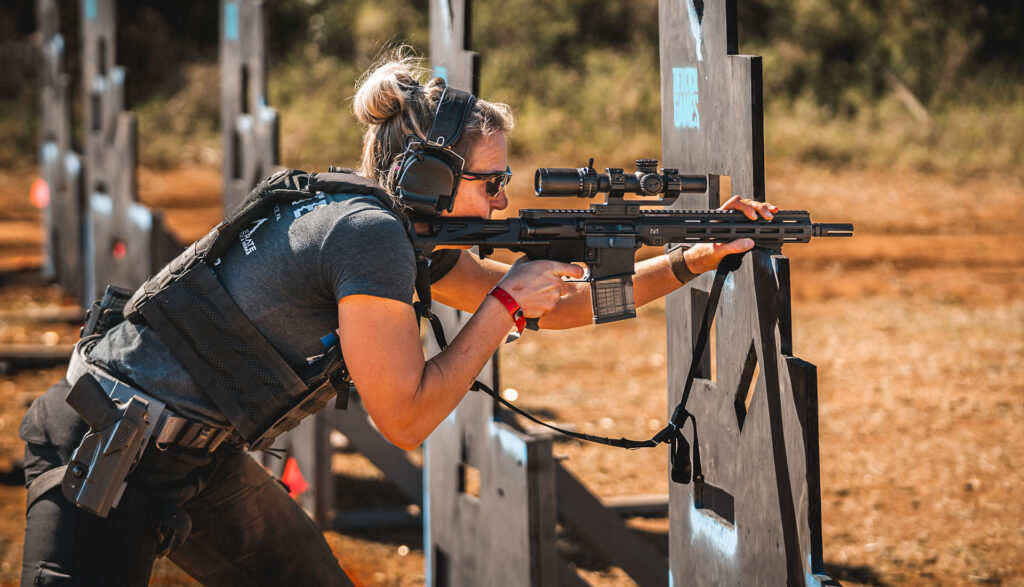
Competitors must come prepared with specific equipment and gear, which may include:
- Rifle & Pistol that follow current ruleset
- Ammunition (Regional Events are usually 250 rounds per)
- Sling for Rifle & Holster for Pistol
- Plate Carrier with 15lbs dry weight for men, 12lbs dry weight for Women
- Clothing & footwear suitable for vigorous movement in varying weather conditions
- Eye and ear protection.
We sat down with Austin Aylward for a complete run-down of his 2023 Season gear in this interview, it’s a great reference for the minimalistic approach you’ll find common across the Elite field.
Their ruleset is typically updated at the beginning of each calendar year. While this guide covers most of it, it’s a good idea to review the current revision to ensure you don’t run into any surprises when you go to compete.
Building your kit? See competitor-tested Tactical Games gear in our Pro Shop.
Frequently Asked Questions
What is The Tactical Games?
The Tactical Games is a competitive sport that pairs functional fitness with precision marksmanship under stress. You complete physical challenges — sled drags, sandbag carries, rope climbs, runs — then place accurate rifle and pistol shots while you’re smoked. Scoring is mostly time-based with penalties for misses, so fitness and shooting both decide where you finish.
Is The Tactical Games just “CrossFit with guns”?
No. The fitness is real and so is the shooting, but the format is its own sport. The shooting standards reward bullseye-style fundamentals, not run-and-gun speed, and you’re judged on placing accurate shots after hard physical work. It isn’t a tactical simulation either — it’s a sport built around repeatable, well-defined challenges.
How many stages are in a Tactical Games event?
A regional event runs two days with eight stages total — four standard work-shoot grinders, two shooting-only stages, and two fitness-only stages. The National Championship runs three days with additional stages. Single-day Skirmishes use the same format in a smaller package.
What divisions can I compete in?
Elite, Tactical, Intermediate, Masters (40+, 50+, 60+), and Team (Men’s, Women’s, Co-Ed). Most new competitors start in Intermediate or Tactical. Intermediate uses scaled weights and a disassemble rule, making it the friendliest entry point.
Do I need to be ex-military or a CrossFit athlete to compete?
No. Plenty of competitors come from regular gym backgrounds or the shooting world with no military experience. The Intermediate division scales the weights and stimulus specifically so newer athletes can finish stages and learn the sport safely.
What gear do I need for The Tactical Games?
At minimum: a rifle in .223/5.56 with an approved muzzle device, a reliable semi-auto pistol, a retention holster, a rifle sling, a plate carrier (15 lb men / 12 lb women, measured slick), 5 magazines per gun, around 250 rounds per platform, a rifle chamber flag, and mandatory eye and ear protection. You don’t need race gear to start — see our Tactical Games gear in the Pro Shop and the full gear breakdown in our guide.
How much does it cost to compete?
Regional registration runs around $400 for both days, scoring, and the event shirt. If you’re traveling and flying, budget closer to $2,000 for the weekend once you add flights, lodging, ammo, and food. Single-day Skirmishes cost less and are the cheapest way to try the sport.
How do I find my first event?
Start with the official Tactical Games schedule for sanctioned regional events, or look for a single-day Skirmish near you — they’re more accessible and run the same format. Not ready to compete? Spectating or volunteering at an event is the fastest way to learn how it all works.
Conclusion
The Tactical Games is a demanding and exhilarating competition that attracts participants from various backgrounds, including military, law enforcement, and civilian enthusiasts. It challenges both shooting skills and physical fitness while promoting a spirit of camaraderie among competitors. If you’re looking for a unique and challenging experience that combines marksmanship and athleticism, The Tactical Games might be the perfect event for you. Be sure to check their official website for upcoming events and registration details.