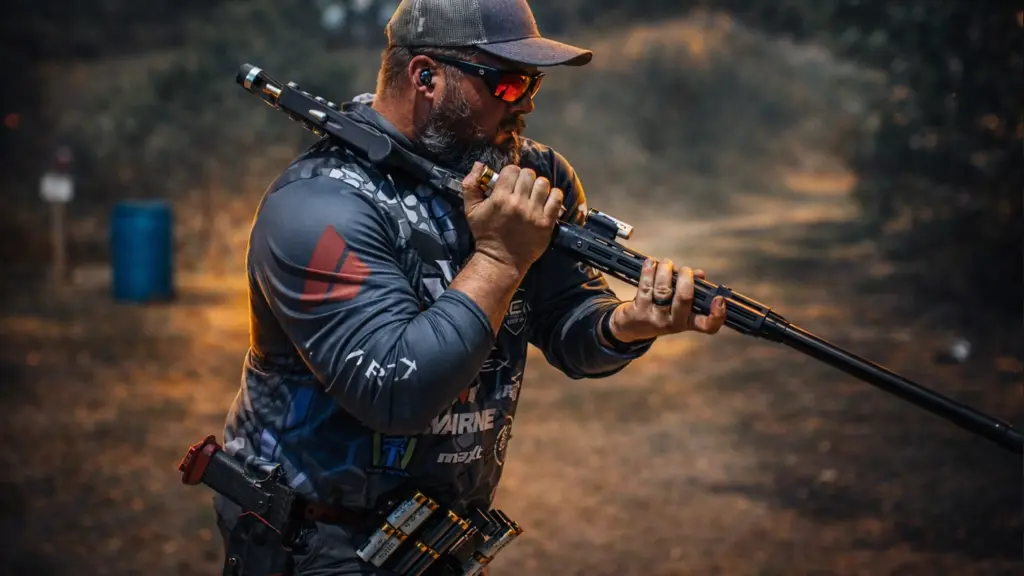
Shotgun ammo selection in 3-gun comes down to two things: will it cycle your gun, and does it meet match requirements. Everything else is optimization.
This guide covers the technical fundamentals, explains how different ammunition choices affect semi-auto reliability, and recommends specific loads for different applications.
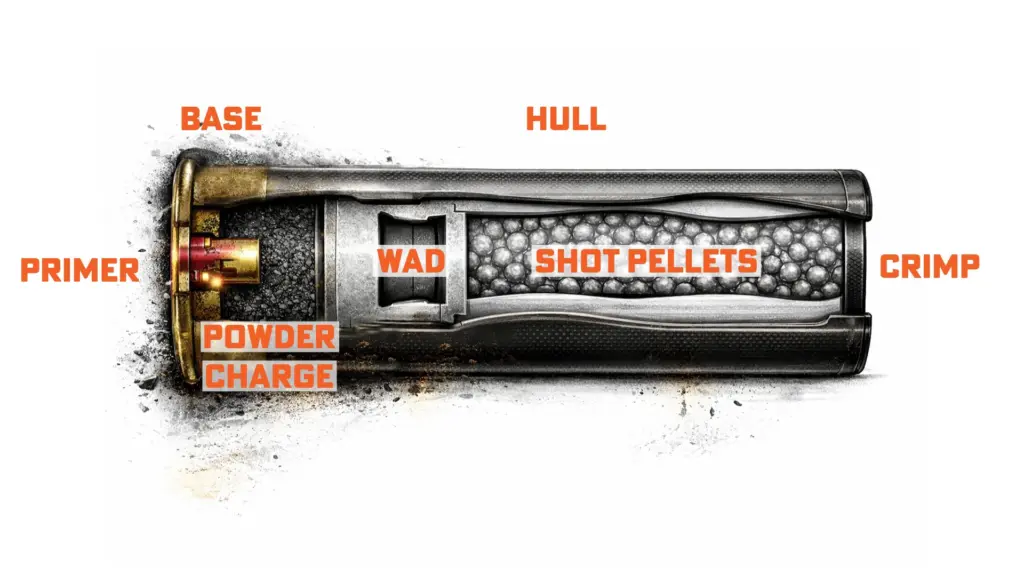
A shotgun shell consists of five parts:
Hull — The plastic body. Hull shape and rigidity affect feeding reliability, particularly in magazine-fed shotguns.
Primer — Initiates ignition when struck by the firing pin.
Powder charge — Creates gas pressure to propel the shot. Amount and burn rate affect velocity and cycling energy.
Wad — Plastic cup separating powder from shot. Creates a barrel seal and cushions pellets during acceleration.
Shot — Lead pellets. Size and weight determine pattern density and terminal effect.
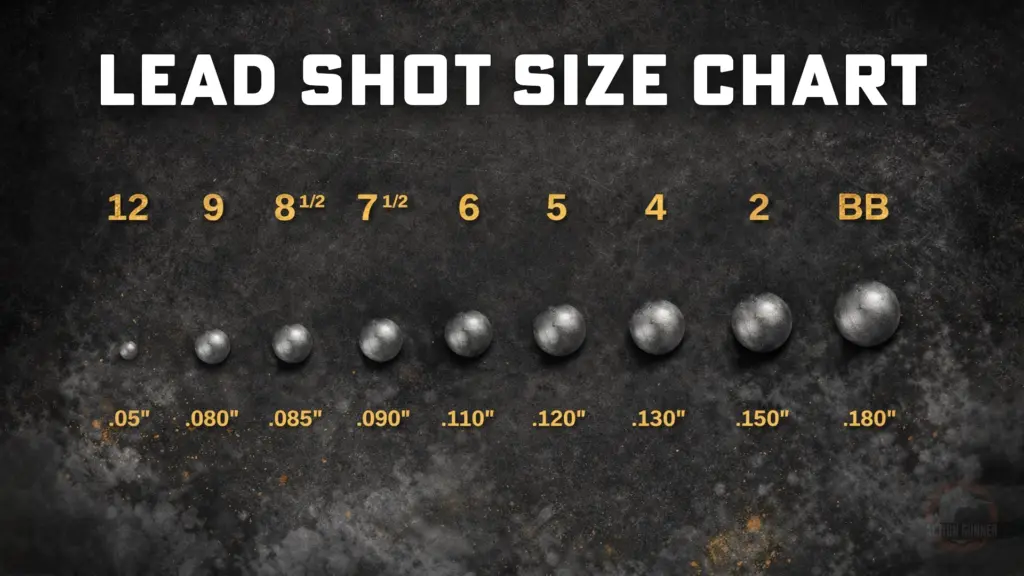
Shot size uses an inverse numbering system: smaller numbers indicate larger pellets.
#8 — Highest pellet count per ounce. Dense patterns, lower individual pellet energy. Effective on clays and close steel.
#7.5 — Standard for most 3-gun competitors. Balances pellet count with energy retention at distance.
#6 — Largest size most matches allow. Fewer pellets but better energy at range. Useful for distant steel and heavy spinners.
Most rulesets prohibit shot larger than #6 to prevent competitors from running hot #5 loads to defeat spinners in one hit.
Practical application: #7.5 or #8 handles standard presentations. Keep #6 available for stages with long-range steel or stubborn targets.
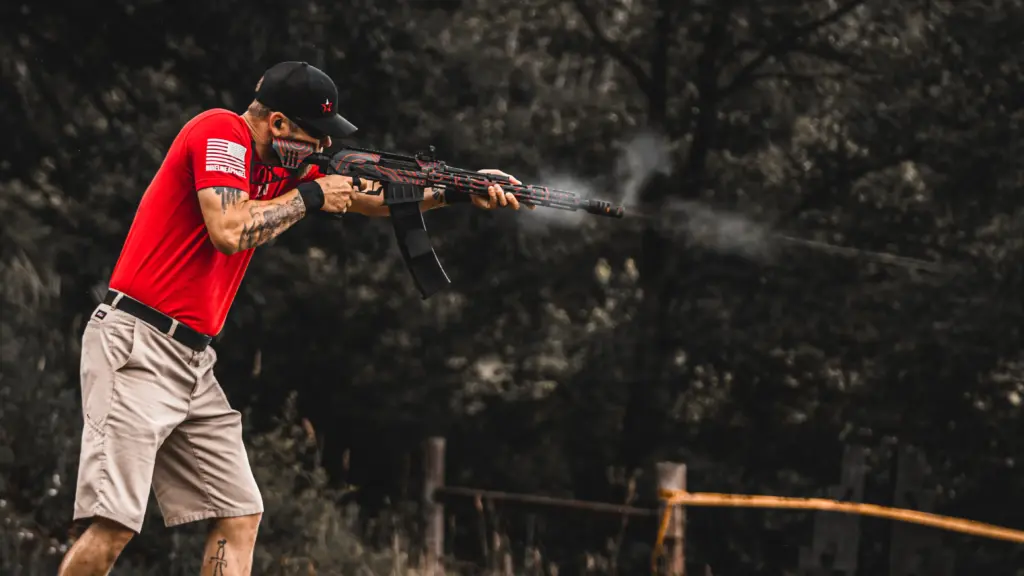
Muzzle velocity affects energy on target, trajectory, and—critically for semi-autos—cycling reliability.
1145 fps — Light target loads. May short-stroke some semi-autos.
1200 fps — Minimum threshold for most inertia-driven guns with proper break-in.
1235-1250 fps — Reliable cycling with moderate recoil. Common choice for competition.
1290+ fps — Maximum knockdown. Higher recoil, potential rule issues at some venues.
Inertia-driven shotguns (Benelli M2, Stoeger M3K) require sufficient rearward momentum to cycle the action. Loads below 1200 fps with 1⅛ oz shot may not generate enough energy, especially in cold weather or with a dirty gun.
DRAM equivalent is a holdover from black powder days. One dram equals 1/16 ounce. When smokeless powder replaced black powder, manufacturers created “dram equivalent” to communicate relative power levels—not actual powder weight, but comparable performance to a given black powder charge.
Practical translation:
Many manufacturers now print velocity instead of dram equivalent. Velocity is more useful information anyway.
1 oz — Less recoil, fewer pellets. Adequate for close targets, may leave pattern gaps at distance.
1⅛ oz — Competition standard. Approximately 50 more #7.5 pellets than 1 oz loads.
1¼ oz — Heavy charges for maximum effect on stubborn targets. Noticeably more recoil.
The 1⅛ oz load provides denser patterns without excessive recoil. Most competitors consider this the baseline.
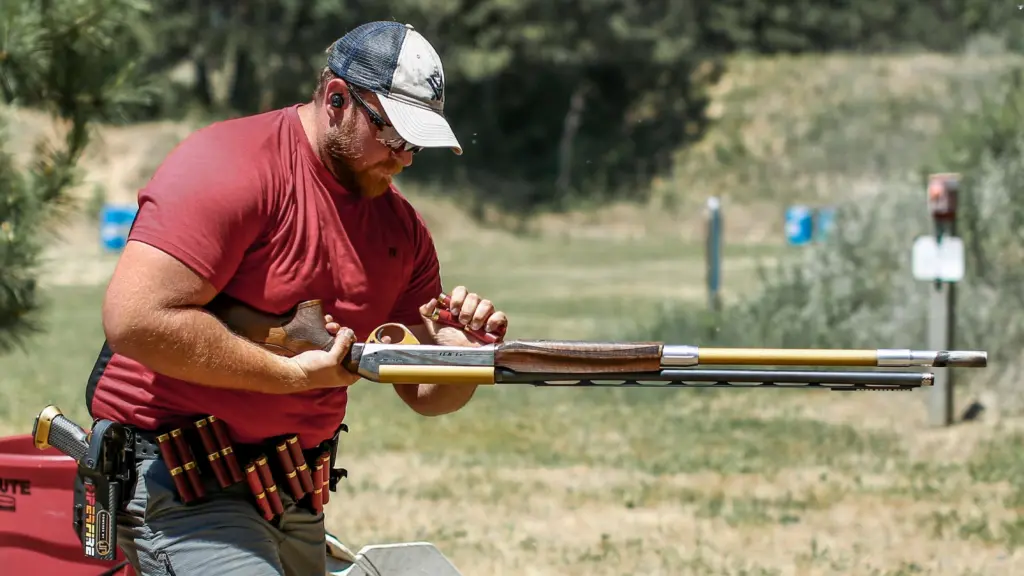
Inertia systems use bolt mass and spring tension to delay action opening until chamber pressure drops. The gun’s rearward movement during recoil overcomes bolt inertia and compresses the return spring.
Ammunition requirement: Sufficient momentum to cycle the action. Benelli specifies 1⅛ oz at 3 dram equivalent (≈1200 fps) minimum. Running 1235-1250 fps provides margin for reliability.
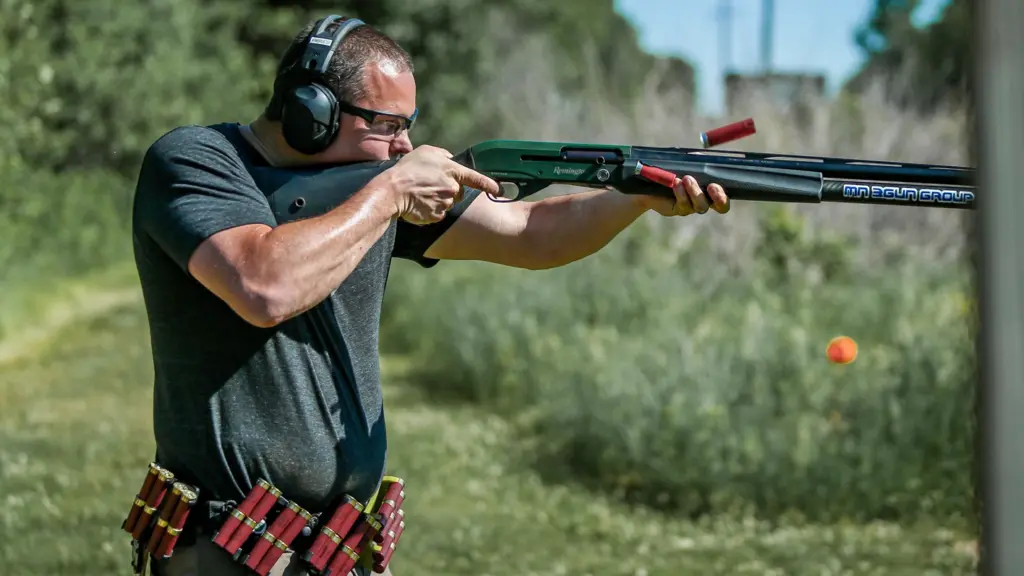
Gas systems bleed propellant gas through barrel ports to drive the bolt rearward. These systems tolerate wider ammunition variety and typically produce softer felt recoil.
Ammunition requirement: Less critical than inertia guns. Most gas shotguns cycle lighter loads reliably. Trade-off is increased maintenance due to carbon buildup in the gas system.
Manual cycling eliminates ammunition sensitivity. Any load that chambers and fires will function, but you’ll certainly feel higher velocity and heavier shot.
Hand-loading shells individually makes tube guns forgiving of hull profile variations. Primary considerations:

Detachable magazine geometry demands precise shell dimensions. Magazine spring tension against stacked shells promotes hull deformation and causes feeding failures.
Before Federal Action Shotgun ammunition, competitors would store loaded magazines in coolers to prevent hull warping in heat. Even minor deformation compromises feeding reliability.
Requirements:
Premium ammunition with roll crimps (Federal Action Shotgun) significantly improves reliability for magazine-fed guns.
Standard 3-gun ammunition rules:
Check match announcements for local variations.
Federal Action Shotgun: Purpose-built for 3-gun. Roll crimp maintains hull rigidity under temperature changes and magazine pressure. Plated steel head ensures reliable extraction. 1⅛ oz #7.5 at 1235 fps. Comes in 200 round bulk packaging.
Federal Top Gun: Great performer, reliable and sturdy hulls. Most competitors choose this or Winchester AA’s.
Winchester AA Super Handicap: My all-time favorite. Smooth hulls speed quad loading. 1⅛ oz at 1250 fps. Lower cost than Federal Action Shotgun with proven reliability in tube-fed guns.
Fiocchi 3-Gun Match: Developed with Jerry Miculek and is widely seen in use at major matches.
Budget loads that cycle reliably:
Note: Bulk ammunition may have occasional extraction issues. I’ve experienced stuck hulls with Walmart purchased Federal target loads in an 870. The aluminum base expanded and required forceful extraction, sometimes the extractor just rips through the base and you end up with a stuck hull. The same ammunition runs fine in my Benelli M2’s. Know your gun’s tolerances.
Distant steel/spinners: #6 shot at 1290+ fps. Larger pellets retain energy better at range – but you need to pattern and test your loads. I recommend just becoming proficient with your normal match load.
Falling Steel & Clays: #7.5 or #8. Pattern density and pellet energy is more than sufficient for most targets you will encounter.
Slugs: Low-recoil rifled slugs (Federal Tactical, Fiocchi Low Recoil). Zero your gun with the specific slug you’ll use in competition. Double check your zero across the chokes you use most commonly, it shifts.
Pattern your loads. Barrel, choke, and ammunition combinations produce different results. Verify point of impact and pattern density at match distances (15-25 yards).
Buy in quantity. Once you identify ammunition that runs reliably, stock enough for the season. Availability and pricing fluctuate.
Don’t change ammunition on match day. Even quality loads may perform differently in your specific gun. Use what you’ve collected data on.
Store properly. Heat degrades hulls and powder. Magazine-fed competitors sometimes store shells in coolers during hot matches to prevent hull deformation.
| Specification | Recommended | Notes |
|---|---|---|
| Shot Size | #7.5 or #8 standard, #6 for distance or heavy targets | Check match rules |
| Shot Weight | 1⅛ oz | 1 oz acceptable for some applications |
| Velocity | 1200-1250 fps | 1200 fps minimum for most semi-autos |
| DRAM Equivalent | 3 to 3¼ | Higher = more velocity/recoil |
| Hull Type | Roll crimp for mag-fed | Personal preference for tube guns |