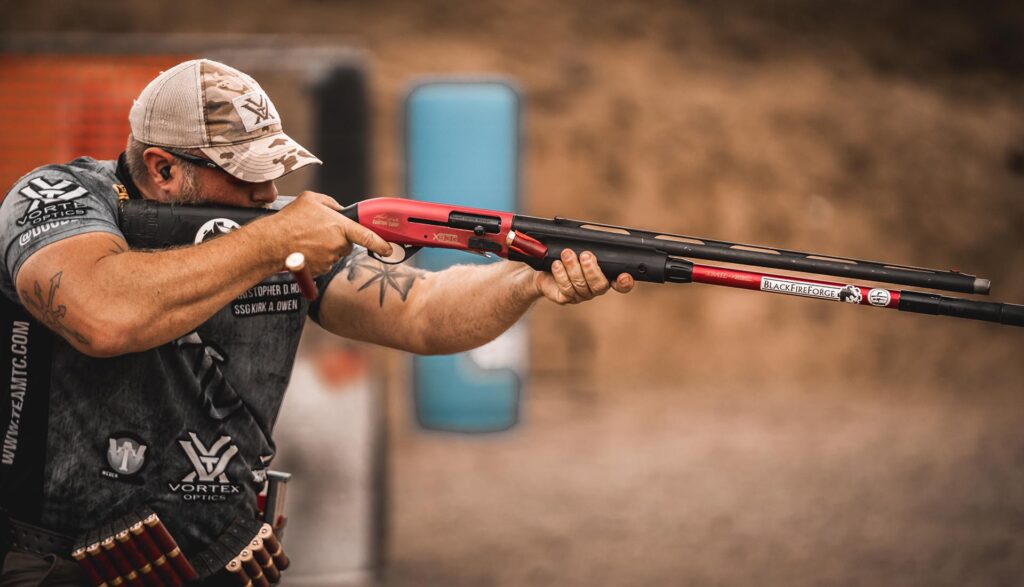
Quick Answer: What Are the Best 3-Gun Shotgun Mods?
The six modifications that make the biggest difference in 3-Gun competition, in priority order:
- Extended Magazine Tube – Adds capacity to 12-13 rounds for most divisions
- Enlarged Loading Port – Enables quad loading for faster reloads
- Modified or Extended Shell Lifter – Prevents thumb injuries and speeds up reloads
- Extended Bolt Release – Faster recovery when you run dry
- Extended Charging Handle – Easier manipulation under time pressure
- Adjustable Rear Sight – Improves slug accuracy at distance
If you can only afford one modification, start with the extended magazine tube. If you can afford two, add the loading port work.
Why Modify Your 3-Gun Shotgun?
In 3-Gun, your shotgun can make or break your match. Not only is it important to select a reliable platform, you need to make sure it’s well-equipped for capacity and ease of loading as well as fast and accurate target engagements.
Picking up a 3-Gun-ready-shotgun like the Benelli M2 3-Gun Performance Shop, Mossberg 940 JM PRO, or Dissident Arms DAm2 Elite would be ideal, but not always in the budget for most competitors just starting out.
I personally started with a used Benelli M2 Field for my first 3-Gun shotgun and modified it over time to suit the sport before eventually dropping money on a true race gun. This article will help guide you to do the same.
This guide covers the modifications that made the biggest difference, ranked from most critical to nice-to-have. Whether you’re running a Benelli, Mossberg 930, Stoeger M3K, Beretta 1301, or something else entirely, these same principles apply.
1. Extended Magazine Tube
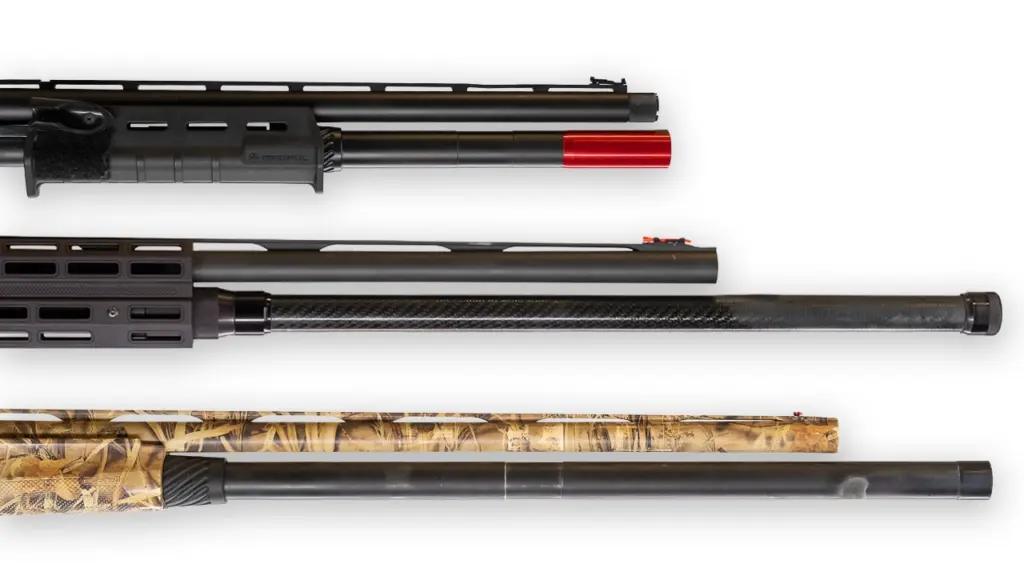
An extended magazine tube is arguably the most crucial modification you can make to your shotgun, you want to match the specifications for your chosen division here so you’re not left throwing extra quad loads in on the clock when you should be moving or shooting.
What Capacity Do You Need?
For Modified and Tactical divisions, you want 12-13 round total capacity (tube plus chamber). This covers the majority of shotgun-heavy stages, allowing you to get creative with your reloads. If you’re shooting Limited or Heavy Metal division, check your specific rules—some may actually cap magazine length relative to barrel length (versus just plugging a 12 round tube to max out at 8).
Recommended Options
- Nordic Components ($80-150): The most common choice. Reliable, well-made, available for most platforms.
- Briley ($100-180): Solid alternative, especially for Beretta and Benelli.
- MOA Precision ($90-130): Popular for Stoeger M3K builds.
- Taccom ($30-$120): Some of the more “stout” tubes I’ve played with.
Installation Notes
After installing your extension, trim your magazine spring so it extends 14-16 inches past the end of the tube when uncompressed (if needed, I rarely trim the spring on my +12 tubes). Too long and you could have loading issues. Too short and shells won’t feed reliably under recoil. When in doubt, leave it long – I’ve seen plenty of competitors struggle with feeding issues on the clock because their spring was too short.
2. Enlarged Loading Port
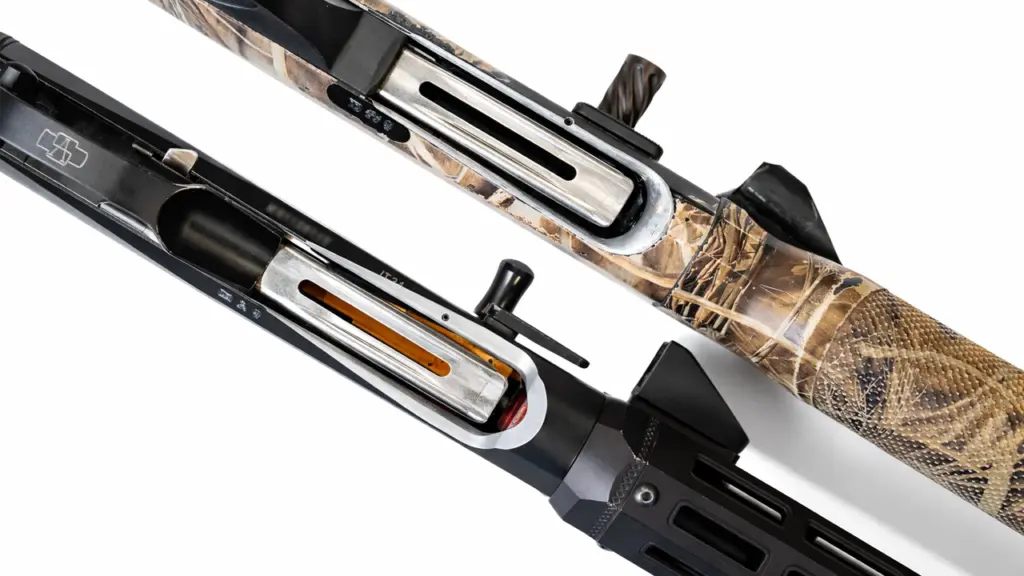
Reloading speed will make or break your performance. An enlarged and beveled loading port makes feeding shells into your shotgun easier, and usually faster (at the very least, more consistent). You can either attempt to DIY, but I strongly recommend leveraging any of the reputable shops out there that will cut a loading port for you at a reasonable cost.
Expect to pay $150-300 for professional loading port work. Shops like Dissident Arms, Triangle Shooting Sports, and MOA Precision all offer this service.
Strong Hand vs. Weak Hand Loading
Before you get the work done, figure out whether you’re going to load strong hand or weak hand. The port cuts can be slightly different depending on your preferred loading technique. Watch videos of both methods, try them with dummy rounds, and commit to one before sending your gun out.
Optional Upgrade: Enhanced Trigger Guard
The A&S Engineering Enhanced Trigger Guard ($220-$240) adds a ramp with rails to the trigger guard that further guides shells into the tube. This is a nice-to-have addition once your port work is done, but isn’t required.
3. Modified (Welded) or Extended Shell Lifter
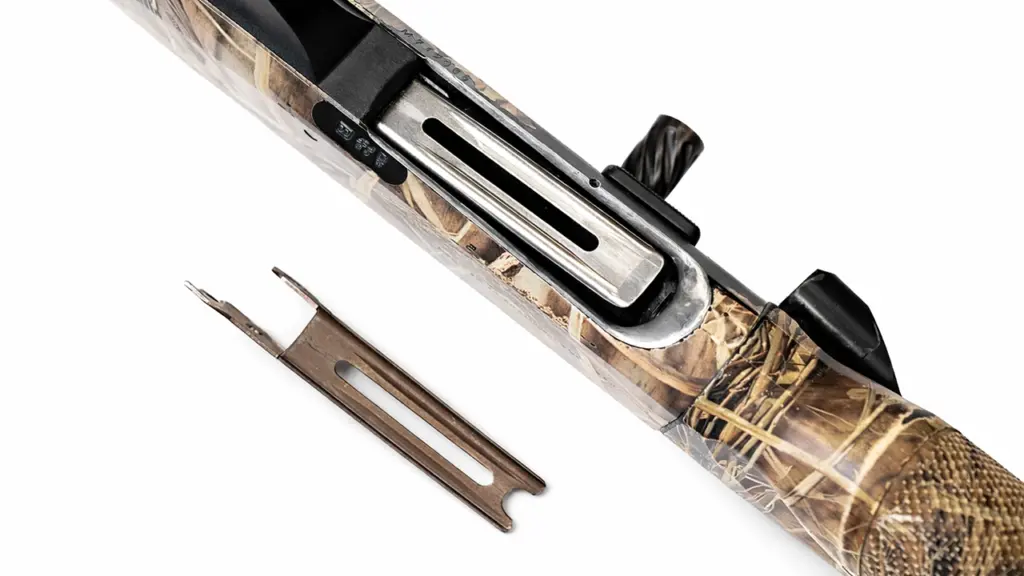
Depending on your model of shotgun, this may not apply to you – but if you have a factory lifter with forked prongs at the end, it’s best to either get it welded or replace with the Taran Tactical Innovations version to make loading even easier. It also helps prevent injury, as getting your thumb stuck in the load port between the lifter tends to result in some deep cuts and a lot of blood.
Solutions
- Welded Lifter ($75-$150 at a gunsmith) – Send in you current lifter, the fork is welded closed and smoothed.
- Taran Tactical Innovations Lifter ($80) – Drop-in replacement with a smooth, continuous surface. Great option if you’re running a Benelli.
4. Extended Bolt Release
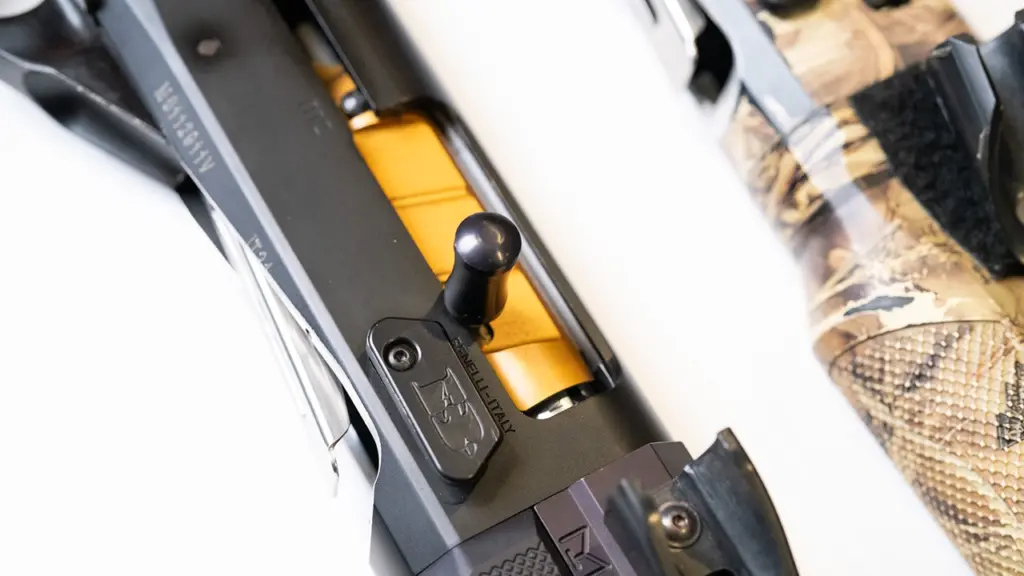
Let’s be honest here, running a shotgun dry happens more than one would care to admit. An oversized or extended bolt release allows for faster, more reliable manipulation of your shotgun’s action when you’ve inadvertently made that dreaded mistake. Just drop a shell in, send the bolt home & proceed with a quad load to get back to work.
Why It Matters
Factory bolt releases are small, often recessed, and require precise finger placement to activate. Under match stress with sweaty hands and an elevated heart rate, that small button becomes harder to hit. An oversized release gives you a bigger target and can often be activated with your palm or the side of your hand.
Recommended Options
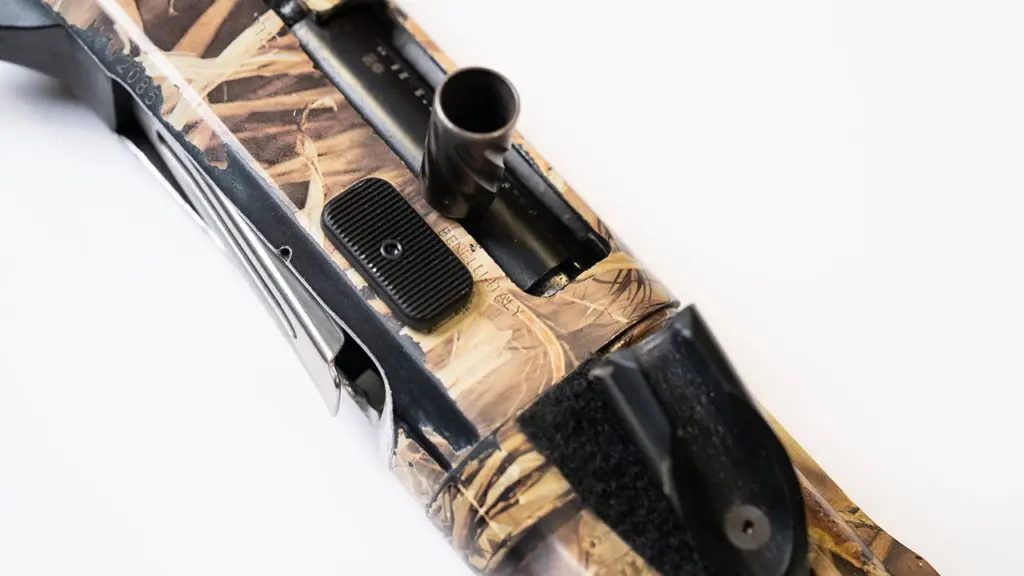
- Nordic Components Speed Button ($25-35) – Affordable, reliable, fits most platforms (if you can find it). I ran this for a season before switching over to the GG&G.
- GG&G Shell Catch/Bolt Release Combo ($150) – Combines the bolt release with an improved shell catch. More expensive but addresses two issues at once, I’ve also found the rectangular pad to be preferred over a “button”.
- Briley EZ bolt release lever kit
5. Enhanced Charging Handle
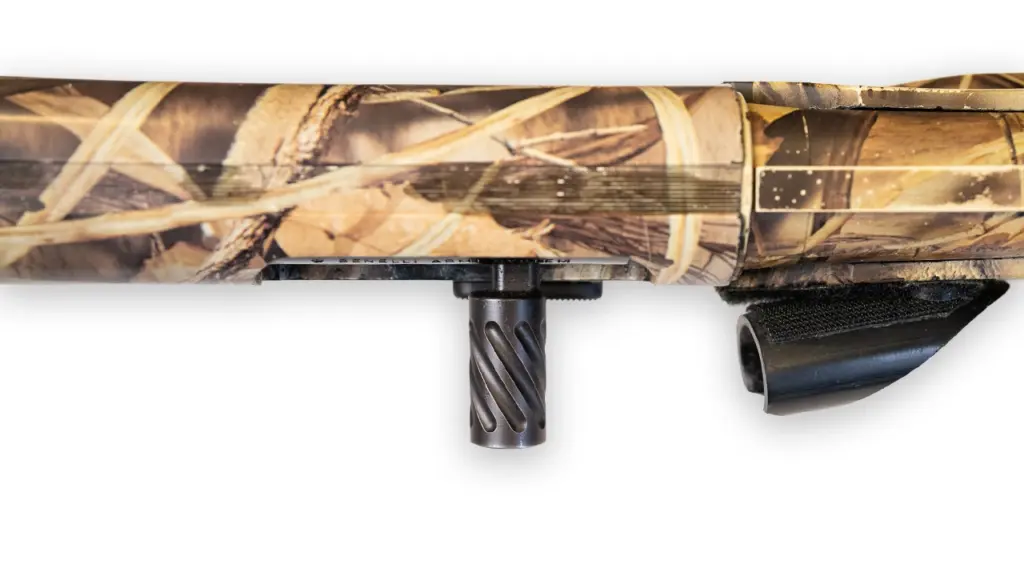
Similar to the Extended bolt release, an extended charging handle gives you better control over your shotgun’s action, especially when you need to rack a shell out or have a stage with an empty chamber start (rare, but you don’t want the lack of a proper handle slowing you down).
What to Look For
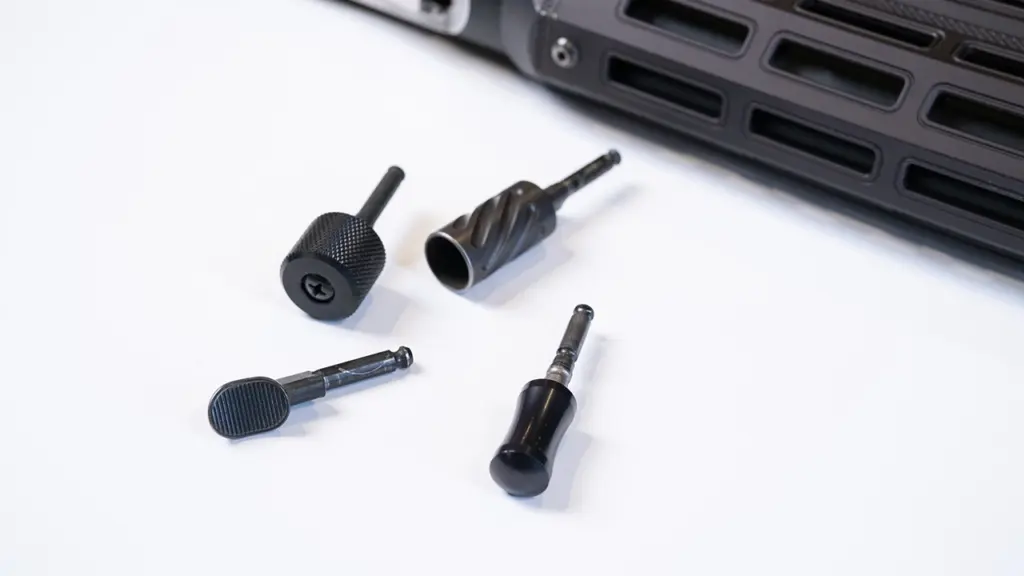
You want something with enough surface area to grip quickly, but not so large that it catches on your gear during movement. Most aftermarket handles strike a reasonable balance, but test yours by running through positions before a match.
Installation Consideration
Make sure the handle doesn’t affect your gun’s cycling. Some oversized handles can add enough mass to change the bolt’s timing. If you notice cycling issues after installation, contact the manufacturer.
6. Adjustable Rear Sight
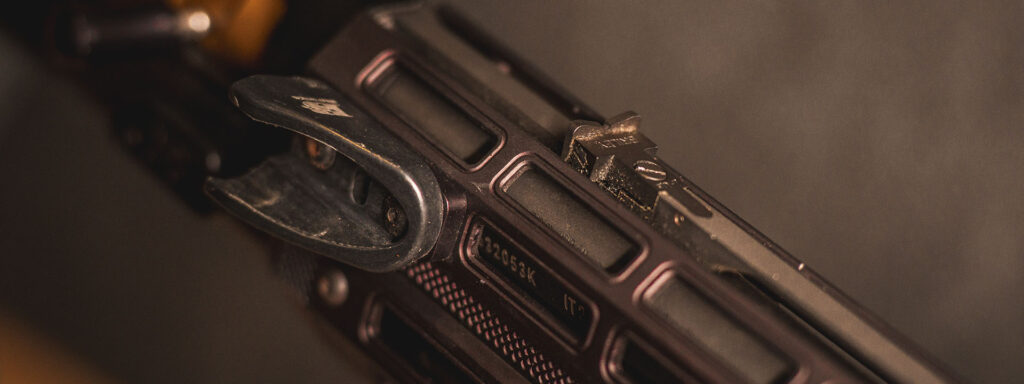
While many shooters prefer a bead sight for birdshot for fast shooting, having adjustable rear sights can significantly improve your rifled slug accuracy at longer ranges. I hesitated to go this route for quite some time due having to send it in for the work, but wish I hadn’t once I got to experience how much more accurate my slug shooting became.
Recommended Setup
Low-profile fiber optic sights work well because they’re fast to pick up on birdshot targets but give you the precision you need for slugs. Look for sights with easy windage and elevation adjustments so you can zero for your specific slug load.
The Briley adjustable rear sight is a solid choice, paired up with Briley Hi Viz™ light pipe front sight.
Who Should Skip This
If your local matches rarely include slug targets beyond 50 yards, you can get by with a bead. But if you’re shooting regional or national matches, expect to see slug shots out to 75+ yards regularly.
Modification Priority by Budget
If you’re building up a shotgun over time like I did, here’s how I’d prioritize spending:
$100-150 Budget: Extended magazine tube only. This gives you the biggest improvement for the money.
$250-350 Budget: Magazine tube + professional loading port work. These two modifications together address your biggest handicaps: capacity and reload speed.
$400-500 Budget: Add lifter modification and extended bolt release. Now you have a shotgun that handles most match situations well.
$600+ Budget: Add sights and charging handle. Or consider whether that money gets you closer to a purpose-built competition shotgun.
Test Before You Compete
Every modification changes how your shotgun runs. Before shooting a match with new parts:
- Run at least 100 rounds of the ammo you’ll use in competition
- Practice your reload technique until it’s consistent
- Test with both your birdshot and slug loads
- Run movement drills to check that nothing catches or shifts
Reliability beats speed. A fast gun that jams loses to a slightly slower gun that runs clean.
Final Thoughts
These six modifications address the most common equipment-related problems in 3-Gun shotgun stages. With all of them installed and tested, you’ll have a gun that doesn’t hold you back.
But modifications don’t replace practice. I’ve been outshot by competitors running stock shotguns because they spent their money on ammo and training instead of parts. The modifications make your ceiling higher—practice is what gets you there.
Whether you’re building up a field gun like I did or just filling gaps on a semi-race-ready platform, prioritize the mods that address your biggest weaknesses. For most shooters, that’s capacity and reload speed. Start there, test thoroughly, and add more as your budget and skill level justify the investment.
Frequently Asked Questions
How much does it cost to modify a shotgun for 3-Gun?
A basic competition-ready setup (magazine tube, loading port, and lifter) runs $250-400 depending on your base gun and whether you do any work yourself. A fully modified shotgun with all six upgrades typically costs $500-800 in parts and labor.
What’s the best base shotgun to modify for 3-Gun?
The Benelli M2, Stoeger M3K, Mossberg 930, and Beretta 1301 are the most common platforms for modification. All have strong aftermarket support. The Stoeger M3K offers the best value for a budget build. The Benelli M2 has the most aftermarket options but costs more to start.
Can I do these shotgun modifications myself?
Magazine tube extensions, bolt releases, charging handles, and lifter replacements are straightforward DIY jobs with basic tools. Loading port work and sight installation typically require professional gunsmith services unless you have metalworking experience.
Should I modify a shotgun or buy a purpose-built 3-Gun model?
If you already own a compatible shotgun and your budget is under $1,000, modifying makes sense. If you’re starting from zero and have $1,200+, a purpose-built option like the Mossberg 940 JM Pro gives you everything done right from the factory. The break-even point is roughly when modification costs exceed 60% of a competition-ready gun’s price.
Do I need all six modifications to be competitive?
No. The magazine tube and loading port work provide about 80% of the benefit. Many competitive shooters have done well with just those two modifications. The remaining four are incremental improvements that matter more as your skill level increases.