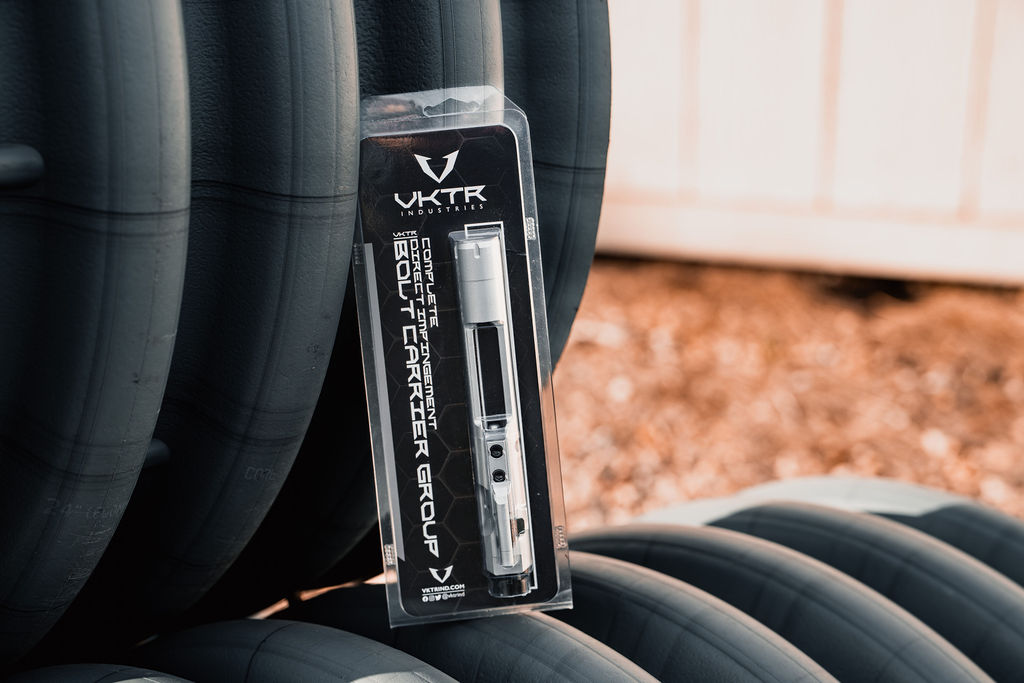
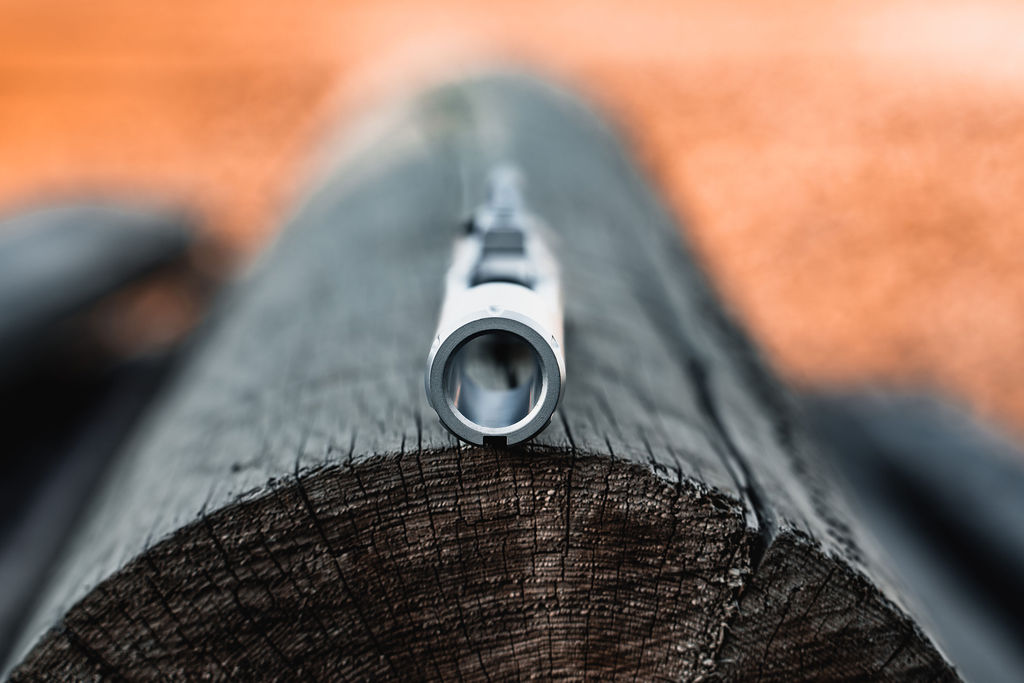
Disclosure: VKTR provided Action Gunner with the direct-impingement bolt carrier group for this review. Our editorial assessment remains independent and uninfluenced.
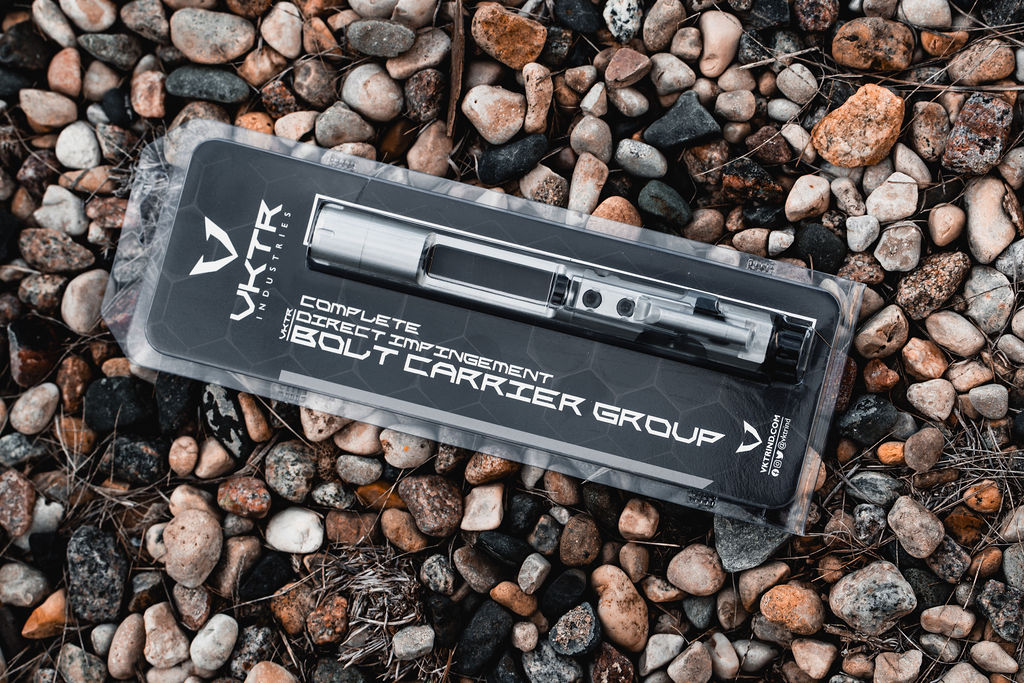
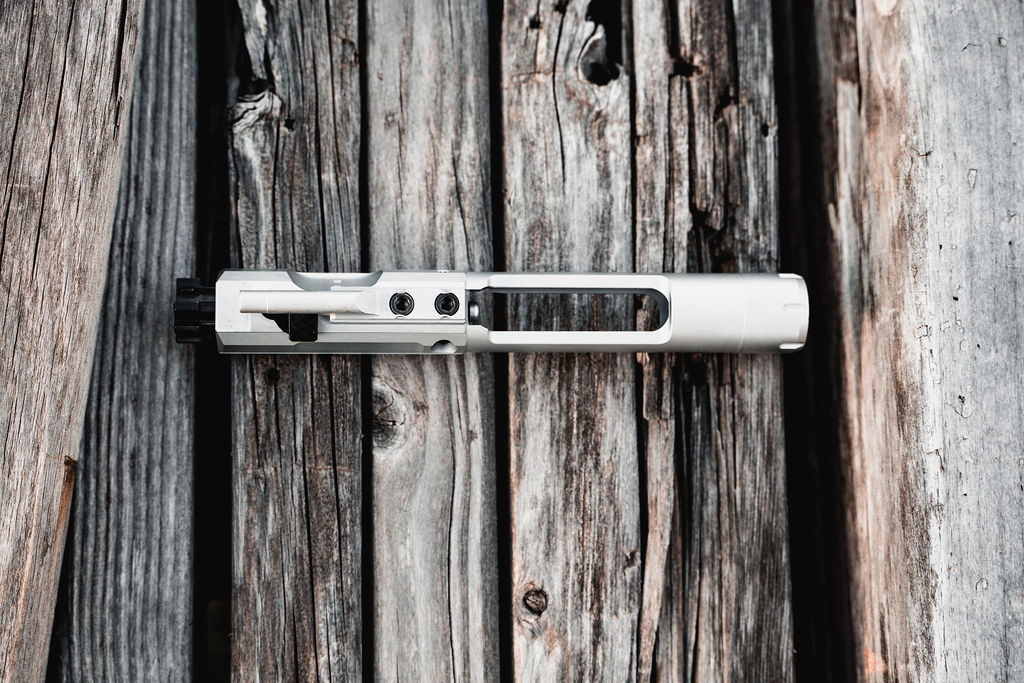
The bolt carrier group is the heartbeat of any AR-15 platform. It’s the critical workhorse responsible for the entire cycling process. Without a reliable BCG, your competition rifle is dead in the water. This is where the VKTR direct-impingement bolt carrier group comes in. VKTR designed this BCG to deliver match-grade performance out of the box as a direct drop-in for over-gassed AR-15s. The company claims it reduces muzzle rise through tighter tolerances on the cam pin, which should provide improved shot-to-shot consistency.
The VKTR bolt carrier group delays unlocking by almost 2 degrees. This reduces residual chamber pressure and allows the cartridge to fully release from the chamber wall, easing extraction. We at Action Gunner were excited to put the VKTR direct-impingement bolt carrier group through competition testing. Let’s jump in and see how it held up.
Tech Specs – VKTR Direct-Impingement Bolt Carrier Group
The VKTR bolt carrier group carries an MSRP of $274.99, which sits in the middle of the pack for pricing. It offers several features designed for match-grade performance out of the box.
The standout feature is a patented long-advance cam path that changes how the rifle times its cycling. VKTR corrected the legacy cam path—the bolt now unlocks at 22.5 degrees rather than the standard 20.7 degrees. This ensures the cam pin sits at top-dead-center where it should be, avoiding interference with the receiver wall behind the cam pin recess.
By delaying unlocking by almost 2 degrees, the residual chamber pressure drops. This allows the cartridge to fully release from the chamber wall, which should ease extraction. The long-advance cam path should result in a flatter shooting platform with less recoil, even in over-gassed weapons, plus smoother locking and unlocking that reduces muzzle rise.
The BCG pairs this cam path with a patented enhanced cam pin that provides consistent lock-up, reducing headspace variations shot to shot.
Key specifications from VKTR:
CNC Precision Machined
Heat Treated 8620 Alloy Steel
Patented Long Advance Cam Path
Faceted Carrier Design
Full-Auto Rated
Grade 8 Gas Key Screws
Thin Dense Chrome Plated
Lifetime Warranty
A Word from VKTR on the Direct Impingement Bolt Carrier Group
This is the same technology that we have been using in our VK-1 piston system, scaled to allow for use in standard direct impingement rifles.
In addition to the advanced cam path, all BCG’s are plated with a thin, dense chrome and include the VKTR patented Precision Cam Pin.
Understanding the Cam Path Advantage
For competitors who want to understand what’s actually happening mechanically, here’s what the 22.5-degree unlock angle does differently from standard 20.7-degree BCGs.
In a standard BCG, the bolt unlocks while chamber pressure is still elevated. This creates harder extraction, more felt recoil impulse traveling rearward, and faster unlocking speed that translates to sharper muzzle rise. The cartridge is still partially stuck to the chamber wall when extraction begins.
The VKTR’s delayed unlock gives chamber pressure an extra fraction of a second to drop. By the time the bolt rotates and unlocks, pressure has decreased enough that the cartridge releases cleanly from the chamber wall. This reduces the violence of extraction and smooths out the entire cycling process.
The practical effect: The rifle doesn’t slam rearward as hard during unlock, and the carrier doesn’t slam forward as violently during lock-up. Both moments contribute to muzzle rise. Smooth them out, and you get a flatter shooting platform with more predictable sight tracking.
This matters most when you’re shooting fast doubles or transitions. The dot settles back to the same spot more consistently, which means you spend less time hunting for your next sight picture.
Performance Testing
I was excited to put the VKTR bolt carrier group through real-world testing because of VKTR’s bold claims. A BCG that could help with muzzle rise, reduce felt recoil impulse, and level out an over-gassed AR-15? I’ll admit I was skeptical. I had tested a few BCGs with similar claims that fell short.
I broke up my shooting sessions with the VKTR bolt carrier group into two phases. I started with several range sessions to get a feel for the rifle before running it at a Tactical Games Skirmish Event. This approach gives us a complete picture of how equipment performs both in training and under match pressure.
Performance Testing
I was excited to put the VKTR BCG through real-world testing because of VKTR’s bold claims. A BCG that could help with muzzle rise, reduce felt recoil impulse, and level out an over-gassed AR-15? I’ll admit I was skeptical. I had tested a few BCGs with similar claims that fell short.
I broke up my shooting sessions with the VKTR BCG into two phases. I started with several range sessions to get a feel for the rifle before running it at a Tactical Games Skirmish Event. This approach gives us a complete picture of how equipment performs both in training and under match pressure.
Initial Range Testing
In my first range session with the VKTR bolt carrier group, I ran four different types of ammo: Black Sheep .223 62 grain, Freedom Munitions .223 62 grain, Super Vel .223 77 grain, and Bone Frog 5.56 77 grain. I wanted to test both my normal range ammo and my competition ammo with the VKTR BCG. I was curious how the Bone Frog 5.56 77 grain would perform since it’s a higher-pressure round compared to .223.
Yes, I realize .223 and 5.56 don’t have much recoil impulse or muzzle rise compared to other calibers. But as competition shooters, we’re chasing marginal gains. Minimizing muzzle rise and recoil impulse translates directly to faster follow-up shots and better accuracy under the clock.
I was surprised by the VKTR bolt carrier group’s performance. I mixed up my ammo and shot a few rounds of the Bone Frog 5.56. When I shot these rounds, I thought I was shooting my regular Freedom Munitions .223 62-grain ammo. The difference in felt recoil was subtle.
I put 300 rounds through the rifle in this first session across all four ammo types. No malfunctions. Ejection patterns remained consistent throughout—more on that in a moment.
Over-Gassed Rifle Testing
I couldn’t leave well enough alone—I had to test this drop-in bolt with an over-gassed AR-15. Enter my wife’s Watchtower Defense Type-15. Her rifle is completely stock, straight out of the box. I’ve shot it before, and it’s noticeably over-gassed, which is normal for factory rifles.
I knew it was over-gassed based on the ejection pattern. Spent shell casings fell between the 1:00 and 2:00 positions. After dropping in the VKTR bolt carrier group, the Watchtower Defense Type-15 started ejecting spent casings between the 3:00 and 4:30 positions—the ideal range for an AR-15.
I ran 200 rounds through the Watchtower with the VKTR bolt carrier group. The ejection pattern stayed consistent at 3:00-4:30 the entire time. There was also noticeably less felt recoil and muzzle rise, allowing for faster follow-up shots.
For competitors dealing with factory rifles that beat themselves up, this is significant. You’re getting adjustable gas block performance without the installation, tuning, or potential for gas block failure under match conditions.
Tuned Competition Rifle Testing
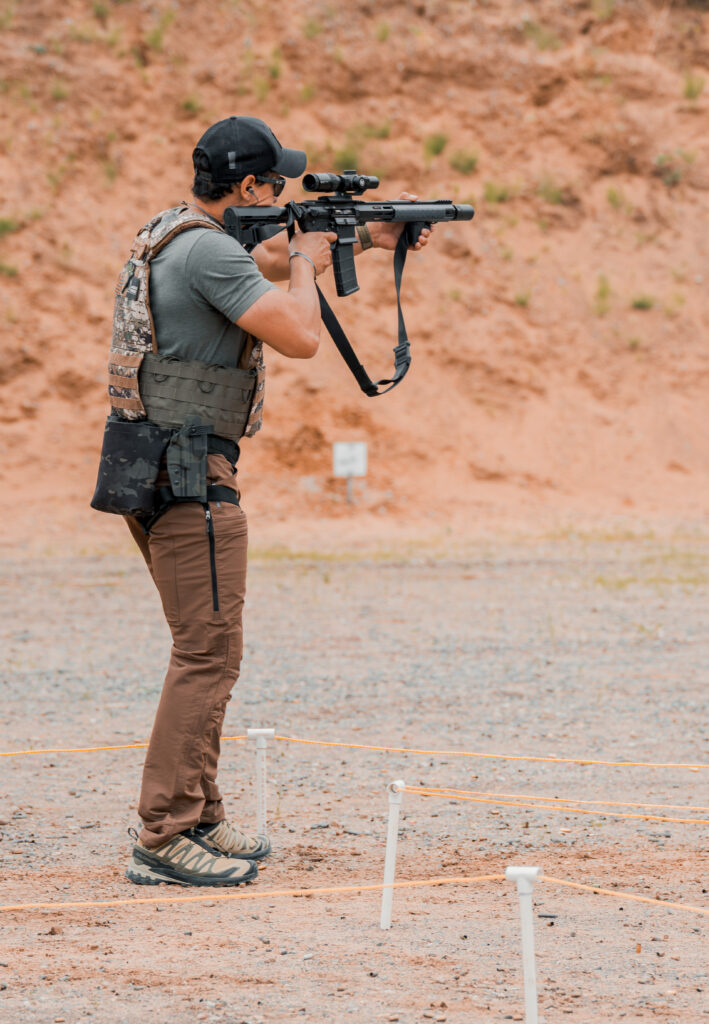
With the initial test results showing promise, I threw the VKTR bolt carrier group back into my competition AR-15. My rifle has an adjustable gas block, Geissele Super Charging Handle, a flat buffer spring, and a DPM buffer. All these modifications, combined with the VKTR bolt carrier group, minimized muzzle rise and allowed for fast follow-up shots.
I wanted to gather hard data on how the rifle performed under the clock. I started with a 10-yard target, shooting doubles at three targets.
Without the VKTR bolt carrier group (Toolcraft standard BCG):
Bill Drill (6 rounds on single target): 2.35 seconds average over 5 runs
Split times: 0.25-0.29 seconds consistently
Transitions between targets: 0.32-0.35 seconds
With the VKTR bolt carrier group:
Bill Drill: 2.11 seconds average over 5 runs (0.24 second improvement)
Split times: 0.19-0.20 seconds consistently (0.05-0.09 second improvement)
Transitions between targets: 0.28-0.31 seconds (0.04-second improvement)
I maintained a tight group on each target—about 1-2 inches in the A-Zone. The VKTR bolt carrier group allowed me to predict where the sights would settle, enabling faster transitions between targets. That predictability matters when you’re pushing speed.
I also tested the setup at 25 yards to see if the smoother cycling affected accuracy during rapid fire:
The tighter groups with the VKTR surprised me. I attribute this to more consistent sight tracking—the dot returned to nearly the same spot after each shot, which kept me from overcorrecting between rounds.
I ran an additional 500 rounds through my competition rifle during these training sessions. Zero malfunctions across all ammo types.
After accumulating roughly 1,000 rounds total across both rifles with the VKTR bolt carrier group, it was time to test it in competition.
Competition Testing – Tactical Games Skirmish
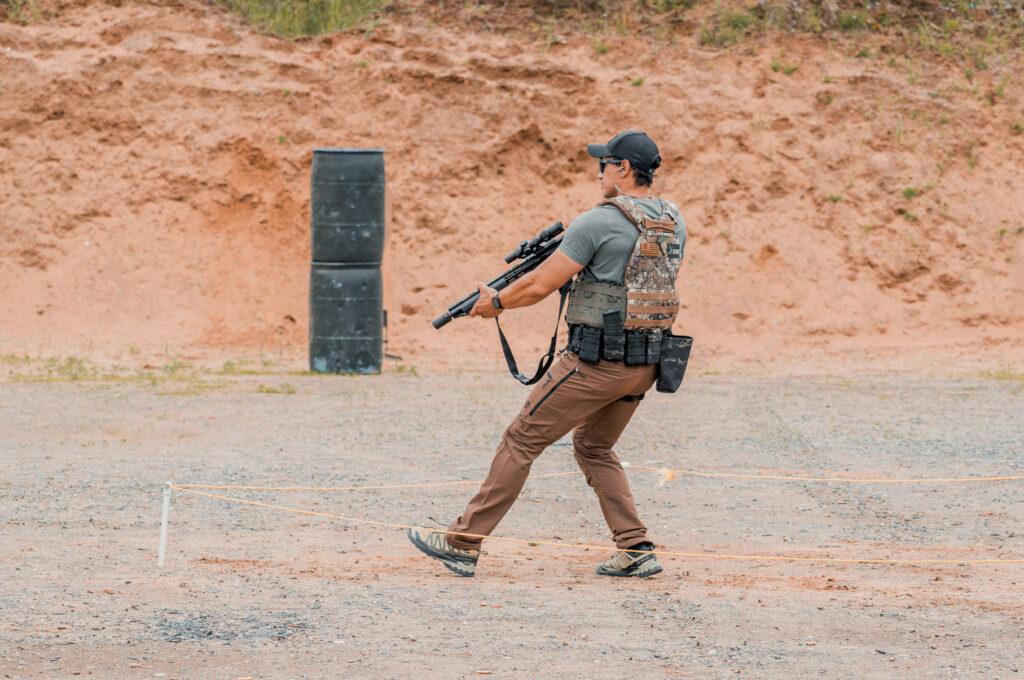
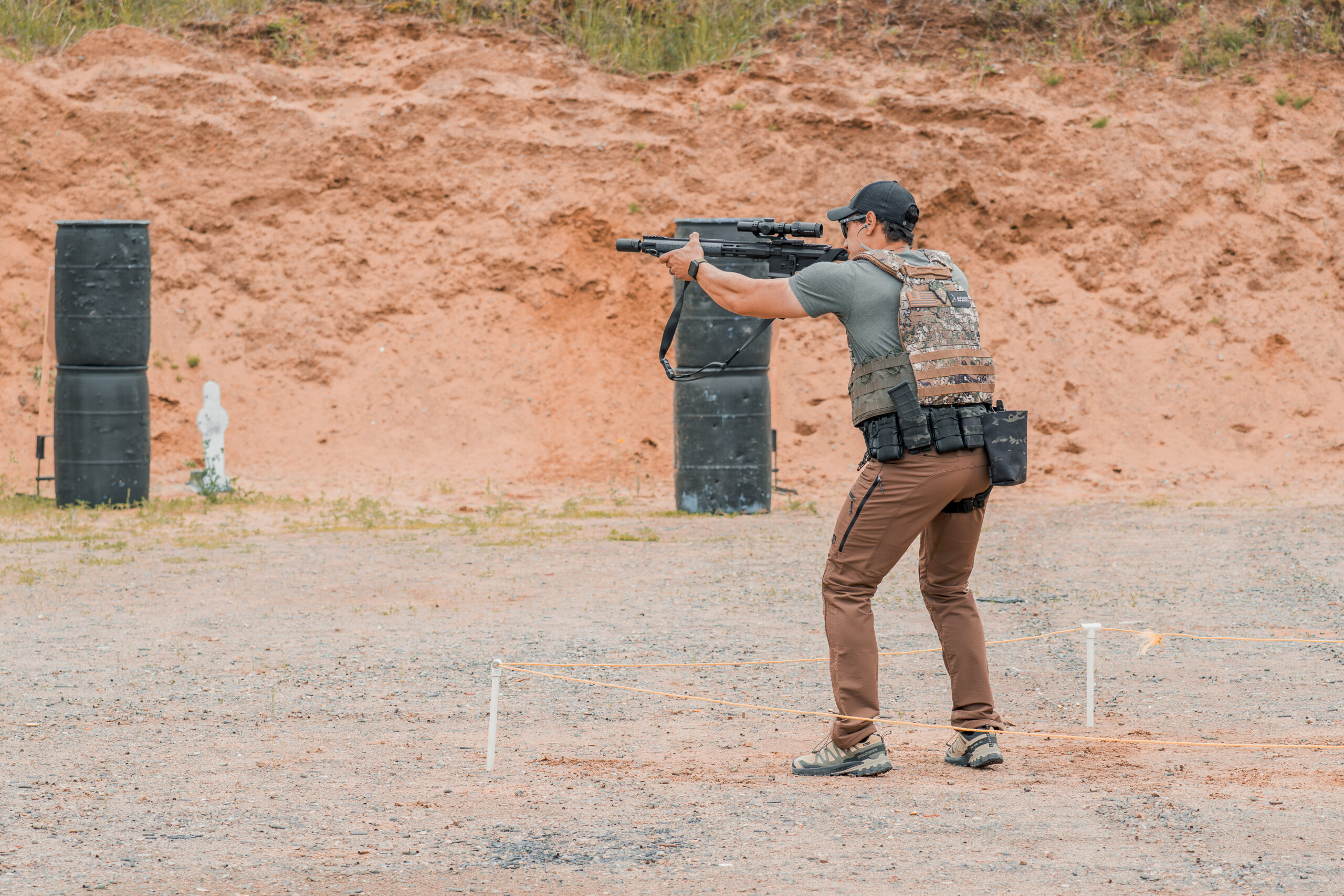
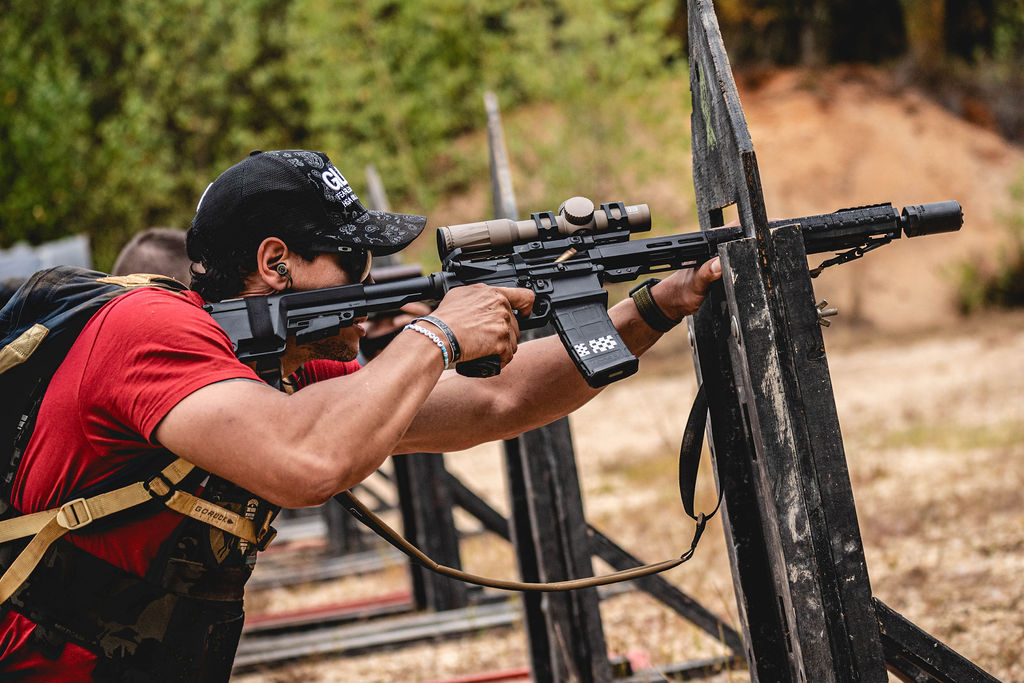
I ran the VKTR bolt carrier group at my last Tactical Games Skirmish in Minnesota. I wanted to test the reliability of the BCG after putting 1,000 rounds through it. More importantly, I wanted to see how the VKTR bolt carrier group would feel while on the clock and physically fatigued—would it still help keep muzzle rise at a minimum and improve accuracy?
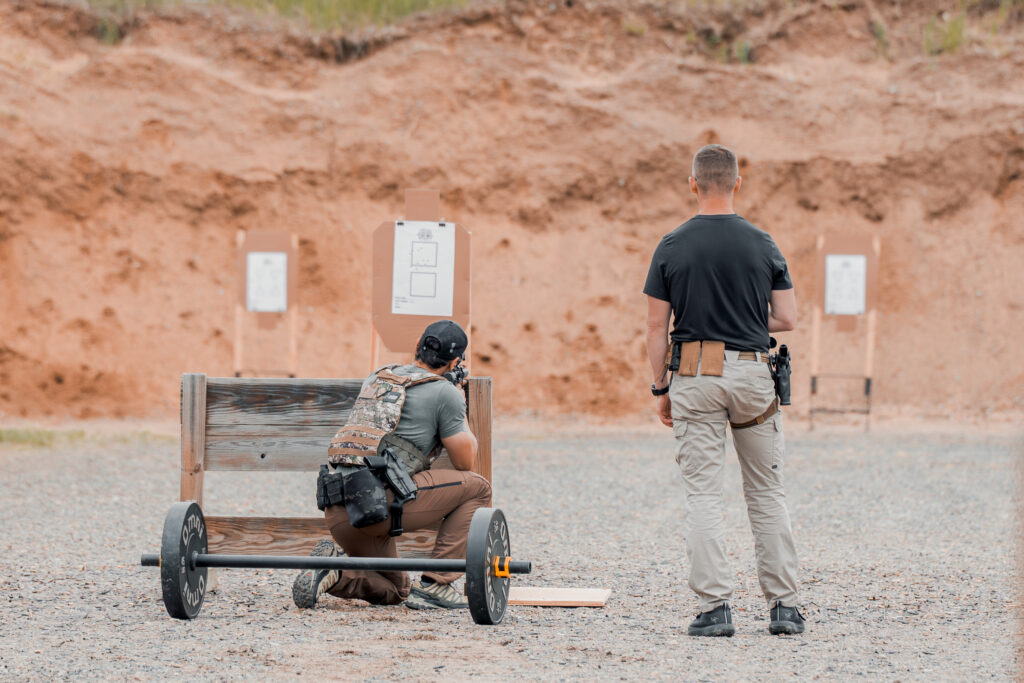
At the Skirmish, we run several different stage types: action shooting stages, Tactical Games-type stages (a mix of physical movement with shooting), and pure physical events.
We had a repeat stage from the Iowa Regional Event, which gave me a direct comparison point. I scored 80 at the Iowa Regional Event and 88 at the Skirmish. The improvement came from being able to predict my sight picture and keeping muzzle rise minimal while shooting through a barrier.
I also ran a 2-Gun Action Shooting stage that involved shooting doubles at several close targets. I ran a competitive time and felt more confident going into the stage. My accuracy improved—I kept my double shots within 2 inches of each other. I didn’t have any issues with double feeds or failures to extract.
After the event, I noticed the BCG was easy to clean. The chrome plating on the carrier made carbon wipe away without heavy scrubbing.
Overall, I could feel the difference with the VKTR bolt carrier group compared to my Toolcraft BCG. The difference wasn’t night and day, but it was measurable in both split times and sight tracking.
I’ll be running the VKTR complete direct-impingement bolt carrier group in my Tactical Games rifle this season. I want to get more rounds through it to see how it holds up after several regional events in 2026. I plan on doing an update review after putting it through a full competition season.
How the VKTR bolt carrier group Compares to Other BCGs
At $274.99, the VKTR sits between budget and premium options. Here’s how it stacks up against common alternatives:
Toolcraft Standard BCG ($89-$120):
What you gain with VKTR: 0.05-0.09 second faster splits, better ejection pattern control, smoother cycling
When Toolcraft is enough: If you’re running a well-tuned gas system and not chasing competitive performance gains
Price difference: $155-$185
BCM Bolt Carrier Group ($189-$219):
What you gain with VKTR: Measurably reduced muzzle rise, better over-gassed rifle performance without an adjustable gas block
BCM advantage: Slightly better bolt face finish, established reputation for reliability
Price difference: $55-$85
Sharps Reliabolt XPB ($349):
Sharp’s advantage: DLC coating on entire BCG, including bolt face (easier cleaning), slightly tighter tolerances
What you gain with VKTR: Better value for competitors who prioritize function over finish
Price difference: VKTR is $74 cheaper
Bootleg Adjustable Carrier ($249-$279):
Bootleg advantage: Adjustable gas flow via carrier rather than gas block
VKTR advantage: Addresses the problem through cam path timing rather than gas restriction, simpler design with fewer adjustment variables
Price difference: Roughly equivalent
My take: If you’re running a stock or over-gassed rifle, the VKTR bolt carrier group gives you the best performance improvement for the money. If you’ve already got a tuned gas system with an adjustable block, the VKTR still provides measurable split time improvements, but you’re paying $275 for 0.05-0.09 seconds. Whether that’s worth it depends on your competition goals.
For Tactical Games, 2-Gun and 3-Gun competitors chasing podium finishes, those fractions of a second add up over a match. For recreational competitors, a Toolcraft or BCM will serve you well.
Pros and Cons
Pros:
Minimizes muzzle rise, making follow-up shots easier and allowing better sight tracking
Reduces felt recoil impulse measurably (dropped my splits by 0.05-0.09 seconds)
Reduces wear on the AR-15 through the corrected cam path and consistent cam bolt placement
Tames over-gassed AR-15s without needing an adjustable gas block
Easy to clean due to chrome plating on the carrier
Cons:
The fit of the VKTR bolt face isn’t as tight in my Mil-Spec AR-15 as my Sharps Rifle Company bolt, making it more difficult to close the rifle after disassembly
The VKTR BCG is more effective when paired with an adjustable gas block—it works as a drop-in for over-gassed rifles, but you’ll get more out of it with a tuned gas system
For the price ($274.99), the finish on the bolt itself isn’t chrome or PVD, so it isn’t as easy to clean compared to the rest of the BCG
Who It’s For
The VKTR BCG is ideal for:
2-Gun and 3-Gun competitors looking for faster split times and better sight tracking
Tactical Games competitors who need reliable performance under physical fatigue
Shooters with over-gassed factory AR-15s who want a drop-in solution without adding an adjustable gas block
Competitors running tuned setups who want to squeeze out every marginal gain in recoil management
Who Should Skip It
Skip the VKTR BCG if:
You’re running a budget build and need to prioritize trigger, barrel, or optic upgrades first—this is a refinement part, not a foundational upgrade
You have an undergassed rifle—this BCG is designed to work with standard or over-gassed systems
You’re not chasing competitive performance gains, and your current BCG is running reliably
The Verdict
The VKTR complete direct-impingement bolt carrier group backs up its claims. It measurably reduced muzzle rise and recoil impulse in my testing. I was worried it would be over-hyped and over-engineered, but the data proved otherwise.
It tames over-gassed out-of-the-box AR-15s without needing an adjustable gas block, which saves you money if you’re looking for a true drop-in system. That said, the VKTR BCG excels when paired with an adjustable gas block in a fine-tuned competition setup.
The reduction in muzzle rise allowed for easier follow-up shots and better accuracy on doubles. My splits dropped by 0.05-0.09 seconds consistently, which adds up over a match. The VKTR claims to reduce wear on your AR-15 through its corrected cam path—time will tell if it holds up to that claim after a full season of hard use.
The VKTR BCG has become my go-to bolt carrier group. I’ll be using one for my next build. Thank you to VKTR for allowing Action Gunner and me the chance to review the VKTR complete direct-impingement bolt carrier group.
Alex is a former U.S. Army Infantryman, Strength Coach and former law enforcement officer with years of experience in firearms, tactics, and hand-to-hand combat. His background includes combat deployments, patrol operations, and training in high-stress environments. A former MMA fighter and CrossFit athlete, Alex now channels his skillset into competitive shooting, actively competing in The Tactical Games and occasionally sharpening his edge through 2-Gun & USPSA competitions. With a deep understanding of real-world applications and field-tested gear, Alex brings a no-nonsense, expert perspective to every article he writes.