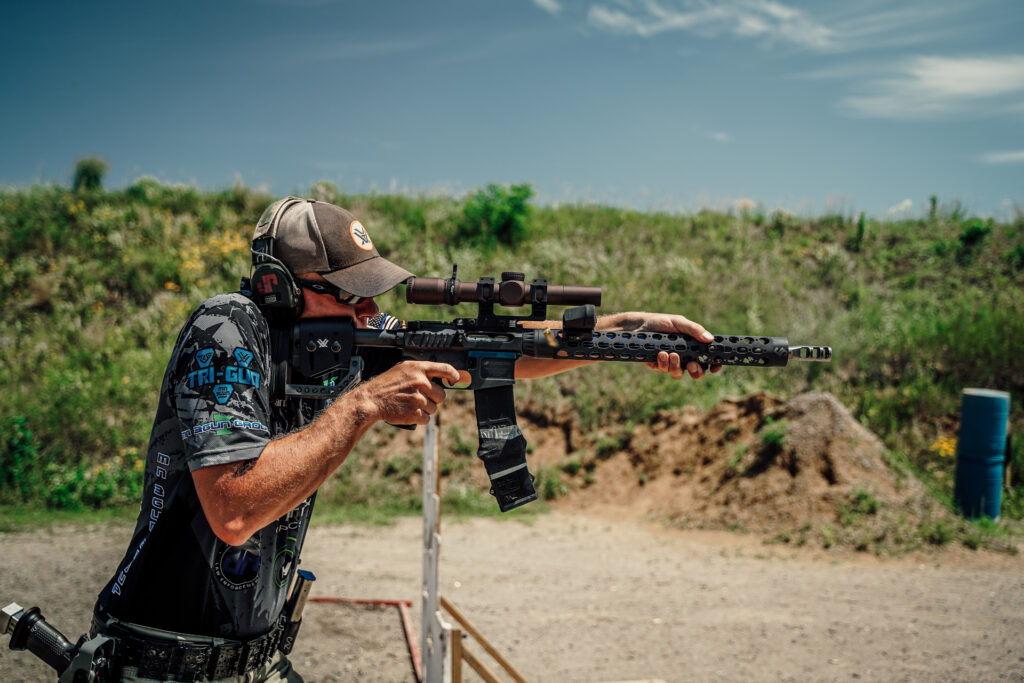
Local 3-gun matches can be a little more forgiving when you forget something at home. You’re typically surrounded by people you normally shoot with, so if you need to lean on someone for gear or spare ammo, odds are good you’ll find a squadmate who can help. The pressure is lower too—the investment in travel is minimal, and you’ve got the luxury of probably traveling by vehicle, alone, with cargo capacity being zero concern when figuring out what to bring.
But what about when you’ve got to travel half a day or more to get to a major match? You need to be more strategic with what and how you pack. Forget something critical at a local club match and it’s an inconvenience. Forget something at the Texas 3-Gun Championship and you might be hunting down a sporting goods store instead of walking stages.
The list below has been my foundation over the years, refined through painful lessons and last-minute scrambles. Whether you’re driving or flying to your next major, this will help you show up prepared and focused on the match instead of stressing about what you left behind.
How you get to the match changes everything about how you pack.
When you’re driving, cargo space is rarely a concern. Throw in backup guns, extra cases of ammo, lawn chairs, a canopy—whatever makes your match experience better. The challenge is just staying organized so you can actually find what you need.
Flying is a different animal entirely. You’re managing weight limits, TSA regulations, and the reality that airlines typically cap ammunition at 11 pounds per passenger. Since a typical 3-gun match can require 150+ rounds each of rifle, pistol, and shotgun ammo, you’ll blow past that limit before you’ve packed half of what you need.
If you’re flying, here’s the reality: ship your ammo ahead of time. Ground shipping is required for ammunition, so plan accordingly—give yourself at least a week of lead time to ensure it arrives before you do. Ship it to the host range if they accept packages, or to wherever you’re staying. Have a contingency plan in case your shipment doesn’t arrive. Before you fly out, identify a few local shops near the match venue that carry ammo close to what you normally shoot. It’s not ideal to switch ammo at a major match—your zero may shift and your feel for the gun changes—but it beats not shooting at all.
For the firearms themselves, I’ve detailed my complete flying system in a separate article: Flying to The Tactical Games: A Guide for Competitive Shooters. The same principles apply to 3-gun travel—hard-sided lockable case, non-TSA locks in every available hole, arrive 2-3 hours early, and declare your firearms at check-in.
Not all gear is created equal. I think about packing in layers, from absolutely essential down to nice-to-have. This helps whether you’re deciding what goes in the car or what gets cut when your checked bag is pushing 50 pounds.
These are your match-critical items. Without any one of these, you either cannot compete or you’re competing with unfamiliar equipment—which often amounts to the same thing at a major match. Before you zip up and head out, physically verify each of these is packed:
Belt and holster setup — Your inner and outer belt with holster, mag pouches, and shell caddies attached. This is your complete competition rig. If you forget your holster, you’re not shooting pistol stages.
Rifle — Along with all magazines and your sling if the match requires it. Count your mags. Then count them again.
Pistol — With all magazines loaded and ready for transport.
Shotgun — Including your extended mag tube if you run one, your choke kit with wrench, and your sling if required.
All ammunition — More on round counts below, but this is the lifeblood of your match.
Eye and ear protection — Bring both clear and tinted lenses for changing light conditions. I run electronic muffs with foam plugs underneath for the best of both worlds—situational awareness when needed, maximum protection when shooting.
These items get checked twice because they’re irreplaceable at the match. You can bum just about anything else off a squadmate. They’ll likely even lend you their rifle, but it’s less than ideal for you to have to become familiar with it at a major match.
First aid kit — I keep mine stripped down to what I’d actually use: bandages, medical tape, Ibuprofen, any personal medications. You’re not performing field surgery, but you might need to tape up a blister or deal with a headache after a long day in the sun.
Knee pads — If you’ve ever taken a stage position on rocky ground, you understand. Even if you don’t think you’ll need them, throw them in.
Hat — Non-negotiable for sun and rain protection. I’ve seen matches go sideways for shooters who didn’t account for seven hours in direct sunlight.
Think about the full scope of your trip: match days, travel days, and downtime.
Match clothing — Shooting shirts (both long and short sleeve options depending on weather), shooting pants or shorts, and proper footwear. I bring both shoes and boots since terrain varies wildly between venues. You might be on groomed grass one match and ankle-deep mud the next.
Base and outer layers — Check the weather forecast for your match dates, but pack for conditions to change. Mornings can be cold even when afternoons are brutal.
Casual clothing — You’ll want something clean to wear in the evenings and for travel. After running 8 stages in August heat, you don’t want to be stuck in the same clothes for a flight home.
The underrated essentials — Socks (more than you think you need) and underbritches. Pack enough for the worst case scenario of getting rained on or sweating through multiple changes per day.
This layer is what separates prepared competitors from those scrambling between stages.
Spare parts kit — This is worth its weight in gold. Mine includes a complete AR-15 BCG as a backup (or at minimum, a spare firing pin, gas rings, and bolt assembly). I keep spare batteries for every optic that takes them—rifle scope, pistol red dot, any electronics. A spare recoil spring for the pistol. If I’m running iron sights, a spare fiber optic rod and fingernail clippers to trim it. I’ve also added a spare shotgun mag tube follower and trigger springs for all three guns. At $15 for a replacement shotgun spring, there’s no reason not to have one ready.
Cleaning supplies — Mag brushes are critical. I’ve watched plenty of stage runs get ruined by a pistol mag jamming from debris or a rifle bolt trying to cycle through a sludge of oil and dirt after a day of dusty conditions. An Otis kit or bore snakes, some paper towels, and basic solvents can save a match.
De-lead wipes — This is a modification I’ve made over the years that I wish I’d adopted sooner. Instead of just regular wet wipes for hygiene, I make sure to have de-lead or “Hero wipes” to decontaminate my hands after shooting, especially before eating. Blood lead levels are nothing to joke around with if you compete and shoot a lot. It’s a simple, cheap mitigation to stay healthy over a long career.
Spare belt gear and caddies — Not as critical as your primary setup, but nice to have if something breaks.
Rifle dope card and slug target reference — For any precision work, having your data accessible speeds up stage planning.
Chronograph — Technology has made portable chronographs like the Garmin Xero genuinely travel-friendly. Being able to verify velocity at the match location is valuable—environmental conditions can shift your ballistics enough to hurt your long-range game. Worth bringing if you have the space.
Quick-detach bipod — Useful for checking zero, since you never know what the host range offers for stable shooting positions. Open division shooters will have this anyway, but it’s worth considering for other divisions.
Rain gear — If the forecast calls for any chance of precipitation, this moves up to essential.
Large garbage bag — Sounds ridiculous, but incredibly useful for keeping gear dry or corralling dirty clothes.
Creature comforts — Water bottle, sunscreen, bug spray, snacks, Gatorade, caffeine. These make long match days more bearable. Most can be grabbed at a local store if forgotten.
Most major matches will publish a round count, often specifying how many targets are beyond certain distances. Here’s how I approach ammo planning:
Rifle: If the match calls out 150 rounds and notes 30 targets beyond 100 yards, I’m packing 300 rounds of hoser ammo (double the requirement) and at least 100 rounds of match-grade. “Hoser” for me is typically 55gr ammo that holds 4 MOA or better—good enough for close targets where speed matters more than precision. Match ammo is 69gr or heavier, capable of sub-MOA accuracy for the precision work.
Pistol and shotgun: For these, most shooters run one type of ammo each. If you can’t double the stated round count, aim for at least 50% extra to cover misses and reshoots.
There’s no universal rule here. You need to honestly evaluate your own accuracy and plan for missed shots. The goal is to never run out and never be counting rounds mid-stage.
For birdshot, buckshot, and slugs, pay attention to the match breakdown. Some matches are slug-heavy, others run mostly birdshot with minimal specialty loads. Pack accordingly.
I don’t have a complex ritual, but I do have a system: every item should be organized and have its place for easy review. When everything lives in a specific spot, packing becomes a visual check rather than a memory exercise.
My setup breaks down like this:
Range bag — Organizational pockets handle most of my smaller items: spare parts, cleaning supplies, eye and ear pro, first aid kit, batteries, tools.
Soft-sided rifle case — Carries the rifle, pistol, shotgun, and belt setup. This is my primary competition bag once I’m on the ground.
Hard case — For flying, the soft-sided case goes inside a large Pelican case with proper locks. Once I arrive at the match location, I shed the hard case and work out of the soft bag for convenience.
Personal luggage — Standard packing cubes for clothing, fitting around the range bag in a roller case.
When I arrive at a match, I keep everything set and ready to go in the back of a rental vehicle. SUVs are ideal—you can open the rear hatch to access everything easily, and the hatch provides protection against both sunlight and rain if conditions turn.
For a major match like the Texas 3-Gun Championship, I aim to arrive well-rested on the day before official check-in begins (usually Thursday, which might mean arriving Wednesday night). That first day is about:
This is not the time to be troubleshooting gear problems or recovering from an overnight drive. Build buffer time into your travel so you show up ready to focus on the match itself.
A final thought on prioritization: almost everything in my “less important” category can be obtained at a Walmart or similar store once you’re at the match location. Forgetting bug spray is annoying. Forgetting your rifle magazines is catastrophic.
If you’re ever stressed about what to pack, focus your energy on the “check twice” list. Everything on that list is what you need to shoot the match with equipment you’re familiar with. The rest can be substituted, borrowed, or purchased in a pinch.
Looking for a printable version? We’ve got a downloadable checklist you can keep in your range bag for pre-match packing. [Download the 3-Gun Travel Checklist PDF]
Have a packing tip I missed? Drop it in the comments—I’m always refining this list based on what I learn at matches.

Active competitor since 2014 across USPSA, 3-Gun, The Tactical Games, and PCSL 2-Gun. Shawn founded Action Gunner in 2016 with the belief that the competitive shooting community deserved honest, match-tested content from people who actually shoot matches — not rewritten press releases. When he's not writing, he's building rifles, running stages, or wrenching on guns in the event trailer.
The most comprehensive major match calendar in competitive shooting. Plan your season.
View Calendar