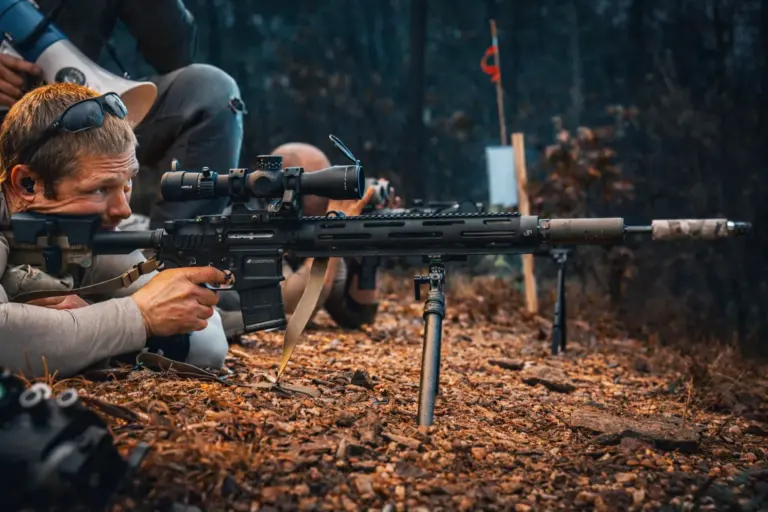
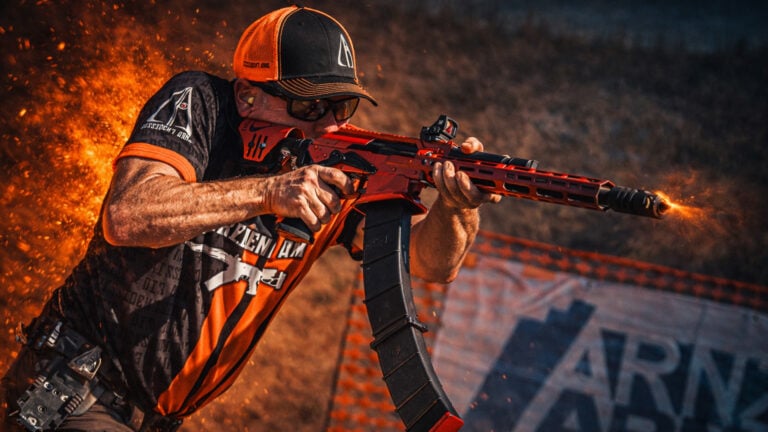
We’ve spent the last few Julys on the bays at Forest Lake for the USPSA Multigun Nationals, and our 2025 USPSA Multigun Nationals recap made a point that stuck with us: a leaner field can still bring championship energy. The 2025 roster was 122 deep but loaded with national and world champions, and it kept Forest Lake on plenty of 2026 calendars.
So heading into this year, the question wasn’t whether the match is worth shooting. It was what’s changed. We put a few questions to Tim Dunderi, the match director for the 2026 Nationals, and his answer set the tone for everything else.
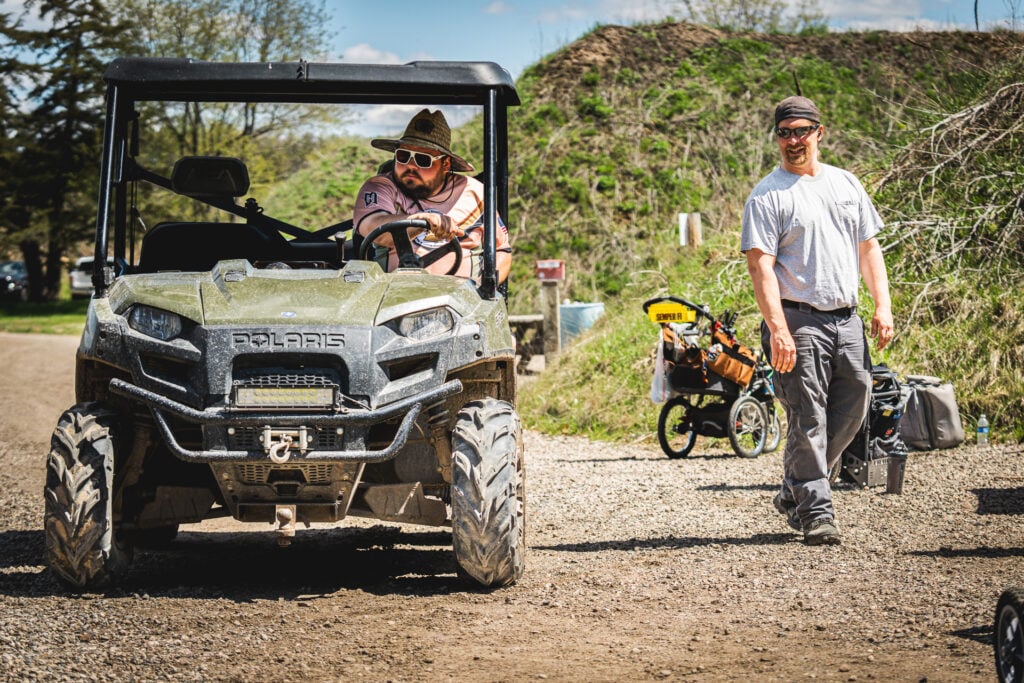
“Growth isn’t a focus of mine this year,” Tim told us. “3-gun is certainly facing a slowdown currently. My focus this year was making the highest quality, applicably difficult and fun match.”
Registration is down a touch from last year, the sport is in a lull, and Tim isn’t pretending otherwise. He’s not chasing a record-breaker. He’s building a match worth your travel and your entry fee.
When and where is the 2026 USPSA Multigun Nationals?
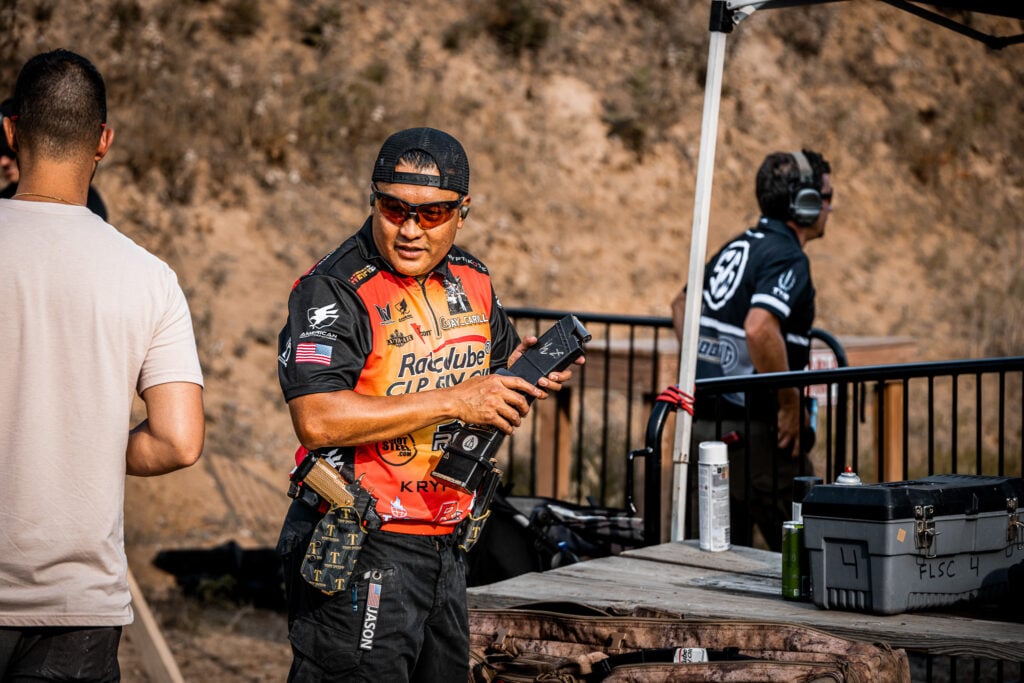
The 2026 USPSA Multigun Nationals, officially the Federal USPSA Multigun Nationals presented by Vortex Optics, run July 17–19 (Friday through Sunday) at Forest Lake Sportsmen’s Club in Forest Lake, Minnesota. It’s a three-gun match (rifle, pistol, and shotgun), and the round count lands a little under 250 per gun. Forest Lake is on the books to host through 2027 under the current contract.
And it’s right on top of us. The range goes dark this weekend, closing to the public on July 11 so the crew can get on site and start building stages. Staff shoot the match July 15–16, the main match runs July 17–19, and by the time you read this, we’re counting down in days, not months.
A few things to set expectations before the stage details. Registration is softer than last year, and Tim is upfront that 3-gun is in a slowdown right now. He’s not trying to spin that. What he’s done instead is pour the effort into stage quality, which is where the rest of this preview lives. If you’re new to the format, our complete guide to 3-gun competition breaks down how it all works.
A lighter turnout, but a stacked field
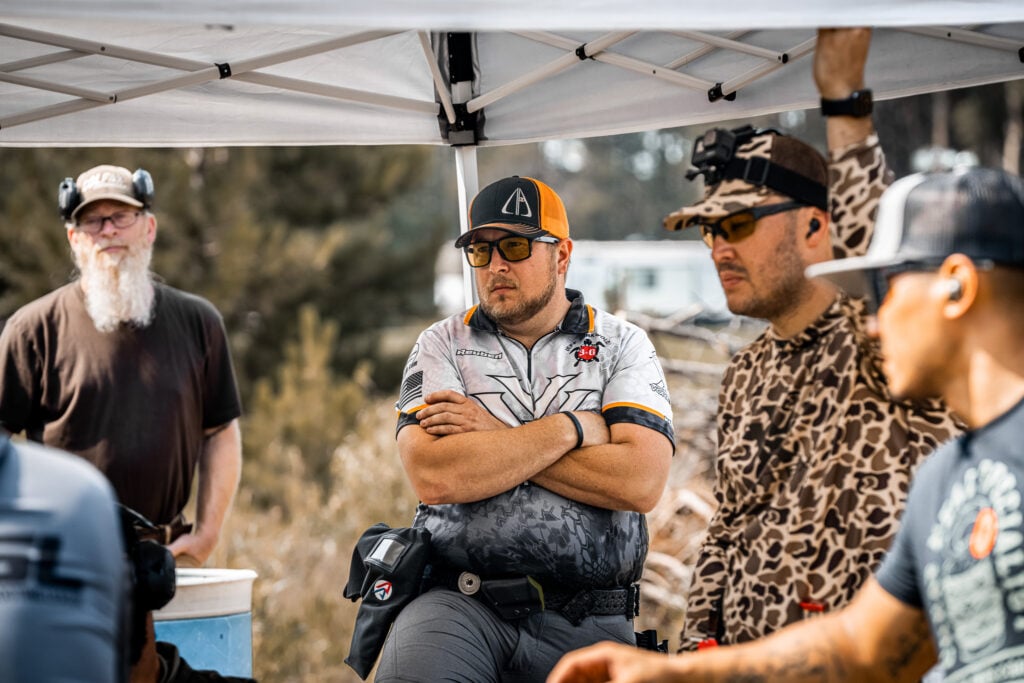
The part that gets lost when people see a smaller registration number is simple: a lighter field doesn’t mean a softer one. This year it might be the opposite. The squad list pulls most of the country’s top multigun shooters into the same match, several of whom haven’t all lined up together before, and the division races on paper are as deep as this match has been since it landed at Forest Lake in 2023.
Start with Open, because that’s where the headline is. The 2026 entry stacks an Open super squad with Varick Beise, Joe Farewell, Jon Wiedell, Brian Nelson, Rich Franco, James Gill, the Landreneaux brothers, Doniel Leak, Reuben Aleckson, and Lanny Barnes, among others. If that reads like a who’s-who, the recent results back it up.
The Open title here has come down to a hair three years running. In 2024, Scott Greene beat Jon Wiedell by 0.28%, about nine points across a three-day match. In 2025, Varick Beise edged Wiedell again, this time by 0.8%, roughly 24 points. Wiedell has now finished runner-up two years straight after winning the title in 2023, while Beise went from a fourth-place Open finish as a junior in 2023 to champion in 2025. Putting that group on one squad, on stages Tim built to make people second-guess their plans, is the match within the match.
Modified is just as loaded, headlined by Daniel Horner. If you’re newer to the sport, Horner is the name to know. He spent 2005 to 2018 with the U.S. Army Marksmanship Unit, and he’s a 9-time USPSA National Multigun champion and 4-time 3-Gun national champion with well over 100 titles to his name. He won Modified at this match in 2023 and 2024, and took third in 2025 behind AJ Anthony and Taylor Ohlhausen.
Ohlhausen is back, as is Dillen Easley, who has finished top-five in Modified each of the last two years. Horner doesn’t lose this division often, and the shooters chasing him have closed the gap.
Tactical brings its own rivalry. Nils Jonasson and Nate Staskiewicz have traded the top step: Jonasson won in 2023 and 2024, Staskiewicz took it in 2025, and both are entered again. Evan Nichols is back too, the shooter who put a pump-action gun on the Tactical podium in 2025 by finishing third in a field of semi-autos. He’ll have Hannah Nichols on the squad with him.
Watch the Yackley family across divisions as well. Becky, Mark, and Andrew are all on the list, which is its own kind of credential.
So when you see the registration number, read it the way the talent reads it. A leaner field at a national match means you’re sharing bays with the people setting the pace, not hiding behind a crowd. The reps are banked, the plans are set, and in less than two weeks we find out who put in the work.
Why the match looks the way it does
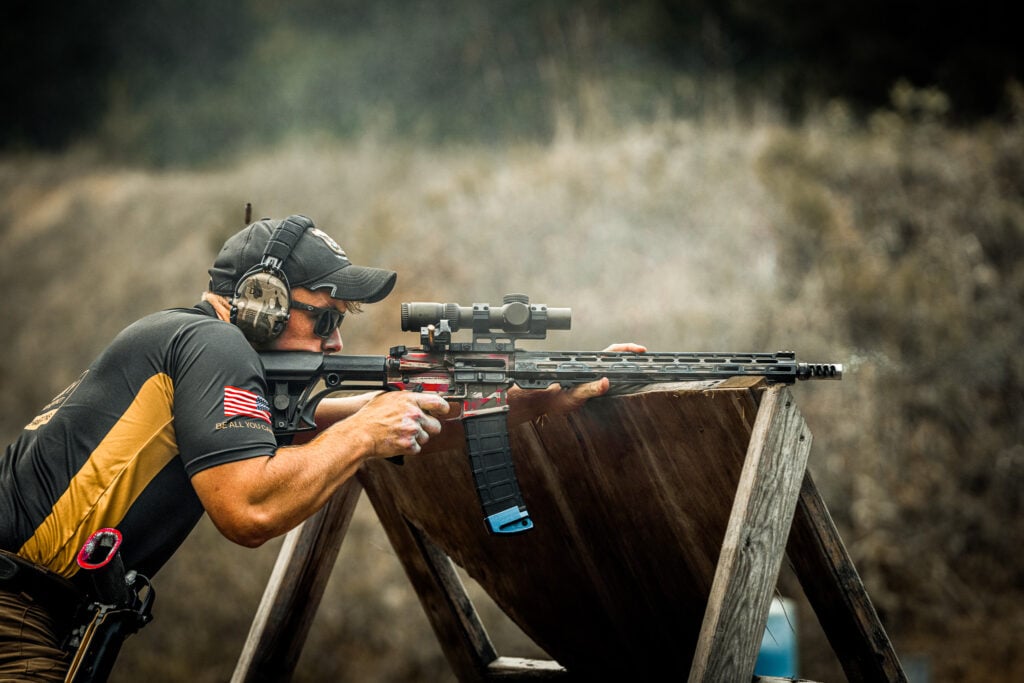
Tim put his goal plainly: “My goal was to ratchet up the difficulty in select places, adequately test all 3 platforms and produce the highest quality match possible.” The catch is that 3-gun fights you on the difficulty part.
“I’ve noticed I can’t get quite as granular with stage difficulty,” he said, “because the sheer size of 3-gun stages is its own level of difficulty.”
That’s a real constraint, and it’s worth understanding. In a pistol match, a designer can nudge a stage up or down with a tighter port or a harder lean. In 3-gun, the stage is already huge. Long movement, three guns to transition between, gear to manage on the clock. So when Tim wants to add difficulty, he picks his spots instead of sprinkling it everywhere.
His take on target difficulty is one of the more useful things he said for anyone prepping: “I personally try to make target difficulty ‘how fast can you hit it,’ not ‘if you can hit it.’”
Read that twice. He’s not building targets you might miss, he’s building targets you can hit. The question is what they cost you in time.
That’s the whole game on his stages: the clock is the test, not the target. You win by shooting them efficiently, not by surviving them.
Scoring pushes the same direction. The match runs on hit-factor scoring, and Tim is direct about what that does to a shooter’s plan.
“The hit-factor scoring certainly makes shooters question their plans and stage strategies more, making for much more interesting stage plans,” he said. “My stage contributions have always begun with hit factor in mind.”
That’s not new language for Dunderi. He’s a longtime USPSA competitor and runs hit-factor matches regularly through MAPSA, the Minnesota group that puts on dozens of matches a year, so designing around points-per-second is how he already thinks. He’s also shot this national match himself, finishing 19th in Open in 2025, so the stage plans are coming from someone who has stood in the same shooting boxes on the clock.
He gave his crew credit, too, noting that other designers’ contributions “have certainly matured and grown to present a better challenge via hit-factor scoring.” For competitors, the takeaway is that the obvious plan often isn’t the best one. Hit factor rewards points per second, so the shooter who sprays and the shooter who creeps both leave a lot on the table. The one who walks the stage, counts the cost of each position, and commits is the one who wins the math. If you want to run the numbers before you show up, our hit factor calculator is free to use.
On round count, Tim put a number on the rumor mill.
“The final round count ended up a little lower than the 250 each,” he said, “but each and every target on a stage has a purpose. I’m not a fan of adding targets for no reason other than to pump round count.”
So plan for a bit under 250 rounds per gun, and don’t expect filler. A higher round count looks impressive on paper and sells the match, but padding stages with pointless targets makes for worse shooting. Tim chose the better match over the better marketing line. Bring enough for the published count plus your usual cushion.
Stages and challenges to know
A few specifics from Tim that will bite you if you show up cold.
Stage 1 requires a sling. Do not forget it. Tim said it twice, so I will too. Stage 1 is built to “test your ability to do your stage homework, know your holds, and your ability to get into a stable shooting position quickly.” If you don’t normally run a sling, make sure one is in your bag before you load the truck.
On the par time, Tim was careful about how he uses it: “The par time is just a stopgap to prevent match-flow issues. We will have non-competitors test the par time prematch to make sure it is correctly calibrated.” The par time isn’t there to wreck your run. It’s calibrated by people shooting it cold so it stays fair. Do your homework and it won’t be a factor.
The 270 bay uses all three guns this year. “I learned that the 270 bay is very popular,” Tim said. “This year it uses all three guns for a unique challenge.” A wide 270-degree bay already forces you to manage muzzle direction while you move, and adding all three platforms makes it a real test of gun handling under pressure. For reference, last year’s 270 bay held the 65-round pistol marathon on Stage 12. This year it’s carrying all three guns instead.
Mind your muzzle on the jungle runs. The downrange “jungle run” stages always raise 180-trap questions, and Tim addressed it head-on, with a caveat I’ll pass along exactly as he gave it.
“Disclaimer, I’m not the range master,” he said. “Generally on jungle runs, if you don’t point your gun at the RO, you’re good. The jungle-run 180s are pretty easy to stay within. There are no targets that are visible past 180. We do a lot of work on this specific part.”
That last line is the important part. The stages are built so that no target tempts you past the 180 in the first place. Keep your muzzle off your RO, shoot the targets in front of you, and the line takes care of itself. For the official call, talk to the range master, since Tim was clear that’s not his hat.
Gear notes
This is the part to dog-ear if you’re already registered.
Beyond the Stage 1 sling, Tim’s advice for newer shooters is direct: “Make sure to respect the offhand rifle shooting and the half-size IPSC rifle targets.” Those half-size targets are new this year. “Thanks to CHL Targets for starting production on these specifically so we could make use of them,” Tim said.
A half-size IPSC silhouette roughly doubles your effective difficulty at distance, and shooting offhand strips away the support you’ve been leaning on all season. This close out, it comes down to whether your zero and your holds are dialed, not whether you can still cram in reps. The season’s work is either banked or it isn’t.
So the job now is gear, not grind. Pack to the published gear requirements, confirm your rifle zero, count your mags and ammo to the round count, and double-check the sling. Lay it all out the night before. Forgetting a sling on Stage 1 is an avoidable way to start a national match behind.
The crew behind it
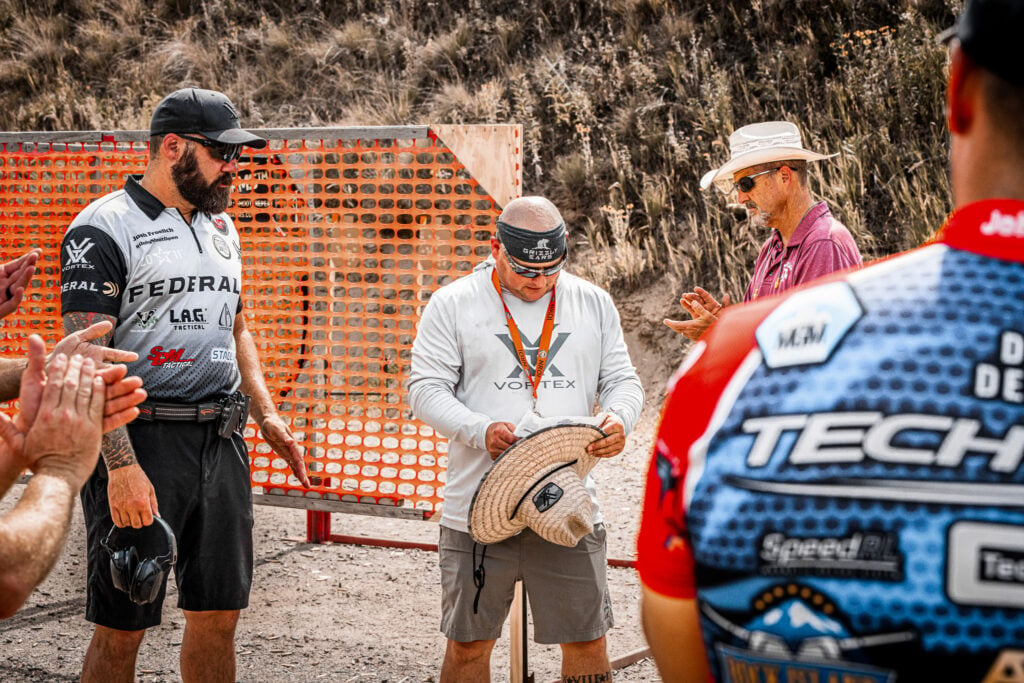
Ask Tim why Minnesota keeps producing good 3-gun, and he doesn’t point at himself.
“The MN 3-gun scene is incredibly welcoming and so hardworking,” he said. “It’s some combination of that that leads to our stage design ability. It also helps that we have plenty of high-level shooters locally to show you when you have a bad stage design.”
That local bench is what most clubs are missing, a group deep enough to catch a bad stage before competitors ever see it. The engine under the whole thing is the home club.
“The biggest thing FLSC currently provides Multigun Nationals is a motivated local workforce and club,” Tim said. “Taking on a match of this size and complexity can be very difficult to produce and pay for. Our unique local crew makes it possible.”
There’s a lineage here, too. Tim came up after some of the earlier era of the match, calling himself “a noob USPSA guy then,” but he sees the DNA carried forward through people still in the mix. “A lot of its DNA does survive via Kevin Harrington, Cody West and Josh Erickson’s involvement.”
Final checks before you load the truck
The training window is closed. At ten days out, nobody’s building new skill, so this is a gear-and-logistics list, not a practice plan. Run these before Forest Lake:
- Sling in the bag. Stage 1 requires it. This is the one that ends match runs before they start.
- Rifle zeroed, holds written down. The half-size IPSC targets and the offhand shooting will find anyone guessing at distance.
- Ammo and mags counted. Plan for a bit under 250 rounds per gun, plus your usual cushion.
- Shotgun and reloads sorted. Caddies loaded, spares packed, the gun cleaned and lubed.
- Paperwork and logistics. Confirm your squad, your check-in time, and your travel around the July 15–16 staff days.
Do all that and you show up ready to shoot the match instead of chasing gear on the clock.
What’s next
New this year alongside the traditional prize-table walk: cash.
“The cash prizes are such a fun addition to the traditional prize-table walk,” Tim said. “It can really make the stakes get interesting based on which prize you have your eyes on. Money talks, as they say.”
The match is on the books at Forest Lake through 2027, and Tim said future-match discussions haven’t started yet, so there’s at least one more year after this one already locked in. The field is set and the squads are posted. Our 2026 USPSA Multigun Nationals event page has the full schedule and details if you’re coming to shoot, work, or watch, and we’ll be on site covering it. Once the season rolls on, our major match calendar keeps the rest of it straight.
For all the talk of difficulty and design, Tim’s reason for doing this is the same one that probably got you into 3-gun in the first place.
“I’m just excited to see all the guys and gals that 3-gun has to offer,” he said. “It’s such an inviting community that I’m glad to be a part of.”
That’s the match in a sentence. It’s down a few entries, the sport’s in a slowdown, and the director decided the answer was a better match, not a bigger one. If that’s the kind of shooting you came for, Forest Lake is worth the drive this July.
Just don’t forget your sling.
The 2026 USPSA Multigun Nationals run July 17–19 at Forest Lake Sportsmen’s Club in Forest Lake, Minnesota. Competitors First. Content Second.