Disclosure: Action Gunner received no compensation from Jacob Grey Firearms for this coverage. Video and media graciously provided by F5 Productions. All opinions and analysis are our own.
At $5,800 MSRP, the Jacob Grey Nox 9 is not a gun you buy on a whim. It is a statement piece from a South Carolina manufacturer that wants you to know exactly what you are paying for: aerospace-grade materials, vertical integration, and a promise that one gunsmith builds your pistol from start to finish.
We stopped by Jacob Grey’s booth at SHOT Show 2026 to see what is new for this year. The headline? They have moved to all in-house billet components for the internals. No more MIM parts. Every piece is cut on their own CNC machines in West Columbia. Whether that matters to you depends on how you think about manufacturing and value, but it is a clear statement about where they want to position this pistol in the market.
Let us break down what the Nox 9 actually offers and who it makes sense for.
What is the Jacob Grey Nox 9?
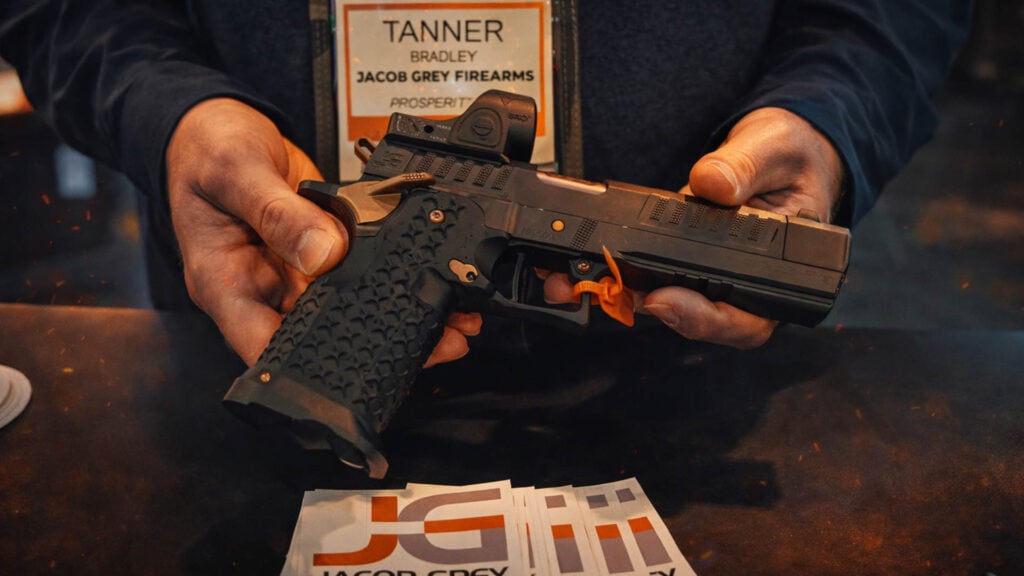
The Nox 9 is a double-stack 9mm pistol built on a 2011-style platform. Think of it as Jacob Grey’s answer to guns like the Staccato P or Atlas Athena, but with some key differences in construction philosophy.
The frame is 4140 steel with a DLC (diamond-like carbon) coating, not the aluminum frames you see on many 2011s. The slide is 416 stainless steel, also DLC coated. The grip module is machined from 7075 aircraft-grade aluminum with mil-spec hard coat anodize.
This mix of materials gives the Nox 9 a loaded weight around 39 ounces before you add a magazine. That is heavier than polymer-framed options like the Glock 34 (about 24 ounces) or even some aluminum-framed 2011s. The weight is intentional. More mass means more inertia to resist muzzle rise.
Key Specifications
Here is what the spec sheet looks like:
Caliber: 9x19mm Parabellum
Barrel: 5.01 inches, integrally compensated, 416 stainless steel with 1:10 twist rate, DLC coated
Frame: 4140 steel with DLC coating
Slide: 416 stainless steel with DLC coating
Grip: 7075 aircraft-grade aluminum with mil-spec hard coat anodize
Dimensions: 8.75 inches overall length, 1.7 inches width, 5.75 inches height, 1.30 inches grip width
Trigger: CNC-machined controlled radius trigger, 2.5 lb pull weight, adjustable overtravel
Weight: 39 ounces unloaded without magazine
Recoil System: 7 lb variable recoil spring over DLC-coated tool-less guide rod
Mainspring: 15 lb fully CNC machined from billet
Magazines: Includes two 17-round steel double-stack 1911 magazines
MSRP: $5,800
What Changed for 2026
The big news from Jacob Grey at SHOT Show 2026 is the move to all in-house billet components. Tanner from Jacob Grey told us directly: “One new thing for 2026 is we went all in-house billet components, all internal. No more MIM from the older models.”
MIM (metal injection molding) is a manufacturing process that many gun makers use for small parts. It works fine for most applications. Parts come out of molds, get sintered, and they function. But MIM has a reputation in some circles for inconsistency, particularly in the high-end 2011 market where shooters expect tight tolerances.
Jacob Grey is betting that shooters who pay nearly six thousand dollars want to hear that every component was cut from solid material on their machines. Whether you think MIM versus billet matters functionally is a longer conversation, but the marketing message is clear: no shortcuts, no outsourcing.
The 2.5 lb trigger with adjustable overtravel remains a centerpiece. The overtravel adjustment screw lets you tune the reset distance after the trigger breaks. In practical terms, this means you can shorten the trigger movement for faster follow-up shots, though you need to be careful not to adjust it so tight that the gun fails to reset properly.
The Comp Barrel Design
The Nox 9 ships with a 5.01-inch integrally compensated barrel. “Integrally compensated” means the ports are machined directly into the barrel rather than being a separate compensator attached to the muzzle.
This design offers a few advantages. First, it keeps overall length more compact than a barrel plus separate comp setup. Second, it eliminates the potential for a comp to loosen during use. Third, integrated ports tend to redirect gas more efficiently because there is no gap between barrel crown and comp entrance.
The tradeoff is you cannot remove the compensator if you want to shoot the gun in a division that prohibits them. Jacob Grey is addressing this with an announced limited version coming later in 2026, a non-ported variant aimed at Limited Optics division shooters in USPSA.
The 1:10 twist rate is standard for 9mm and should stabilize everything from 115 grain to 147 grain bullets without issue.
Ergonomics and Grip Design
During our conversation at SHOT Show, Tanner made an interesting point about the grip: “Really ergonomic grip model. So even for the small-handed shooters, it fits their hand, but it’s not too small where larger hands kind of gets lost in it.”
The 1.30-inch grip width is narrower than many double-stack 2011s. For context, a Staccato P has a grip width around 1.4 inches. That tenth of an inch makes a noticeable difference in how the gun sits in your hand, particularly for shooters with smaller palms.
The grip texture appears aggressive but controlled. Jacob Grey describes it as deceptive, not appearing extremely aggressive visually but locking in firmly under recoil when you actually grip the gun hard at the range. We did not get to shoot it at SHOT, so we cannot verify that claim firsthand yet.
Steel Frame: Pros and Cons
The 4140 steel frame sets the Nox 9 apart from aluminum-framed competitors. Let us talk honestly about what that means.
Weight helps control recoil. A heavier gun resists muzzle rise more effectively than a lighter gun, assuming equal spring rates. The 39-ounce unloaded weight means you are carrying around two and a half pounds of pistol before ammunition. On a belt during a match, that weight works in your favor. During transitions between shooting positions or while moving through a stage, you will notice it.
Steel is more durable than aluminum. For a pistol that sees tens of thousands of rounds per year, steel frames hold up better around the rails where the slide interfaces with the frame. Aluminum frames can develop wear over very high round counts, though modern 2011s with properly hardened aluminum have largely solved this problem.
Steel adds cost to manufacture. Cutting steel takes longer than cutting aluminum. It wears tooling faster. These realities get baked into the price.
Heat management is different. Steel absorbs and disperses heat differently than aluminum. During extended strings of fire, a steel-framed gun will feel different thermally than an aluminum-framed gun.
None of these factors are deal-breakers in either direction. They are tradeoffs you should understand before deciding whether the Nox 9 fits your needs.
Who Should Consider the Nox 9?
USPSA Open Division shooters: The compensated barrel, optic-ready slide, and high capacity magazine well place this squarely in Open territory. If you are building an Open rig and want something other than the usual suspects, the Nox 9 deserves a look.
Serious 3-Gun competitors running Open or Unlimited pistol: Same logic applies. The comp helps manage split times, but make sure it puts you in the right division.
Collectors of high-end 2011s: If you appreciate craftsmanship and want something different from the Staccatos and Atlases that dominate the market, Jacob Grey offers a distinct alternative with a compelling manufacturing story.
Shooters who prioritize American manufacturing: The vertical integration story is real. Jacob Grey machines their parts in-house in South Carolina from aerospace-grade materials. If that matters to you, this checks the box.
Who Should Skip the Nox 9?
Limited Division competitors: The compensated barrel makes this ineligible for USPSA Limited or Limited Optics. Wait for the non-ported variant coming later in 2026.
Budget-conscious buyers: At $5,800, you are paying a premium for the billet construction and American manufacturing. A Staccato P runs around $2,500 to $3,000. You can build a competitive 2011 platform for less money from several manufacturers. Whether the Jacob Grey approach justifies the price difference is a personal value judgment.
New competitors still figuring out their division: If you have not settled on what division you want to shoot, buying a nearly six-thousand-dollar pistol that is only legal in certain formats does not make sense. Get some match experience with something more versatile first.
Anyone who has not handled one: Do not buy a pistol at this price point without getting your hands on one. The ergonomics might be perfect for you or they might not. Find a dealer demo or attend a Jacob Grey range event before committing.
The Competition Landscape
At the $5,800 price point, the Nox 9 competes with some serious hardware. Here is how it stacks up conceptually:
Atlas Gunworks Athena 3.0: Around $4,500 starting price. Aluminum frame, established track record with top USPSA shooters. Atlas has proven reliability at the highest levels of competition.
Infinity Firearms SVI: Prices vary but similar territory. The original 2011 manufacturer with decades of competition heritage.
STI/Staccato XL: Around $3,000-$3,500. The volume leader in the 2011 market. Not as exclusive but proven reliable.
Custom shop 1911/2011 builds: For $5,800, you could commission a build from various custom shops with your exact specifications.
The Nox 9’s value proposition centers on the aerospace manufacturing background, all-billet construction, and one-gunsmith-per-gun assembly approach. Whether that justifies the premium depends on how you weight those factors against established competition track records.
Limited Version Coming
Jacob Grey confirmed that a limited version of both the Nox 9 and Hex Pro will arrive later in 2026. These non-ported variants target the Limited Optics divisions specifically.
This is a smart move. The 2011 market for Limited Optics has exploded as that division has grown in popularity. Having a compensated and non-compensated option in the same product line gives Jacob Grey a path into that segment without abandoning their Open division focus.
We will cover the limited variants when they become available.
The Bottom Line
The Jacob Grey Nox 9 represents an uncompromising approach to 2011 construction. All-billet internals, steel frame, one-piece ported barrel, and a 2.5 lb trigger with adjustable overtravel add up to a pistol designed for shooters who want something different from the mainstream options.
At $5,800, it asks a lot. But it also offers a manufacturing story you will not find from most competitors. Every part machined in-house. One gunsmith responsible for your gun from raw material to final test fire. A lifetime warranty backing it all.
Whether that resonates with you depends on what you value in a competition pistol. For Open Division shooters who appreciate American manufacturing and want to support a smaller operation building high-end hardware their own way, the Nox 9 makes a compelling case.
For everyone else, handle one before deciding. A pistol at this price deserves time in your hands before it earns space in your safe.
Frequently Asked Questions
What divisions is the Nox 9 legal for?
With the compensated barrel, the Nox 9 is legal for USPSA Open Division and similar unlimited formats in 3-Gun and multigun. It is not legal for Limited, Limited Optics, Carry Optics, Production, or Single Stack. A non-ported variant is coming later in 2026 for Limited Optics shooters.
How does the weight compare to other 2011s?
At 39 ounces unloaded without magazine, the Nox 9 is heavier than most aluminum-framed 2011s due to its 4140 steel frame. A Staccato P weighs around 34 ounces empty. The extra weight helps control recoil but is noticeable during movement.
What magazines does the Nox 9 use?
It ships with two 17-round steel double-stack 1911 magazines. The specific magazine compatibility with aftermarket options like MBX or Atlas magazines is something you should confirm with Jacob Grey directly.
Where is the Nox 9 manufactured?
Jacob Grey machines the Nox 9 entirely in-house at their facility in West Columbia, South Carolina. The company emphasizes vertical integration, meaning they machine, assemble, and test every gun themselves rather than outsourcing components.
Does the Nox 9 come optic-ready?
The slide is cut for optic mounting. Confirm the specific mounting pattern and included plates with Jacob Grey, as this can vary between production runs.
What warranty does Jacob Grey offer?
Jacob Grey provides a lifetime warranty on their firearms. Specific coverage terms should be confirmed directly with the manufacturer.
For more information on the Nox 9, visit jacobgreyfirearms.com. Stay tuned to Action Gunner for hands-on range testing when we get time behind the trigger.