Disclosure: TA Targets provided Action Gunner with the AR550 Steel Targets System for this review. Our editorial assessment remains independent and uninfluenced.
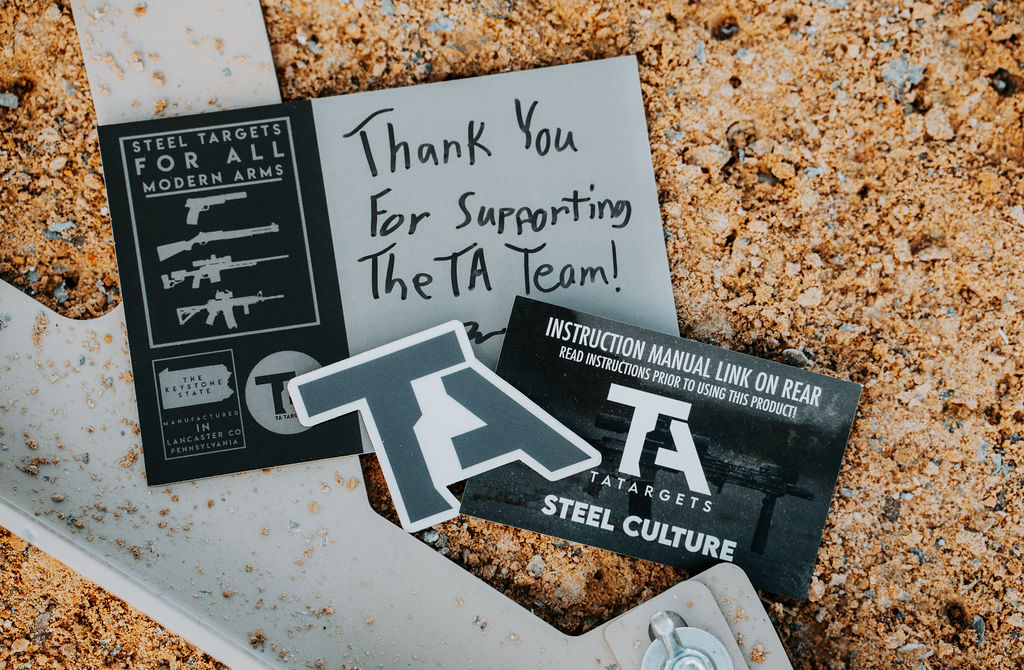
Steel targets give you instant feedback. You pull the trigger, you hear the ping—or you don’t. There’s no walking downrange to check your work, no squinting at cardboard trying to figure out if that’s a new hole or if you’re counting the same miss twice.
But here’s the thing about steel: shoot the wrong kind, at the wrong distance, with the wrong setup, and you’re catching fragments in places you’d rather not. I’ve taken spall to the shins, the forearms, and once—memorably—right across my shooting glasses at an indoor range with poorly positioned AR500 plates. That’s why I wanted to test the TA AR550 Steel Targets System. They claim their design prioritizes safety alongside that satisfying ring. After putting several hundred rounds of pistol and rifle ammunition through their AR550 Reduced C-Zone plates, I can tell you whether that claim holds up.
The TA AR550 Steel Targets system offers versatility beyond basic steel—you can run their proprietary targets, reduced C-zone steel plates, or mount paper holders for standard cardboard. TA also designed their system for easy transport and quick setup, which matters when you’re running practice before a match and don’t want to burn half your training time wrestling with equipment.
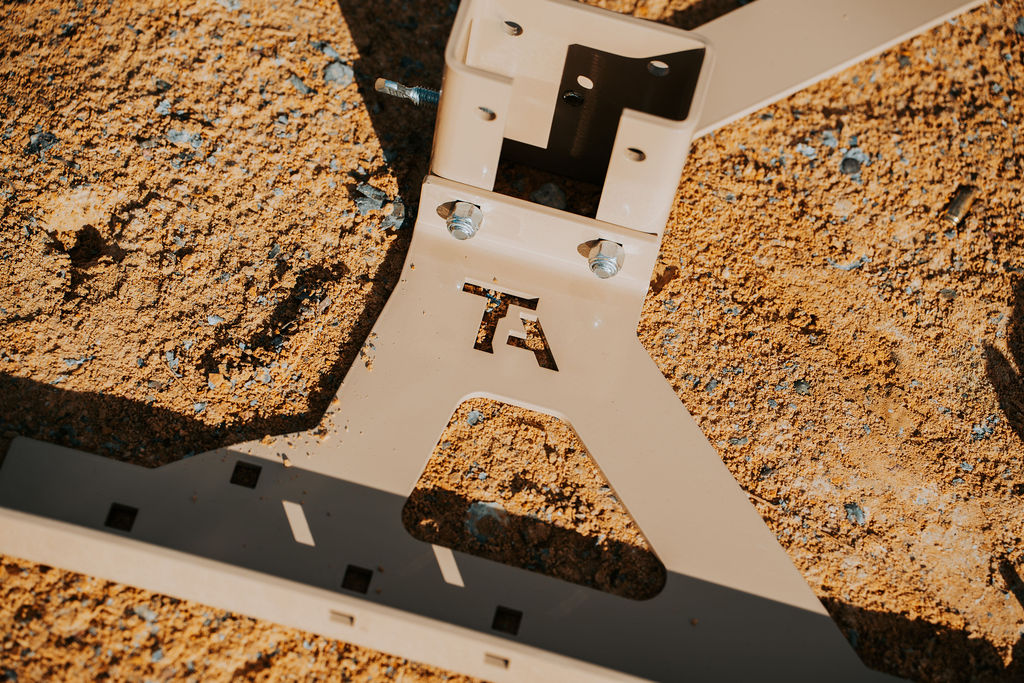
Tech Specs- TA Targets AR550 Steel Targets System
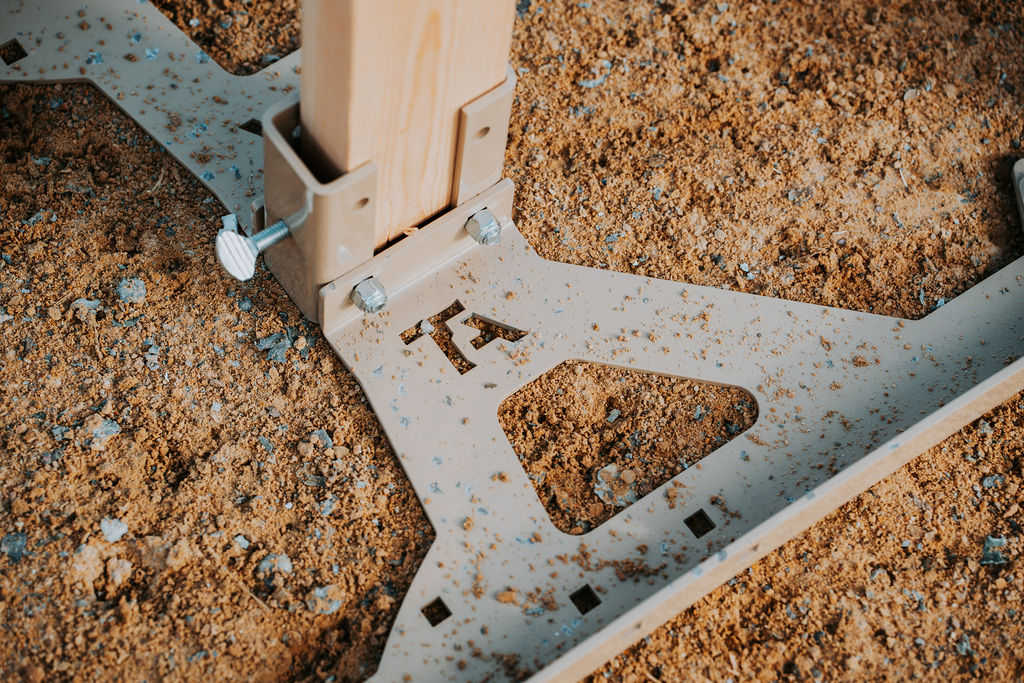
Genesis Steel Target Base(The ARK)
TA spent considerable time engineering the Genesis base for material efficiency and simplified manufacturing. That’s marketing-speak for “we figured out how to make it cheaper without making it worse.” Here’s what that translates to in practical terms:
- Material: Mild Steel, Laser cut, CNC formed
- Dimensions: Approximately 22.5″ Long X 19″ Wide
- Finish: Powder Coated Grey Beige
- Construction and Assembly: Bolted components, Laser Cut, CNC Formed
- Paper Holder Attachment: Bolted
- Approximate Weight: 16 Pounds
- MSRP: $117.00
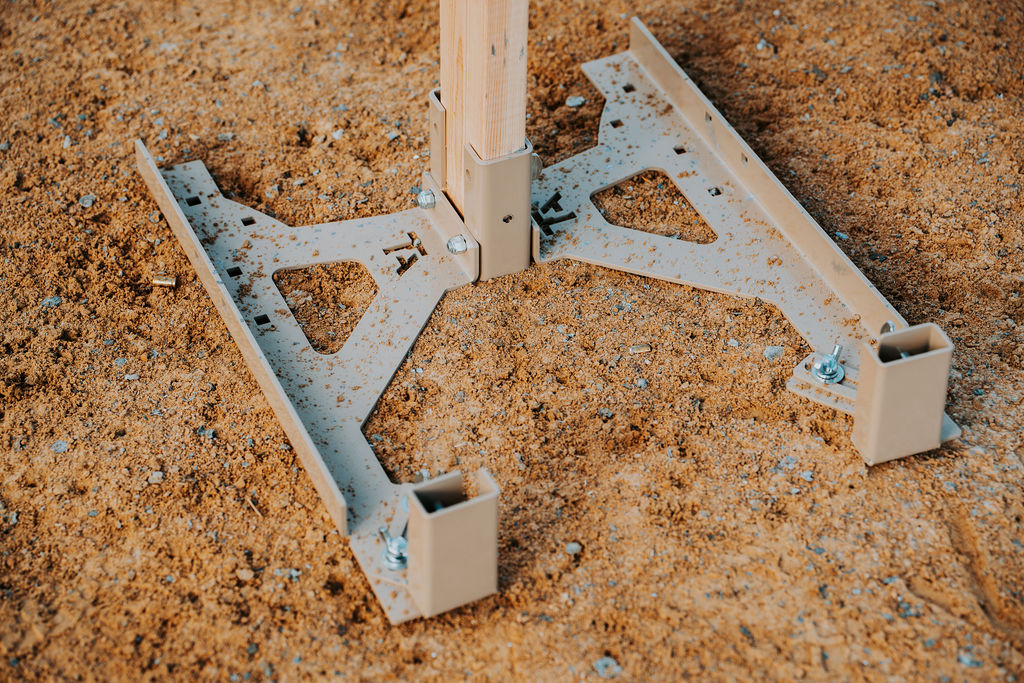
The base accepts 48″ or 60″ 2×4 lumber posts (not included), which is industry standard. You’ll need to source your own lumber—any home improvement store carries what you need for under $5.
AR550 Reduced C-Zone Target Plate(The A-DAP)
The AR550 Reduced C-Zone Target is the plate you’re actually shooting. It’s rifle-rated for close-range work, with specific distance requirements based on caliber:
- Mount Type: A-DAP Gen 5 Top Bracket (Or Armored Post)
- Steel Grade: 1/2″ or 3/8″ AR550 Steel
- Assembly: Fast, Tool-Less Assembly
- Adjustable Lean: 3 Angles of Adjustment Available Standard
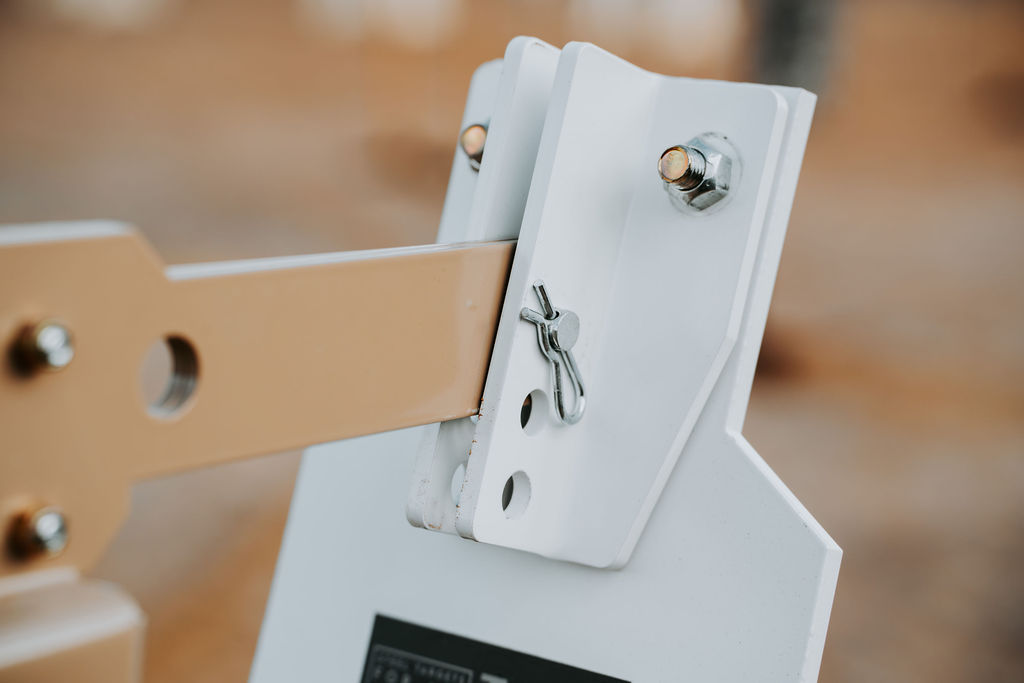
- Brackets: Laser Cut, CNC Press Brake Formed to Perfect Angles
- Approximate Height: 16″
- Approximate Width: 8″
- Shape: Reduced C Zone Shape
- Finish: Powder Coated Finish
- MSRP: $160.00 (3/8″) or $195.00 (1/2″)
- Minimum distances:
- Pistol calibers: 10 yards
- 7.62×39 and below (<3,000 fps): 30 yards
- Magnum rifle calibers: 100+ yards
- Warranty: 10-year warranty on 3/8″ and Lifetime warranty for 1/2″ AR550 (TA Targets Warrenty)
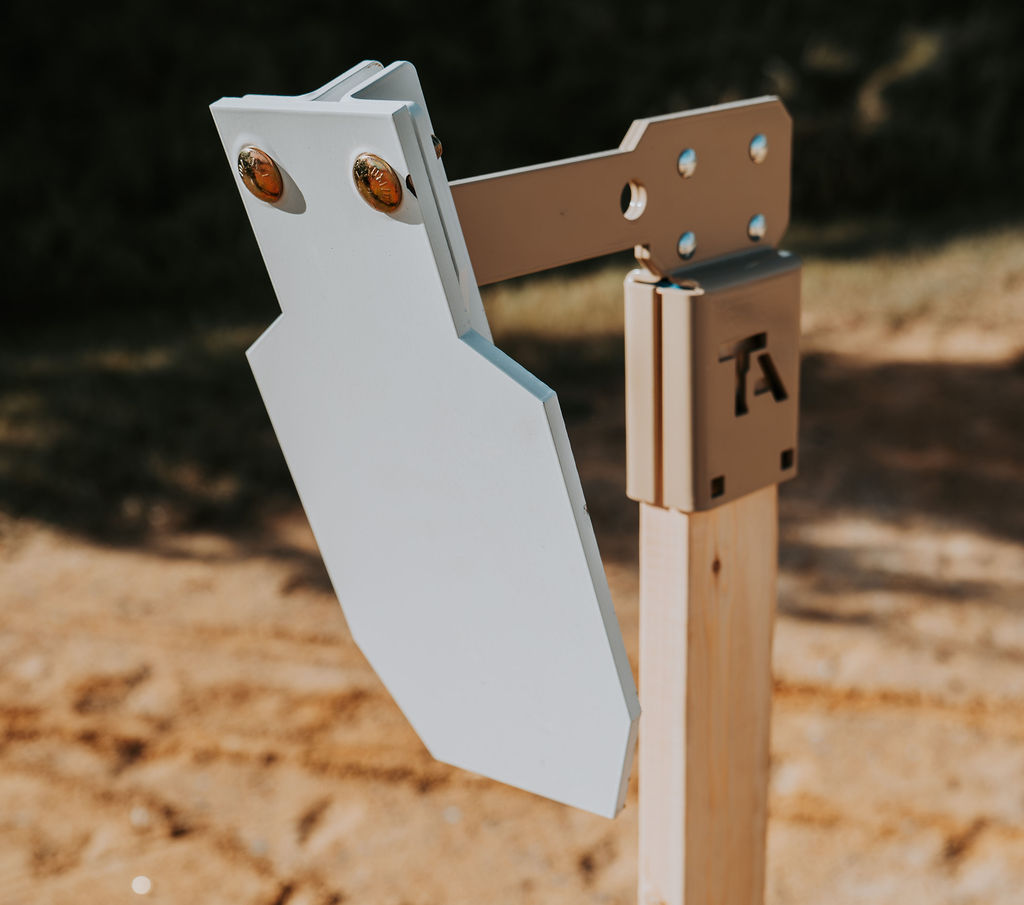
Important: Use only copper-jacketed, lead-core ammunition. Frangible rounds are acceptable. Steel core, penetrator, or armor-defeating rounds will damage the plate and void any consideration for replacement.
A-DAP Steel Target Mount (Gen 5 Top Bracket)
TA’s been using the A-DAP bracket design since 2015, adapting it across their product line. It positions the plate at a forward angle and allows it to swing on impact, which helps redirect energy and fragments downward.
- Material: Mild Steel, Laser cut, CNC formed
- Diameter: Approximately 24″
- Assembly required: Ships assembled
- Finish: Powder Coated Finish
- Material Thickness: 3/16″
- Production Method: Laser Cut, CNC formed
- Hostage Compatible: Yes, backwards compatible
- Hardware Included: Yes.
- Approximate Weight: 10 pounds
- MSRP: $75.00
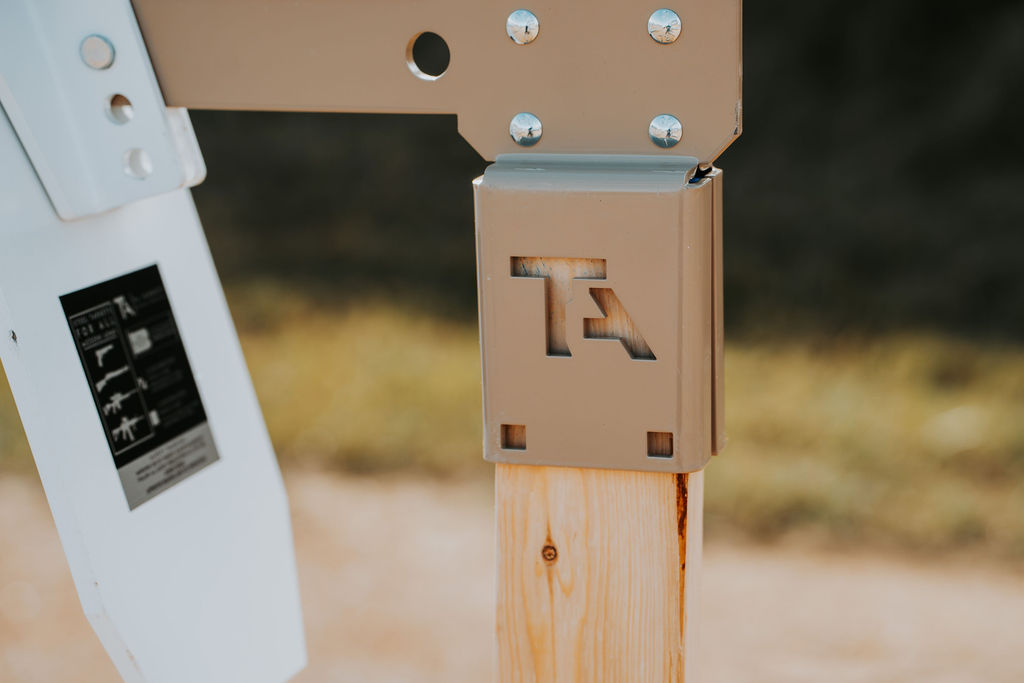
What’s in the Box?!
When you’re investing in training equipment, you need to know if you’re getting a complete system or if you’re about to discover you need another $200 in accessories before your first range session.
Genesis Steel Target Base
What is included with EACH ARK Base
- (One) Left Leg
- (One) Right Leg
- (One) Breakdown base tube (for 2X4 Posts)
- (2) 3/8″ Carriage Bolts
- (2) Locking Nuts
- (One) 3/8″ X 1″ Thumb Screw
- (One) 3/8″ X 1 1/2″ Thumb Screw
- (One) Breakdown Base Tool
- Powder Coated Grey Beige for elegance and durability
AR550 Reduced C-Zone Target Plate(a.k.a AR550 Steel Targets)
WHAT IS INCLUDED:
- AR550 Reduced C-Zone Target Plate
A-DAP Steel Target Mount
WHAT IS INCLUDED:
- Left side of the Gen 5 Top Bracket
- Right side of the Gen 5 Top Bracket
- (4) carriage bolts, washers, and locking nuts
- (2) 3/8″ Carriage bolts and lock nuts to fasten the top bracket into the breakdown base for storage
- Ships pre-assembled
Not Included: 2×4 lumber (you’ll need one 48″ or 60″ 2×4 per target—get the straightest boards you can find), ground stakes (available separately, though I found them unnecessary for stability).
Why AR550 vs. AR500: The Hardness Question
TA uses AR550 steel instead of the more common AR500. This isn’t just spec-sheet bragging—there’s a measurable performance difference that affects how long your target lasts.
Steel hardness is measured on the Brinell scale (BHN). A hardened ball is pressed into the material under a specific load, and the resulting dent diameter indicates hardness:
- AR500: Typically 460-485 BHN
- AR550: Typically 510-560 BHN
That 15-20% increase in hardness translates to real-world durability. AR550 resists deformation better over thousands of rounds, handles high-velocity rifle impacts with less pitting, and maintains its deflection angle longer, even when you’re shooting at minimum distances.
The trade-off? Cost. AR550 is harder to cut and form during manufacturing, which increases production expense. TA’s 3/8″ plate costs $160 versus typical AR500 plates in the $120-140 range. For the 1/2″ plate at $195, you’re paying about $40-50 more than equivalent AR500 options.
Is that worth it? Depends on your round count. If you’re putting 500+ rounds on steel monthly, AR550 will last noticeably longer before developing the cupping and pitting that reduces deflection efficiency. If you’re a casual plinker shooting 100 rounds every few months, AR500 will outlive your interest in the hobby.
What Makes TA Targets Different?
TA Targets sets the AR550 steel minimum guaranteed spec at 525 BHN—that’s the rock-bottom guarantee from their steel mill. But here’s the kicker: most TA Targets plates actually land between 560-585 BHN, consistently outperforming their own baseline.
The real game-changer? TA Targets air-cools their steel instead of using traditional oil quenching. This trade-off delivers a guarantee of 95%+ hardness throughout the entire steel plate—not just on the surface. Most competitors use oil quenching, which creates surface hardness with a soft core underneath. That’s a critical weakness. TA Targets also employs an extensive argon degassing process that removes impurities from the steel. Combine premium materials with superior engineering, and you get top-tier performance from your steel target systems.
TA Targets backs their products with an exceptional 10-year warranty on their 3/8″ AR550 systems and a lifetime warranty on their 1/2″ AR550. According to TA Targets themselves, this warranty exists to hold them accountable to manufacturing a better product—it ensures they’ll always create targets that perform. But how good is the TA Targets warranty? There’s always a catch, right?
Not with TA Targets. Between 2018-2019, a steel mill (prior to TA Targets using their new proprietary material) falsified documents, forged specs, and sold TA Targets AR500 instead of their requested 540 Brinell minimum AR550. Hundreds of TA Targets systems shipped and began failing prematurely. What did TA Targets do? They absorbed over $60,000 in raw material costs—totaling over $100,000 with all the finished products included. TA Targets personally reached out to every affected customer, replaced all defective targets for free, and covered shipping. That’s how bulletproof their warranty is, and how far they’ll go for their customers. Learn more about TA Target’s story here.
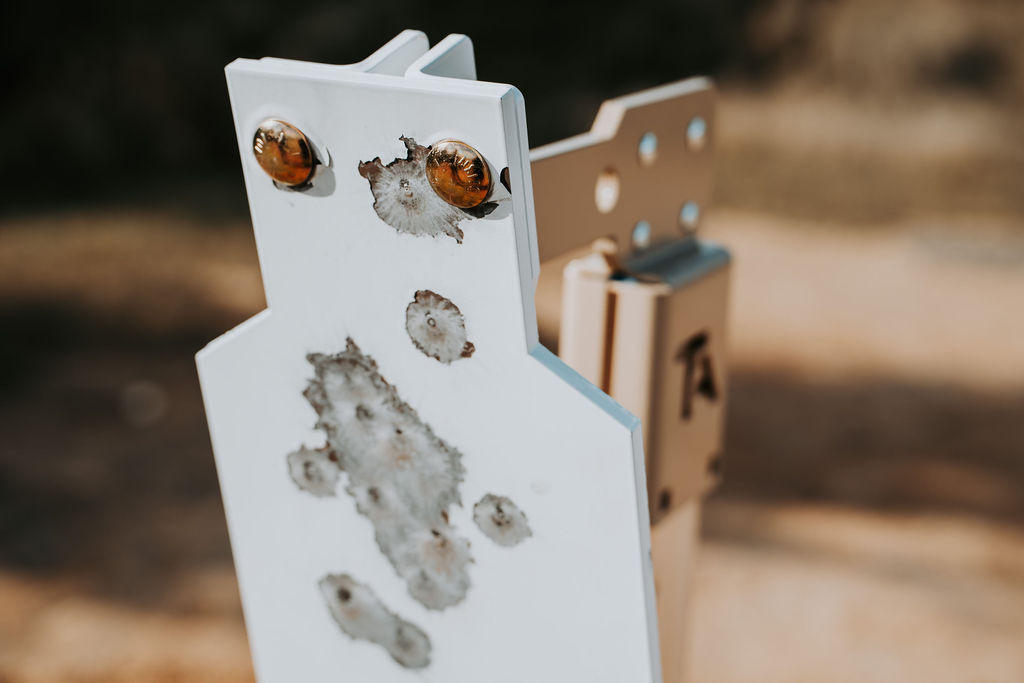
First Impressions: Unboxing and Build Quality
Everything arrived well-packaged with edge protection. Opening the boxes, I immediately checked what I always check first: welds, edges, and coating quality.
Welds: Full penetration, no obvious gaps or inconsistencies. These are show welds, and they’re solid functional welds that should hold up great.
Edges: Laser-cut edges were smooth with no burrs. I ran my hand along every edge—nothing sharp or requiring deburring.
Powder Coating: Even coverage, good thickness. No obvious thin spots or holidays in the finish. The grey-beige color is functional rather than tactical-cool, which I appreciate—this is equipment, not fashion.
Weight and Feel: The steel has appropriate heft. The 3/8″ plate feels substantial without being unwieldy. The 16-pound base is heavy enough to resist movement but light enough to carry from vehicle to shooting position without turning into a farmer’s carry workout.
Everything looked good statistically. The real test happens when you’re assembling it in the field and putting rounds on it.

Range Testing: Assembly and Performance
Initial Setup
The AR550 plate ships pre-mounted to the Gen 5 bracket—you don’t need to touch that assembly. The base, however, requires assembly, and TA Targets includes a specialized tool for the job.
I deliberately used only their included tool to test their “tool-less” assembly claim. Here’s the reality: the tool works, but it’s short. Breaking the initial bolt tension to get everything properly snugged requires significant hand force on a tool that’s only about 4 inches long. I scraped my knuckles once when my hand slipped during the initial tightening sequence.
Time to assemble: First time with their tool only: approximately 8 minutes. Once you understand the sequence, subsequent assemblies took 3-4 minutes. With a standard socket wrench, you could cut that to under 2 minutes.
What you actually need: One 48″ or 60″ 2×4 (I recommend selecting the straightest board available—warped lumber affects the plate’s angle and stability).
Once assembled, the target has a forward-leaning angle. This isn’t adjustable during setup—you get three angle options, but it is easy and fast to change the angle. I tested in the default middle-angle position.
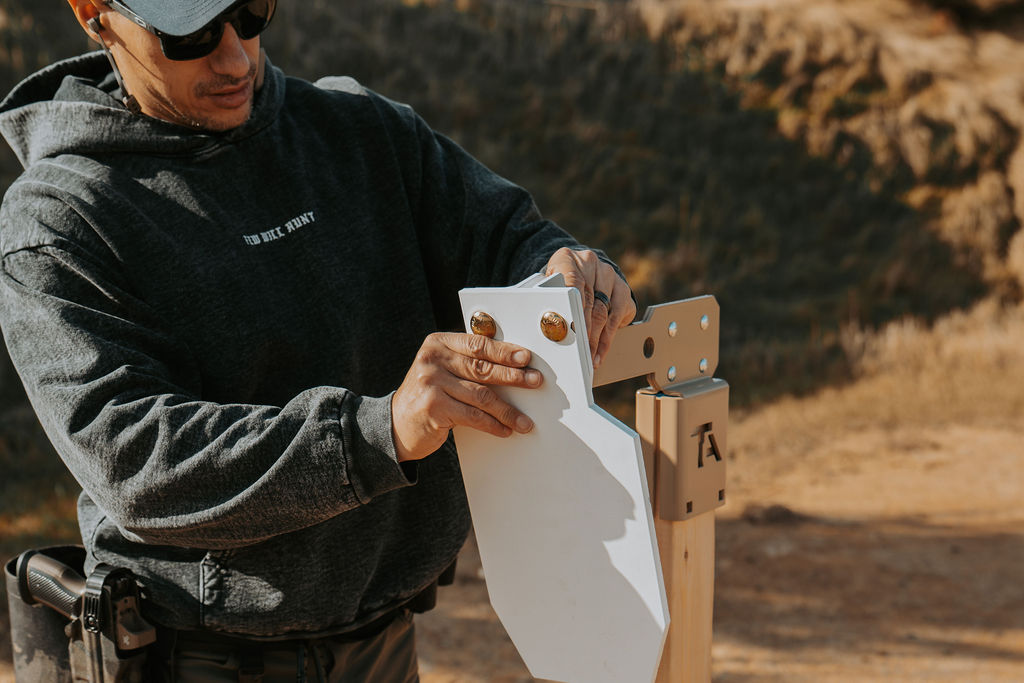
Distance and Safety Setup
I set up two testing scenarios:
Pistol Testing: 10 yards (minimum rated distance)
- Springfield Ecehlon with multiple ammunition types
- Approximately 250 rounds total pistol
Rifle Testing: 30 yards (minimum rated distance for 5.56/.223)
- AR-15 with 16″ barrel
- Approximately 150 rounds total rifle

Ammunition Performance Data
9mm Pistol (10 yards):
- Blazer Brass 115gr FMJ (approximately 60 rounds)
- Eley 124gr FMJ (approximately 50 rounds)
- Super Vel 147gr JHP (approximately 40 rounds)
- Freedom Munitions 115gr FMJ (approximately 50 rounds)
- Black Dot 124gr (approximately 50 rounds)
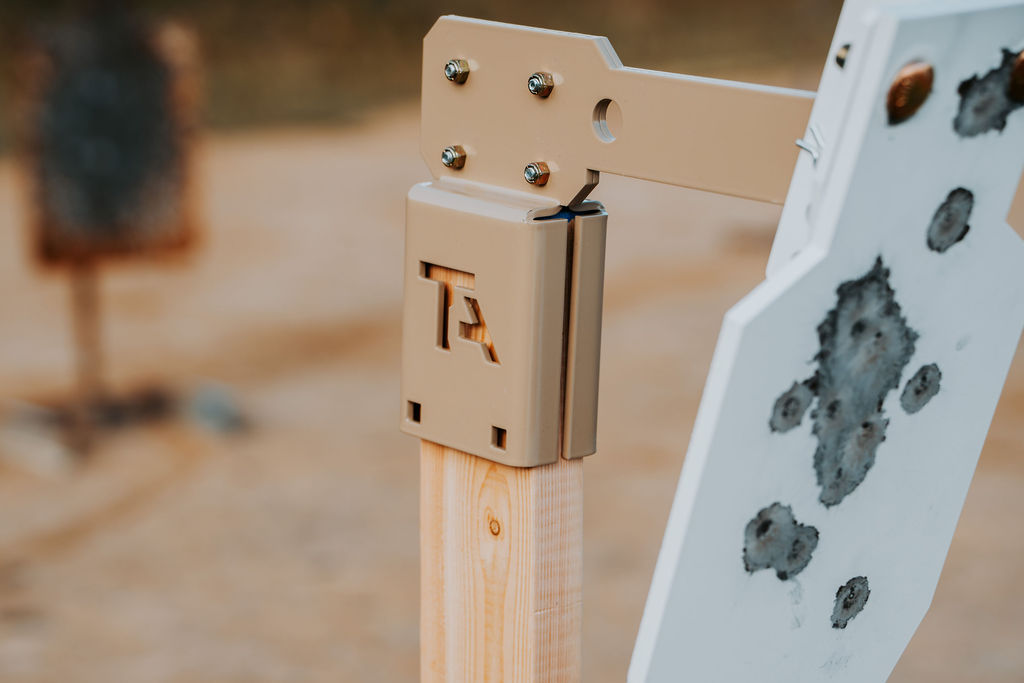
Results: Zero penetration across all ammunition types. No visible deformation or denting on the plate surface after 250 rounds. The powder coating showed impact marks but no coating failure or spalling of the finish itself.
5.56/.223 Rifle (30 yards):
- Super Vel 77gr OTM (approximately 50 rounds)
- Bone Frog 77gr (approximately 50 rounds)
- Freedom Munitions 62gr FMJ (approximately 50 rounds)
Results: Zero penetration. No visible pitting or crater formation on the plate surface. After 150 rifle rounds, I could feel slight texture changes in the impact area when running my hand across the surface, but no measurable deformation or cupping.

The Critical Question: Spall Management
This is where steel targets either work safely or send you to urgent care for fragment removal.
I’ve shot enough poorly-designed or poorly-positioned steel to know what unsafe feels like. At my local range in South Dakota, we have vertical AR500 plates that send fragments back at shin and chest height regularly. I’ve taken hits through clothing multiple times.
The TA AR550 Steel Targets system’s forward angle measurably redirected fragments downward. Standing at 10 yards with a pistol, I observed impact debris patterns in the dirt approximately 3-5 feet in front of the target base. With the rifle at 30 yards, debris patterns extended 6-8 feet forward of the base.
I shot without lower-leg protection deliberately (not recommended, but I wanted an honest assessment) and experienced zero fragment impacts to my legs or body over 400+ rounds. After all those rounds, I didn’t experience any fragments, splash, or sprall. I was very pleased with how the TA Targets AR550 Reduced C-Zone Target Plate managed spall.

Sound and Feedback
The acoustic feedback from AR550 Steel Targets differs noticeably from AR500. The ring is slightly higher-pitched and seems to carry better. At 10 yards with a pistol, hits were clearly audible with hearing protection on. At 30 yards with a rifle, the ring was still distinct and satisfying.
This is subjective, but I found the sound more immediately gratifying than the AR500 plates at my local range. There’s a cleaner, more resonant tone that makes confirmation of hits more satisfying during rapid strings.
Base Stability
The Genesis base held position without ground stakes on packed dirt. I tried deliberate wobbling and shaking—the 16-pound base, combined with the 2×4 post and mounted plate, created enough stability for normal shooting.
That said, I was provided stakes for the base. They were extremely tight-fitting—I needed to hammer them into the stake holes. Once installed, they added security for uneven ground or if you’re shooting in wind conditions.
On flat, packed range surfaces, stakes are unnecessary. On uneven terrain or loose soil, they’re worth the installation effort.
Who It’s For
This system makes sense for:
Competitive shooters running regular steel practice: If you’re putting 200+ rounds on steel per practice session multiple times monthly, AR550 Steel Targets durability advantage justifies the cost premium over AR500. You’ll replace plates less frequently.
Shooters training at minimum distances: If you regularly work pistol skills at 10 yards or rifle transitions at 30 yards, the harder steel resists pitting better at these closer ranges where impact energy is highest.
Shooters who transport equipment regularly: The breakdown design and reasonable weight make this practical for throwing in your vehicle for practice sessions at different ranges.
Shooters wanting multi-purpose target systems: The base accepts paper target holders and other TA accessories, so your investment serves multiple training purposes beyond steel work.
Shooters who like a peice mind: The 10-year for 3/8″ or the lifetime warrenty for the 1/2″ steel targets is one of the best in the industry. TA Targets truly stands by thier prodcuts.
Who Should Skip It
This system isn’t optimal for:
Casual shooters with low round counts: If you’re shooting 50-100 rounds monthly, AR500 plates at a lower cost will last effectively forever for your purposes. The AR550 premium won’t deliver meaningful benefit.
Shooters on tight budgets: At $352 for the complete system (base + bracket + 3/8″ plate) before lumber, this sits at the higher end of portable steel options. Cheaper alternatives exist if durability isn’t your priority.
Shooters wanting fixed permanent installations: This is a portable, breakdown system. If you’re setting up a permanent range with static steel positions, more economical solutions exist. However, TA Targets offer more permanent installations too.
Shooters needing immediate full-setup: The system requires a 2×4 that you source separately. If you want completely ready-to-shoot systems with no additional purchases, other options include integrated posts.
Limitations and Trade-Offs
Every piece of equipment has compromises. Here’s what TA’s system trades for its benefits:
The included tool is inadequate: The breakdown tool works, but its short length makes initial assembly unnecessarily difficult. Bring a socket wrench for faster, easier setup.
Stakes are overly tight: If you receive stakes, expect to hammer them into position. They don’t hand-press into the mounting holes.
Price premium over AR500: You’re paying approximately 25-30% more than equivalent AR500 systems. That premium buys durability, an amazing warrenty but it’s still money out of your pocket upfront.
Requires separate lumber purchase: The 2×4 post adds cost and logistics. You can’t just pull this from your vehicle and shoot immediately—you need to source wood first.
The Verdict
After 400+ rounds across pistol and rifle calibers at minimum rated distances, the TA Targets Steel Target System delivers on its core promise: safe, durable steel targets with effective spall management.
The AR550 Reduced C-Zone Target steel proved noticeably more resistant to deformation than AR500 plates I’ve used at similar round counts. The forward-angle mounting effectively redirected fragments downward—I experienced zero fragment impacts to my body during testing, which represents a significant improvement over vertical steel installations.
AR550 Steel Targets’ build quality is solid throughout. Welds are functional, edges are clean, and powder coating is well-applied. The system breaks down for transport and assembles reasonably quickly once you’ve done it once or twice.
The cost premium is real—this system runs $352+ before lumber compared to $250-280 for comparable AR500 setups. That’s a 25-30% premium that buys you harder steel, better engineering, and an amazing warrenty. Whether that premium is worth it depends entirely on your round count and if you want peice of mind when you buy a product.
For serious competitors running regular steel practice, the investment makes sense. For casual shooters, it’s probably more capability than you’ll fully utilize.
My personal assessment: I’ll continue using the AR550 Steel Targets system for my own training. The sound feedback is satisfying, the spall management works as designed, and the durability should mean I’m not replacing plates in two years when AR500 alternatives would start showing significant wear.
Thank you to TA Targets for allowing Action Gunner and me the chance to review the TA Targets Steel Targets System.
If you found this article interesting, check out our other reviews below: